
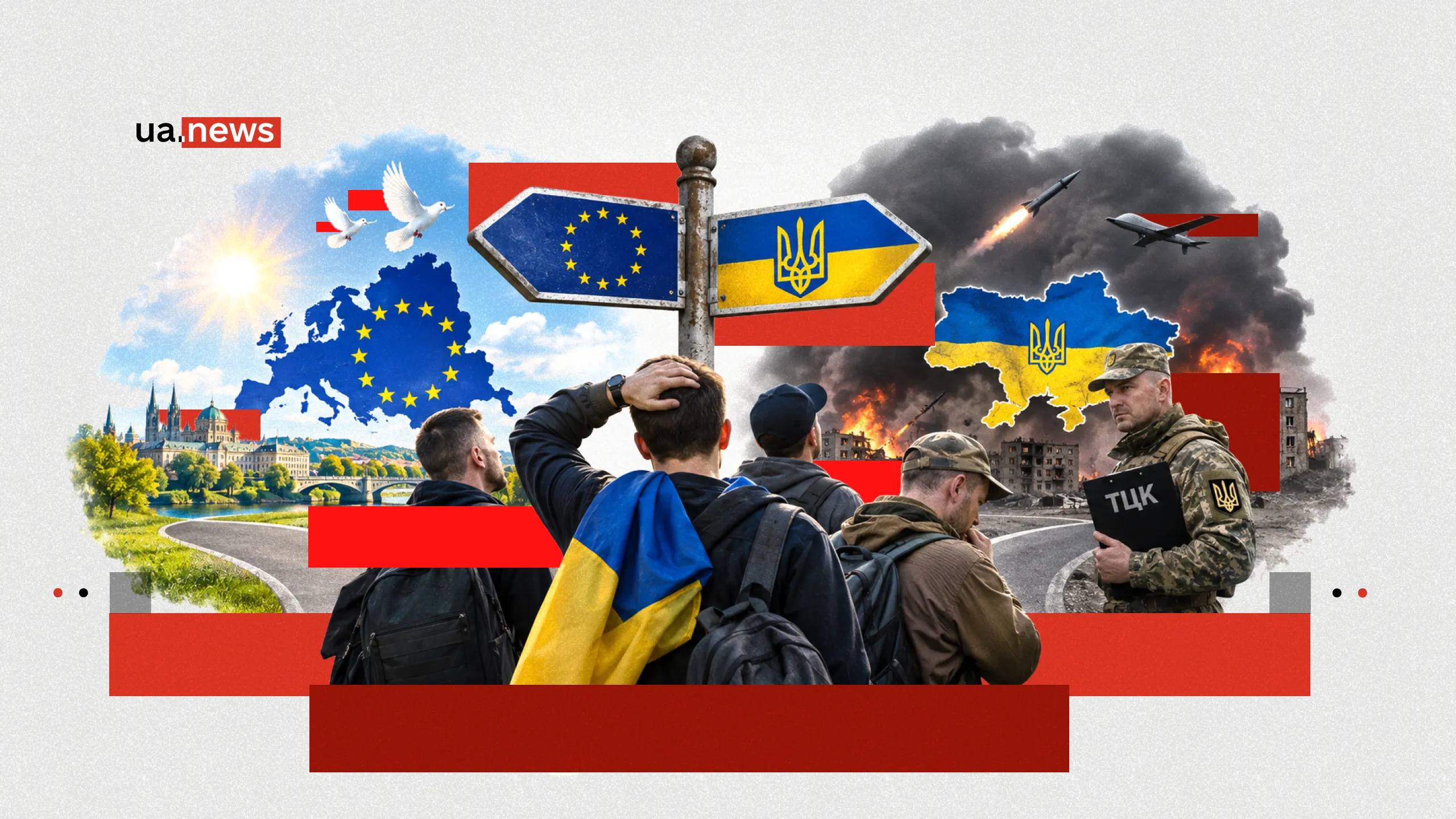
On Wednesday, November 11, during a joint press conference with Irish Prime Minister Micheál Martin in Dublin, President Volodymyr Zelenskyy once again reiterated a point he had made many times before: Men of draft age must be in Ukraine. He acknowledged that many had left to escape the war and that, as a result, quite a few families are living apart, but he emphasized that those who are supposed to be in the country to defend it must return.
Standing beside him was the Irish prime minister, who virtually immediately refuted this claim right there on live television. According to Martin, Ireland will not forcibly return Ukrainian men to Ukraine. This case illustrates just how complex and controversial the issue of the return of Ukrainian men from Europe is, and how differently it is viewed in Kyiv and in some European capitals.
The question is not whether Europeans will begin deporting Ukrainian men to Ukraine en masse. From a legal standpoint, this is nearly impossible, and it’s worth stating that right away. The question is this: how far is Europe willing to go in making life more difficult for those already on its territory, and what rules will it establish for those who are just planning to arrive? It is precisely here that real shifts have taken place in recent months, and it is these shifts that will determine the reality for hundreds of thousands of Ukrainian men in the coming years. For more details, see this article by UA.News political analyst Mykyta Trachuk.
From Universal Protection to a Selective Approach: What Has Changed for Ukrainian Men
Just a year or a year and a half ago, talk of Ukrainian men returning from Europe seemed more theoretical than anything else. Moreover, when, following last year’s “cardboard Maidan,” Zelenskyy allowed men under 22 to leave the country, more than 100,000 people left the country in just two months of fall 2025. But throughout 2026, this issue shifted toward concrete decisions. In July, the EU Council decided to extend temporary protection for Ukrainian refugees until March 2028—but with a fundamental change: from now on, asylum will be granted only to men who have “fulfilled their military obligations” in Ukraine.
This decision was the result of pressure from two sides. On the one hand, the Ukrainian government has openly asked Europe to help repatriate these men. On the other hand, European governments have increasingly argued that temporary protection should not become a permanent refuge for those evading military service. According to Eurostat estimates, as of mid-2026, approximately 1.2 million adult Ukrainian men were benefiting from temporary protection in the EU.
Germany has taken an even more concrete step in this regard. As of October 9, Ukrainian men of draft age can receive temporary protection in Germany only if they can confirm that they crossed the Ukrainian border legally and have no mobilization obligations. Proof may include a stamp in the passport or documents confirming exemption from military service.
German Interior Minister Alexander Dobrindt explained the rationale behind this decision without mincing words: if men are excluded from the temporary protection mechanism and/or do not receive a positive decision under the asylum procedure, they are required to return to Ukraine. Draft evasion is also not grounds for asylum—unlike, incidentally, the situation with the war in Syria. As they say: “You don’t understand—this is different.” Incidentally, as of May, there were at least 350,000 Ukrainian men between the ages of 18 and 60 in Germany.
All these changes aren’t happening in a vacuum. They’re part of a broader process in which the EU is trying to strike a balance: not to deport people outright, but at the same time to “make life as difficult as possible” for those who have just arrived, are planning to do so, or even already have asylum. But this balance has turned out to be far from uniform across different countries.
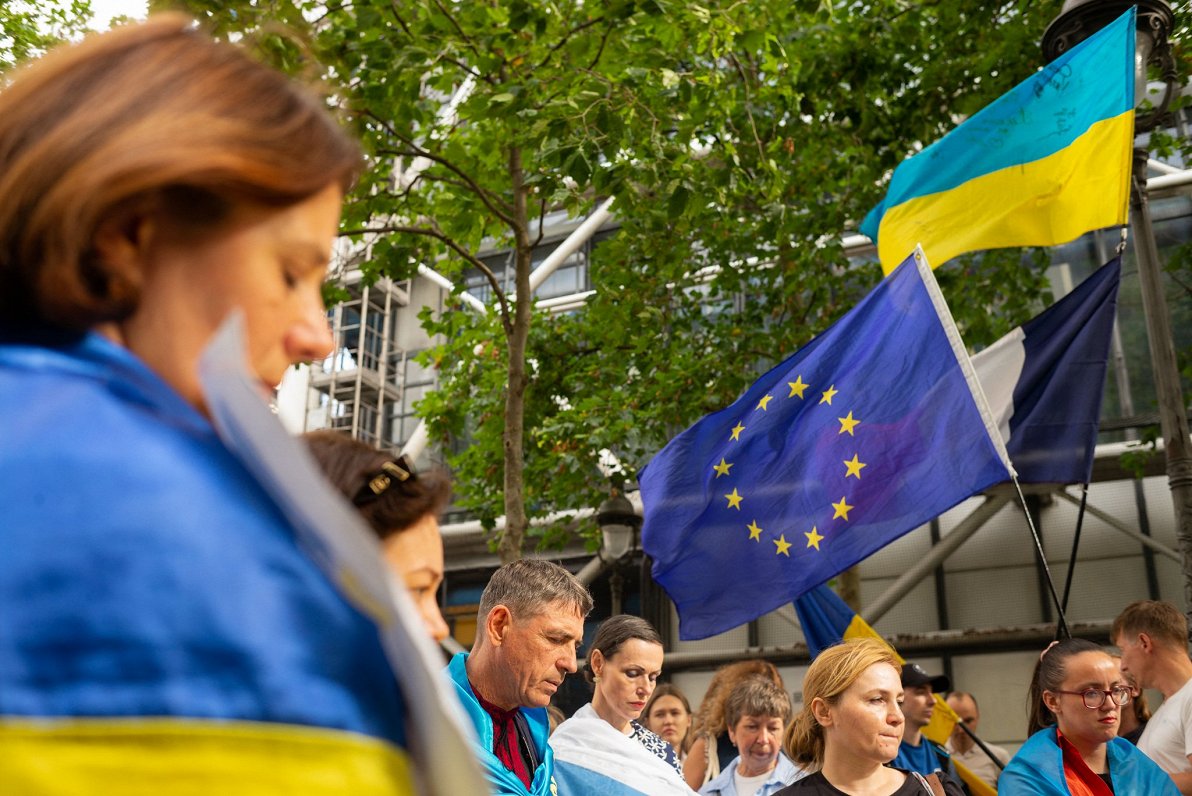
Europe Is Not a Monolith: Who Opposes a Unified Approach Toward Ukrainian Men
Ireland’s position, as articulated by Micheál Martin, is a principled rejection of forced return. Martin acknowledged that the issue is complex, that many people have left Ukraine because of the war, and that Ireland continues to discuss the return of citizens with the Ukrainian government—but with the understanding that, once the war ends, Ukraine will need people for reconstruction, not for immediate mobilization. For now, Dublin will not return anyone to Kyiv.
Hungary has taken an even more specific and unequivocal stance. Prime Minister Péter Magyar stated that he would continue to provide protection to Ukrainians of draft age even in the face of new EU restrictions. Budapest officially informed the European Commission that it would not impose any restrictions on individuals who have unfulfilled military obligations to Ukraine.
According to some sources, France has also expressed opposition to restricting access to the protection system. Paris has not made any high-profile public statements on this issue, and President Macron has consistently supported Zelenskyy in all his endeavors. In reality, however, the percentage of asylum denials in France is significantly lower than in other countries.
Luxembourg also officially opposed excluding men from the scope of the directive during discussions on the reform in the EU Council, insisting on maintaining a unified humanitarian approach. It eventually adopted the new measures, but in practice, strict denials are rarely applied in that country, although basic document checks upon entry are still in place.
It’s important to remember that Europe isn’t just the EU. Countries such as Moldova, Serbia, Albania, and North Macedonia, while remaining official candidates for EU membership, are in practice fully entitled to disregard certain EU directives. And that is exactly what they are taking advantage of right now: temporary protection in these countries remains fully accessible to Ukrainian men, and no documents are required from the consular offices in Chisinau, Belgrade, Tirana, or Skopje.
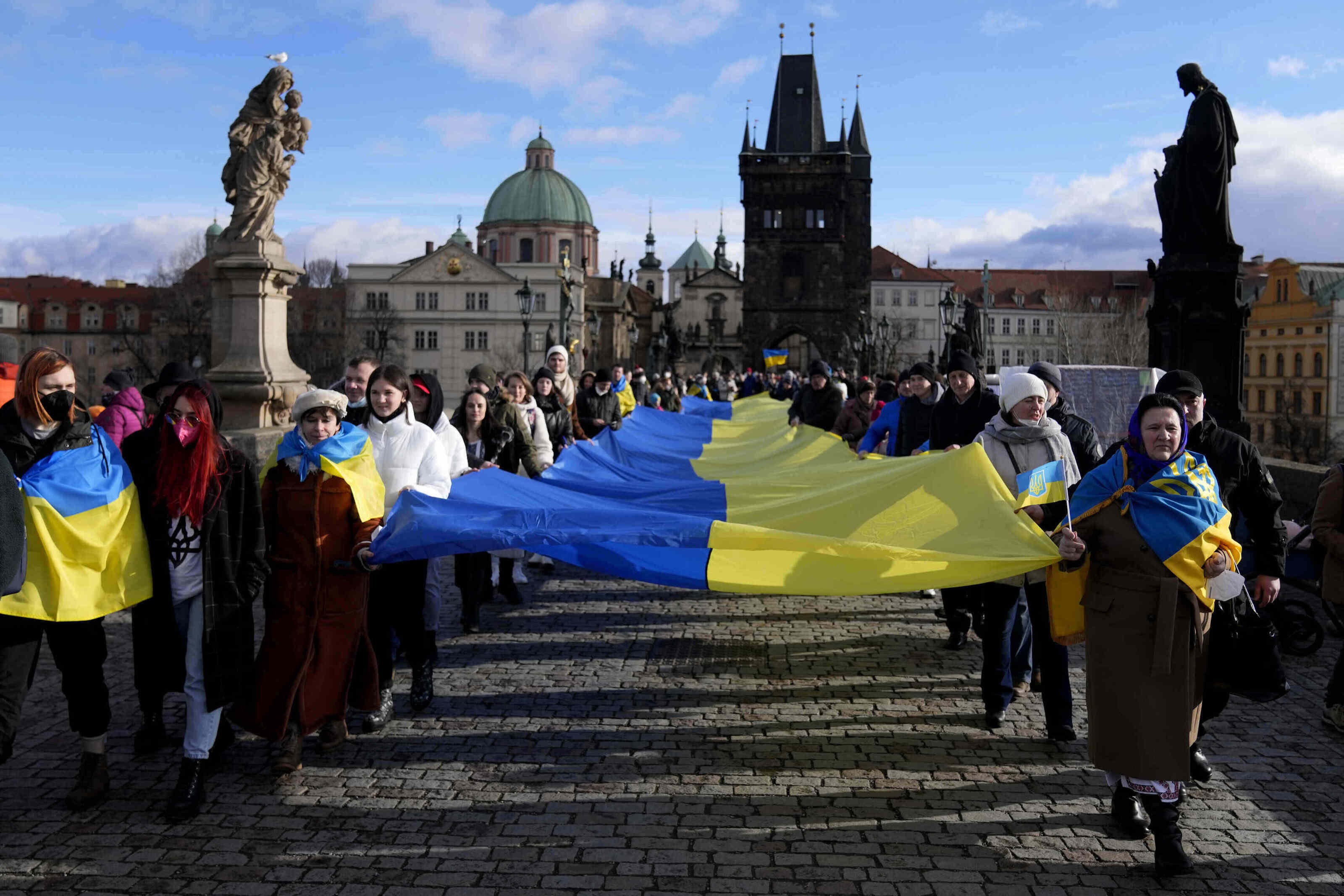
Law vs. Politics: Why Deportation Remains Unlikely
Despite all the talk of tightening rules and restricting access to protection, there is a fundamental legal obstacle that makes the mass forced return of Ukrainian men to Ukraine nearly impossible. This is the principle of non-refoulement, enshrined in international refugee conventions and EU legislation. This principle prohibits returning a person to a country where their life or freedom is at risk—period. That is precisely why direct deportation to Ukraine by the EU would violate its obligations under international law.
But that doesn’t mean Europe can’t make life difficult for Ukrainian men in other ways. Restricting access to temporary protection for new arrivals, requiring proof of legal departure, denying social benefits, complicating procedures for extending status, and so on—all of these are tools of pressure that do not violate the formal ban on extradition, but create real incentives to return. It is at this level that the main work will take place in the coming years.
It is telling that even Germany, which is perhaps the most vocal about the need for return, does not speak of forced deportation. The difference is fundamental: yes, it is pressure, but not direct deportation. And it is precisely this difference that will shape the EU’s actual policy in the coming years.

Expert
Opinions
Political analyst Maksym Honcharenko notes: the meeting between President Zelenskyy and Irish Prime Minister Martin has sparked a new debate about the fate of Ukrainian men in Europe. We have repeatedly heard from Kyiv the desire to restrict the granting of asylum to Ukrainians subject to military conscription. And we heard it again this time. However, the Irish leader’s response is clear: Dublin has no intention of persecuting or sending such people back.
“In fact, a clear line is being drawn: support for Ukraine will continue, but Europe has no intention of taking on the role of Ukrainian mobilization authorities. Nevertheless, the dichotomy between humanitarian aspirations and support for Kyiv’s interests is becoming increasingly evident. And the future fate of citizens subject to military conscription remains an open question. Objectively speaking, persecution and mass deportations are currently an unlikely scenario. Europe operates in accordance with the principle of non-refoulement and cannot deport refugees whose lives and freedom are at risk. Therefore, those who have already been granted asylum in EU countries face the least risk. This is especially true if they have already integrated into the local system by obtaining a temporary residence permit, a job, access to education, and so on.
Another issue is the mechanism for granting asylum to new refugees. Here, stricter rules and criteria can be expected. The most likely mechanism here is granting legal status only if it is confirmed that the individual has no military obligations and/or crossed the Ukrainian border legally. This is the most realistic scenario, but it will not be implemented immediately either. A gradual transition lies ahead. Similarly, administrative mechanisms and incentives may come into play. Some of them are already in effect. Such programs already exist; a prime example is the international AVRR or the German REAG/GARP, along with other local initiatives. This is a soft repatriation mechanism, and it may work for those who have not yet managed to integrate into their new environment. However, we should not expect a sharp reversal of European migration policy. EU authorities do not seek to become a Western version of the TCC. But in terms of legal requirements, they may well tighten the criteria in the future while applying soft mechanisms right now,” says Maksym Honcharenko.
Political scientist and director of the “Third Sector” Center, Andriy Zolotaryov, acknowledges that the issue of returning men of draft age has once again garnered significant attention. But the president’s hopes that Europeans will begin returning men to Ukraine are completely unfounded, the expert says.
“It is true that the conditions can be made more difficult, making it impossible to obtain temporary protection. And we are already seeing this. But Europeans will certainly not send back or deport people who are fleeing the war. The Irish Prime Minister has stated from the very beginning that they will not make the conditions for obtaining temporary protection more difficult. Hungary’s position is the same. Countries such as Slovakia and the Czech Republic will absolutely not send people back. If there are criminal proceedings against a person that are not related to persecution for political reasons or other issues of military service—that’s a different matter. But they cannot send back those fleeing the war in Ukraine.
And most importantly: Zelenskyy should not be thinking about how to send men back. Even if he were to litter the Polissya swamps with anti-personnel mines and release crocodiles into the Tisa River, none of this would stop the flow of people fleeing the country by any means necessary. We see this in the “Carthage” case or the events in Petropavlivska Borshchahivka. People faced with a choice between prison and death are capable of almost anything. There are plenty of examples of TCC officers using force. People understand that there is a way out of prison, but not from the grave,” the political analyst asserts.
According to Zolotaryov, all attempts to resolve the issue of mobilization resources lack a solid foundation. Such attempts will continue. But the Europeans will not send back any of the Ukrainians who have fled to Europe, and this must be understood, the expert concluded.

In summary, the answer to the main question—whether Europe will begin to send Ukrainian men of draft age back en masse—is as follows: there will be no direct deportation, but the pressure will intensify. Practice shows that there is no single European policy regarding Ukrainian men, and most likely, there never will be. Each country will act based on its own political calculations, legal traditions, and stance on the war in Ukraine.
But there is also a broader context worth keeping in mind. The discussion about the return of men is not merely a matter of mobilization resources. It is a global question of how the Ukrainian government envisions the future—its own and that of its citizens. If the only response to the challenge of a war that has lasted nearly five years (!) is to, like a vacuum cleaner, “suck up” all men with Ukrainian passports from around the world and send them to the front lines into a drone “killzone,” then we must honestly admit: this is a strategy of collapse that physically exhausts the people and robs the country of its future.
It would be far more productive to focus all efforts on ensuring that the war truly ends as soon as possible. Because while the debate rages on about how to “get” men from abroad, millions of people in Ukraine and beyond its borders are waiting for one thing: for people to stop dying and for the day when they can return home—not to die, but to live.




