
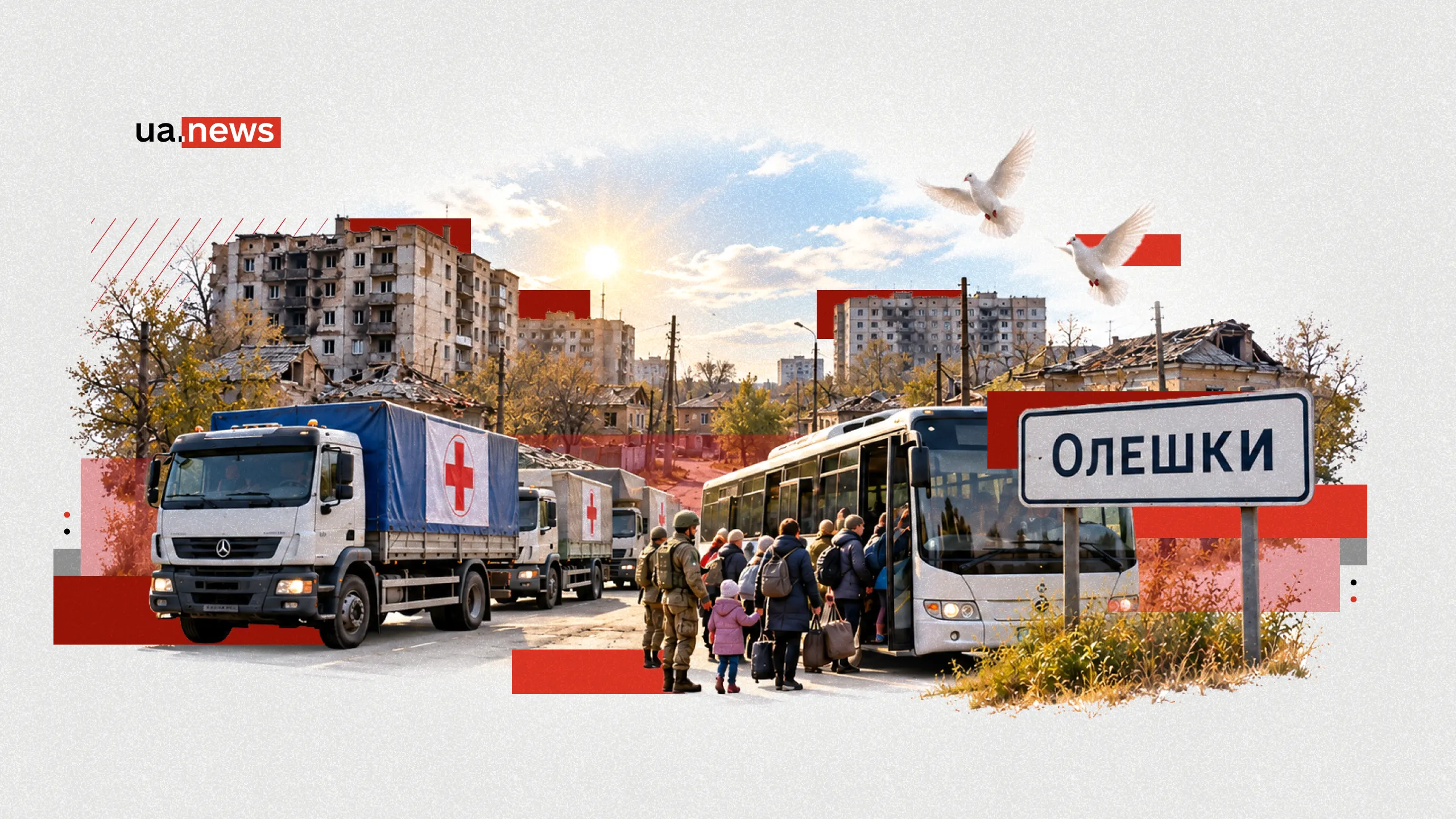
It has been quiet for more than 80 hours in the occupied town of Oleshky in the Kherson region. The ceasefire remains in effect, and no violations have been recorded during this time.
Oleshky is a city that has been at the epicenter of a full-blown humanitarian crisis since May 2026, and in recent weeks, the situation there has become simply unbearable. Through the mediation of a number of international actors—and first and foremost, U.S. First Lady Melania Trump—a local ceasefire has been achieved in this sector of the front line. The goal is to allow for the delivery of medicine and food, the evacuation of those who wish to leave, and the clearance of landmines. What we are seeing now is perhaps one of the most underappreciated, overlooked, and at the same time most eloquent scenes of the entire full-scale war.
Back when he was still just a presidential candidate, Volodymyr Zelenskyy made a statement about Donbas that drew harsh criticism from a radical segment of society: “We just need to stop shooting.” But seven years later, in the midst of a major war, the Oleshky case proved that, in essence, this statement was true. It turns out that it is possible to simply stop shooting, and it really does work.
What has actually been happening in Oleshky all this time, what is the situation there now, can the “Oleshky ceasefire” be applied to other sections of the front, and what does this whole story reveal on a broader scale? UA.News political analyst Mykyta Trachuk, together with experts, examined the issue.
Oleshky: A Town That Was Nearly Destroyed
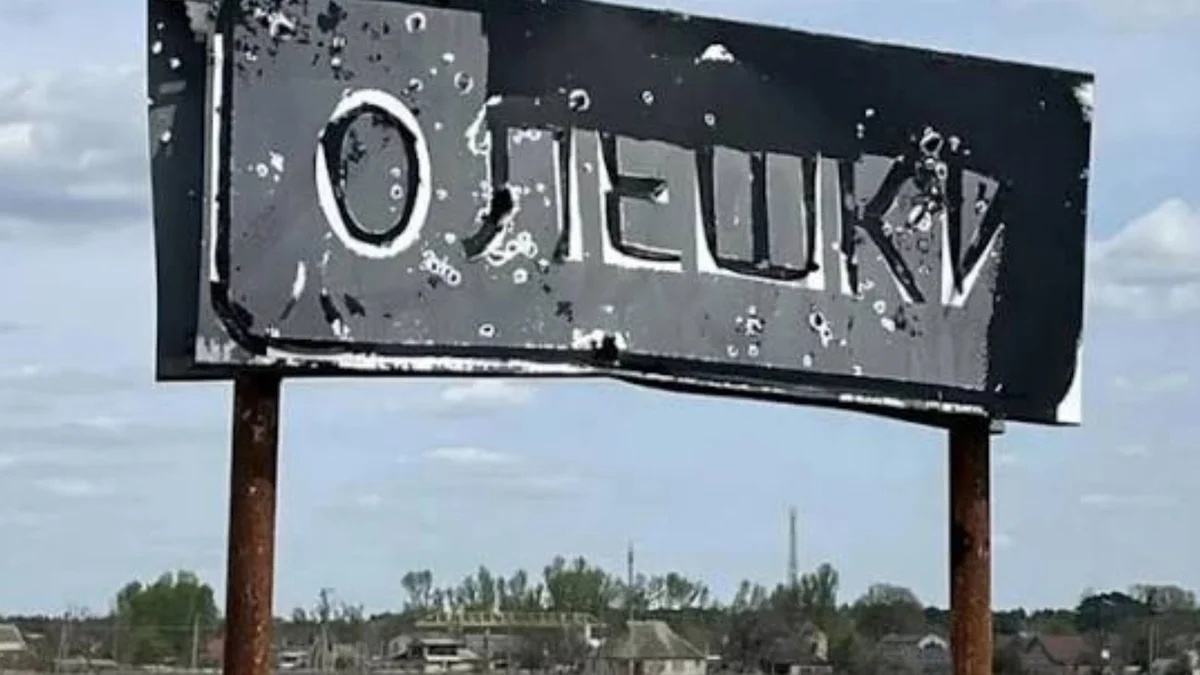
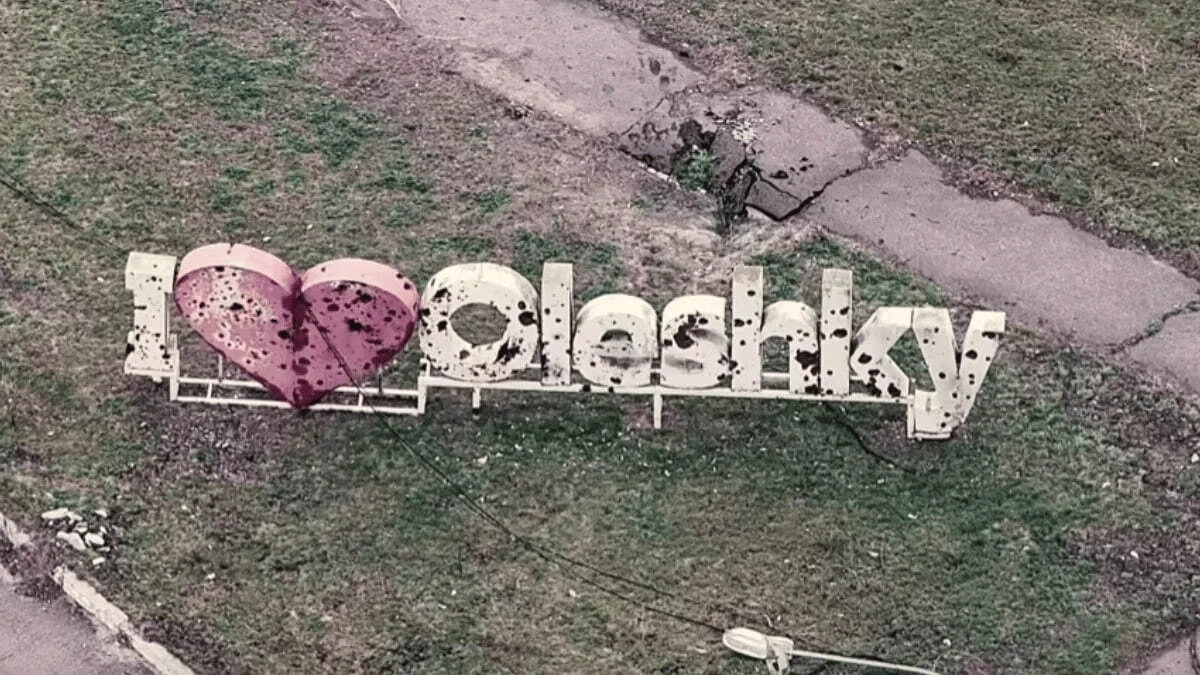
Oleshky was occupied by Russian forces from the very first day of the full-scale invasion—February 24, 2022. Before the war, about 25,000 people lived here. As of today, about 2,000 remain.
The city has become the site of one of the greatest tragedies in the Kherson region. In June 2023, Russian occupiers blew up the Kakhovka Hydroelectric Power Plant—and Oleshky, located on the left bank of the Dnipro River, was literally swept away by the floodwaters. Approximately 90% of the city was flooded, and the entire infrastructure was completely destroyed.
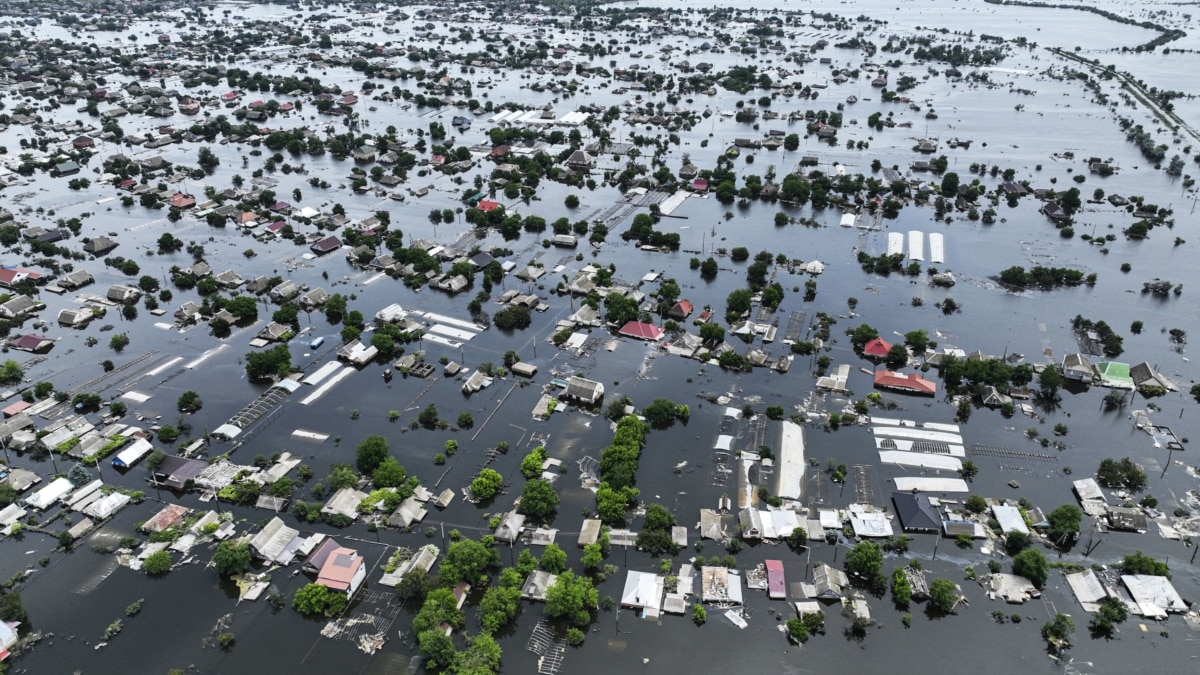
Since then, Oleshky has effectively ceased to be a city in the conventional sense. There was no gas, no electricity, and no centralized water supply. After the hydroelectric power plant was blown up, even the source of drinking water disappeared. Only one hospital remained, but it could no longer cope with the influx of patients: there was a shortage of medicine and equipment, and due to drone attacks, ambulances could not safely reach the patients.
And starting in May 2026, the situation escalated into a full-blown humanitarian disaster. The last food delivery by road took place on May 26. After that, the roads were completely mined, and supplies ceased. People survived as best they could: they cooked food over open fires, grew vegetables in gardens and even in their apartments, collected water from heating pipes, and so on. According to locals, people have been eating grass for the past two months. Those who tried to escape on foot had to traverse more than 20 km along the mined “road of death” to neighboring Radensk—and often lost their lives.
Ukraine tried to help in whatever way it could. Sometimes humanitarian aid was successfully delivered by drones. For example, on October 4 alone, nearly four metric tons (!) of cargo containing food and medicine were sent to Oleshky. But this was still woefully insufficient. Moreover, there is evidence that the occupiers confiscated humanitarian aid and even punished those who accepted it “for collaborating with the Kyiv regime.” And the cold weather was approaching. It became clear: the roughly 2,000 people who remained in Oleshky simply would not survive the winter.
That is precisely why the issue of Oleshky began to gain attention at the highest global levels. It reached the UN and the White House. And that is when Melania Trump took up the cause. On October 23, the White House announced that the First Lady had succeeded in negotiating a local ceasefire between Ukraine and Russia, applicable exclusively to Oleshky. The ceasefire took effect on October 27 and is set to last until November 1.
How the ceasefire works: silence that brings life back
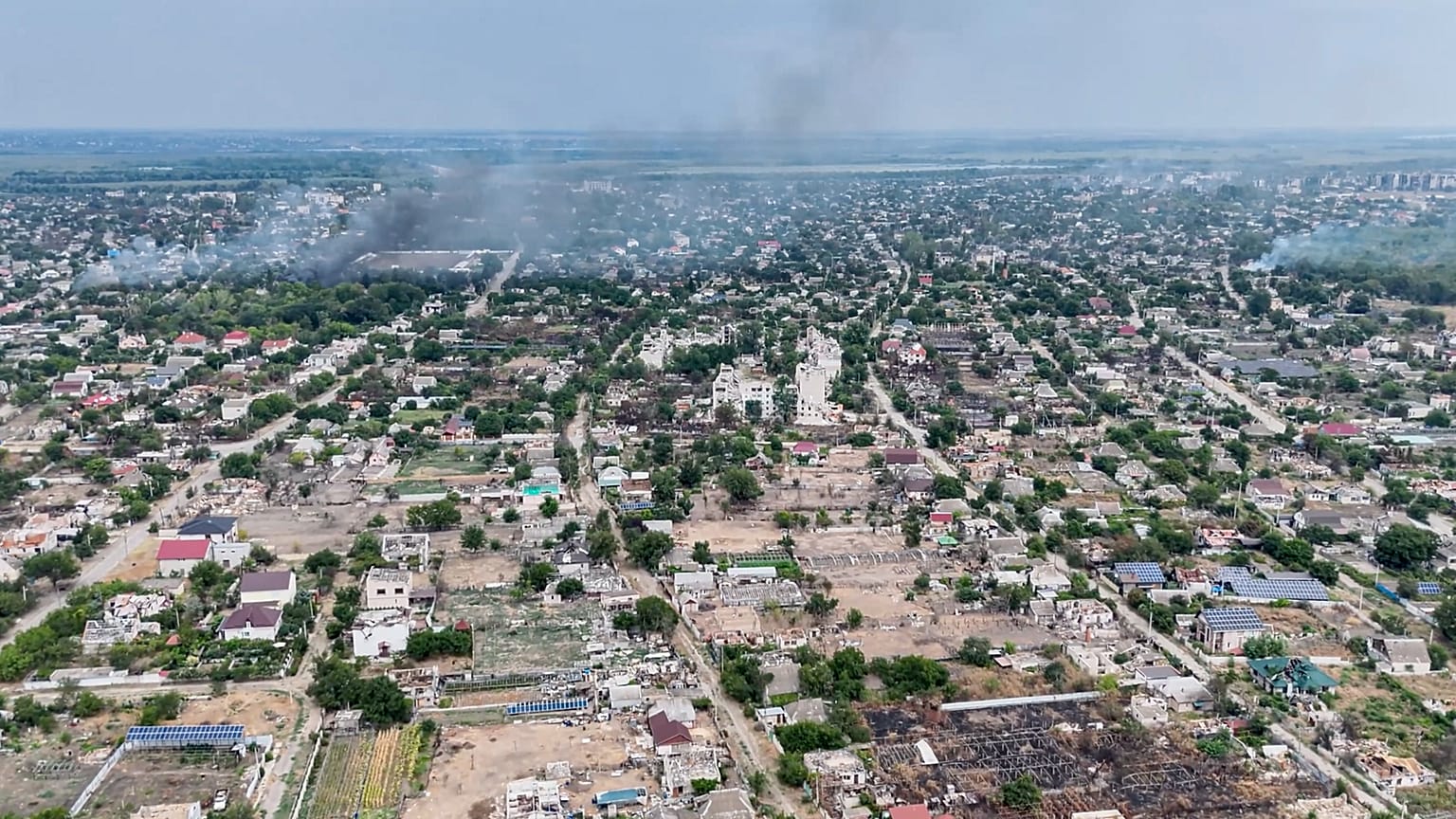
What is happening right now in the Kherson region is unprecedented. According to Dmytro Lubinets, the Verkhovna Rada’s Commissioner for Human Rights, for over 80 consecutive hours, neither side has violated the ceasefire even once. This is the longest ceasefire since 2022.
What does this mean in practice? First and foremost, demining: work is underway in Oleshky to clear routes necessary for the safe delivery of humanitarian aid and the evacuation of civilians. Dozens of passenger buses have been prepared on both sides. People who wish to leave will be able to choose their destination: either territory controlled by Ukraine or Russia. Humanitarian aid is available for those who decide to stay.
Since a direct route to Oleshky via the Dnipro River is impossible for security reasons — the river and its channel are mined — the only route agreed upon by the parties for the evacuation of civilians wishing to leave for Ukraine is via the territory of Belarus and Russia. Ukrainian Ombudsman Lubinets flew from Gomel, Belarus, to Anapa, Russia, in order to travel from there to Oleshky and personally escort its residents back to Ukraine via the same route: Anapa—Gomel—Ukraine. Lubinec is coordinating this mission together with his Russian counterpart, Yana Lantratova. Journalists from three countries—Ukraine, Russia, and the U.S.—are covering the process. When the Ukrainian delegation in Russia orders coffee in English at a gas station, it looks completely surreal, but it works.
But one of the most moving and telling parts of this story is Kherson. The city, located literally “across from” Oleshky (on the other bank of the Dnipro), has been methodically destroyed by the Russians all this time. FPV “safaris” targeting people, constant shelling, explosions—this was the daily reality for the people of Kherson. And now there is absolute silence there.

There hasn’t been a single shelling
in the past few days—and the city has literally come back to life. Streets that had been empty for years are now filled with residents, and the roads with cars. People are going out for walks, visiting relatives, returning to their apartments in the most dangerous neighborhoods, and so on. Huge lines of cars are forming at the entrance to Kherson. Locals say, “It feels like the war is over.” And that is perhaps the best description of what ordinary silence can do: it literally brings an entire regional center back to life almost instantly.
Oleshky as a Model of Peace: A Paradox That Turns Everything Upside Down
And here we come to the crux of this whole story. The Oleshky case is not just an important humanitarian operation. It is a paradox that turns all the key ideological narratives of this war upside down. The “existential” nature of the confrontation, its “eternity,” the “root causes of the conflict,” the “fascist Kyiv regime,” and so on — all of this is nothing more than various ideological constructs designed to explain to the population why they must fight endlessly.
But what do we see in Oleshky? We see that, with U.S. mediation, the parties have actually reached an agreement. They “simply stopped shooting.” Yes, this was preceded by complex negotiations, technical agreements, coordination, and so on. But in the end, how else can a ceasefire be secured, other than by simply stopping the shooting?
So the parties went ahead and stopped—and nothing bad happened! The sky didn’t fall. The universe didn’t collapse. Quite the opposite, in fact: Kherson instantly came back to life; thousands of residents of Oleshky, who had spent months literally in hell on the brink of survival, breathed a sigh of relief; demining is actively underway; evacuations are continuing; and the city is being supplied with humanitarian aid. Absolutely everyone stands to gain from the fact that, for over 80 hours now, no one has been injured or killed on this section of the front.
This is a wonderful and absolutely unprecedented example that proves that anything is possible if there is the political will. The war could end literally at any moment, at any minute. It all depends on the decisions of a few people—and first and foremost, of course, Vladimir Putin. They could simply stop firing, and the war—as a process of constant destruction and mutual annihilation—would end instantly. What would follow would be years of difficult and nerve-wracking political negotiations. But that is a thousand times better than simply killing each other endlessly.
If there were a desire, if there were the political will, Oleshky could mark the beginning of the end of this war. This is particularly symbolic, given that the occupiers seized the city on February 24, the very first day of the invasion, and over the past 4.5 years, the situation there has deteriorated into a humanitarian catastrophe, with locals dying of starvation. It would be symbolic if the Oleshky case itself became an example, and the ceasefire spread to other sections of the front.
However, everyone understands perfectly well that this will not happen. And on November 1, after a few joyful days of silence and peace, the sides will most likely resume shelling, destruction, and killing one another.
But the key point demonstrated by the situation in Oleshky is that all of this is entirely artificial. The war could be ended in literally one second, simply by issuing an order from both sides to cease fire. People will stop dying—and nothing will happen; the world won’t collapse because of it. On the contrary: everyone will simply be happy that the worst is finally behind them.
Expert
Opinions
Political scientist and director of the Ukrainian Institute of Politics Ruslan Bortnik says he is extremely happy for the residents of Oleshky and Kherson, as well as all the surrounding areas, that peace has been established there, at least for a few days. This model, according to the expert, shows that much of what was previously considered impossible is now possible.
“A full agreement between the parties on a truce is possible; a complete ceasefire without a single shot fired is possible. A visit by a Ukrainian political delegation led by Lubinets to Russian territory is also possible—without protests, without fanfare, without anything. Anything is possible if there is political will and political expediency. But we must understand that, to a large extent, what is currently happening around Kherson and Oleshky is a kind of demonstration for Trump, for Melania Trump, for the Pope, and for the international community as a whole. During this demonstration, both sides are trying to appear as peacemakers, as advocates of a peaceful settlement. In this way, they are fighting for their public, international, and diplomatic reputations.
But strategically, neither Ukraine nor Russia has yet developed joint, consensus-based models for a ceasefire. Therefore, a repeat of the Oleshky ceasefire in other sectors of the front is possible, but turning this into a full-fledged truce and a cessation of hostilities with the involvement of the U.S. administration and the international community is nearly impossible. Although the very fact of this ceasefire offers hope that the parties will still be able to reach an agreement in the future. As we can see, technically they are capable of implementing such a ceasefire. At the same time, it is also important to understand that the military is taking advantage of this ceasefire: forces are concentrating, reinforcing, and replenishing their ranks in these areas of combat, which threatens an even greater escalation after the ceasefire ends in the Kherson and Oleshky regions,” Ruslan Bortnik asserts.
Political analyst and director of the “Third Sector” Center, Andriy Zolotaryov, believes that the ceasefire in Oleshky clearly demonstrates the main point: ending the war requires political will and determination. This raises the question: Why not declare a ceasefire along the entire front line starting November 1? But here, everything stumbles over that very political will.
“In reality, Putin isn’t interested in ending the war. There are certain doubts about our president’s intentions to outlast Trump, but neither Zelenskyy nor Putin wants to provoke the American leader. Zelenskyy has realized that this could have very serious consequences for the country, while Putin stands to gain a potential bonus in the form of the dismantling of the sanctions regime, which, it seems, was proposed by American negotiators. It is likely this very desire—to ensure everything goes well with Trump—that ensured the success of Melania Trump’s mission. And indeed, for several days now, not a single shot has been fired. For the first time, a Ukrainian delegation has traveled to the occupied territory. And this is a clear demonstration.
Putin is, after all, inclined to secure the terms for ending the war that he desires—terms that would plant a time bomb for Ukraine. That is, so that the proposed peace terms would look like Ukraine’s complete surrender, with the expectation that this would undermine Ukraine from within. And then Putin would have every opportunity to bring about a “final resolution of the Ukrainian issue.” That is precisely why peace is unlikely to prevail on November 1, and the Oleshky case will be replicated along the entire front line. But the Oleshky case could indeed serve as a model for further actions—though only after a political decision has been made. “I think that ahead of us lie not only Abu Dhabi, but also Shenzhen, Miami, and the G20 summit. Then, perhaps, there will be some progress toward peace,” the expert noted.
Andriy Zolotaryov points out: Americans are very pragmatic people. They believe that if problems cannot be fully resolved, then the issue must be addressed at the micro level. And indeed, if a political decision is reached, the Oleshky case could serve as a model for ending hostilities along the entire front line.

In summary, the Oleshky case is arguably the most important and successful “peace experiment” since the full-scale war began. It proved what many did not believe: a ceasefire and its observance are entirely possible. Not just in theory, not just in someone’s plans on paper, but right here and now, on a specific section of the front line, with specific people who, for over 80 hours, have not heard explosions, have not been injured, and have not died. The “Oleshky Ceasefire” proves that “just stop shooting” is not a naive phrase, but a fully workable formula. Moreover: it may be the only workable formula.
But this very case also reveals another—tragic, inhumane, utterly dehumanizing—aspect of the process. Even when everyone can see that peace is possible, that it works, and that it brings relief to thousands of people—the political will to extend it is lacking. The Oleshky incident, unfortunately, will serve as yet another proof that the war continues not because it is impossible to stop, but because there is simply no desire to stop it.




