
Russia Is Creating Pretexts for Aggression Against NATO Countries — Foreign Ministry
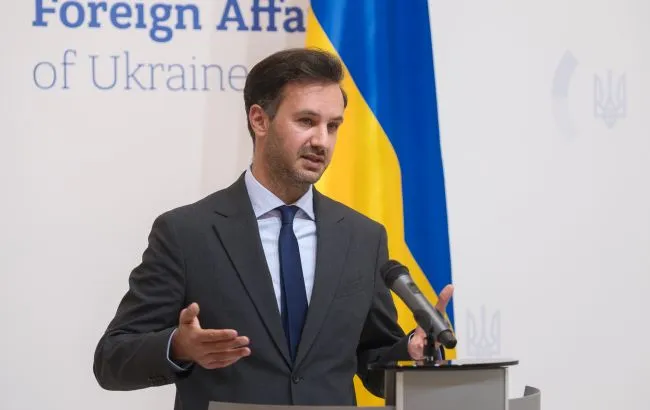
Russia is conducting information operations that could be part of preparations for a possible attack on countries on NATO’s eastern flank. This was stated by Georgiy Tykhyi, a spokesperson for the Ukrainian Ministry of Foreign Affairs, during the presentation of a report by the Center for Countering Disinformation. According to him, it is currently impossible to say whether Moscow will dare to launch a direct invasion, but signs that it is laying the groundwork for such an aggression are already visible.
Georgiy Tykhyi cited the Kremlin’s return to the rhetoric of diplomatic ultimatums as one of the alarming signs. Russia is once again promoting the idea of creating a new “European security architecture.” According to the diplomat, this rhetoric is reminiscent of the events of December 2021, when Moscow presented NATO with a series of demands regarding changes to the European security system.
At that time, the Kremlin effectively demanded that the Alliance’s military presence be rolled back to the state that existed prior to 1997. Specifically, Russia sought to limit NATO’s expansion and the Alliance’s military cooperation with countries that joined after that date. These demands concerned not only Ukraine but also other countries in Central and Eastern Europe. Moscow sought to renegotiate the security arrangements that had taken shape after the end of the Cold War.
Tikhyi believes that Russia’s current statements about the need for a new security system may be part of the same tactic. First, the Kremlin puts forward demands that are knowingly unacceptable to other countries; then, upon receiving a refusal, it can use that as a pretext for further aggression. In this way, Russia attempts to portray its own actions not as an attack, but as a supposedly forced response to the West’s refusal to comply with its conditions. “No one really knows whether there will be an invasion of these countries or not, but the fact that conditions are being created and certain preparations are underway in the media is absolutely clear,” the Foreign Ministry spokesperson emphasized.
Russia has already violated international agreements
Separately, Heorhiy Tykhyi pointed out that the current European security system already has an international legal foundation. Its principles are enshrined in several documents that Russia itself has signed. These include the 1975 Helsinki Final Act, the 1990 Charter of Paris for a New Europe, and the 1999 Istanbul Charter on European Security.
These documents define the basic rules governing relations between states. In particular, they enshrine the principles of sovereign equality, respect for territorial integrity, the inviolability of borders, and the right of every country to independently choose its own path of development and security alliances. They also call for the renunciation of the threat or use of force against other states.
According to Tykhyi, Russia itself violated the principles it had previously signed onto by launching an aggression against Ukraine. Therefore, the Ukrainian side views Moscow’s talk about the need to restructure European security as an attempt to shift responsibility for its own actions onto others. “What security? It has long existed; there is no need for any new European security architecture. It is enshrined in the Helsinki Final Act, the Paris Charter, and the Istanbul Charter. And Russia signed these three documents, but then violated them itself,” stated a representative of the Ukrainian Ministry of Foreign Affairs.
Ukraine urges partners not to ignore Russian rhetoric
The Ministry of Foreign Affairs emphasizes that Russian information campaigns must be taken seriously. Foreign Minister Andriy Sibiga has already raised this issue during international meetings with partners. The Ukrainian side urges its allies to pay attention not only to Russia’s military actions but also to its statements, propaganda campaigns, and the Kremlin’s attempts to shift the agenda of international discussions.
Officials in Kyiv believe that information operations may help Moscow shape the narrative it needs to justify its future actions. Through statements about alleged threats from NATO, Russia is attempting to create the image of an adversary that supposedly leaves it no other choice. Such rhetoric could be used to justify new demands, exert pressure on European states, or even lead to military escalation.
At the same time, the Foreign Ministry does not claim that an attack on NATO countries has already been decided. Tykhyi explicitly noted that it is currently impossible to predict with certainty whether Moscow will move from informational pressure to direct military aggression. However, the very fact that the groundwork is being laid, in the opinion of the Ukrainian side, should serve as a reason to assess the Kremlin’s actions more closely.
How Ukraine Envisions the Peace Process
Heorhiy Tykhyi also outlined Kyiv’s position regarding further diplomatic negotiations. Ukraine insists that discussions on a new European security architecture should not follow a Russian-dictated scenario, in which Moscow’s interests are prioritized over Ukraine’s security. The Ukrainian side believes that a ceasefire must first be achieved before moving on to the next stages of negotiations. According to Kyiv’s position, the sequence should be as follows: first, a cessation of hostilities in Ukraine; then, negotiations on security guarantees for Ukraine and the terms of a peaceful settlement. Only after that can a broader discussion take place on how to ensure the security of other European states.
The Ministry of Foreign Affairs emphasizes that new agreements must not be made at Ukraine’s expense, nor should Russia be allowed to dictate which alliances neighboring states may choose. After all, a country’s right to independently determine its foreign policy is one of the fundamental principles of international law. That is precisely why Kyiv is calling on its partners not to agree to Russian ultimatums and not to treat them as mere diplomatic proposals.
Consequently, the Ukrainian Ministry of Foreign Affairs views the Kremlin’s return to discussions about a new European security architecture as an alarming signal. Kyiv urges its allies to closely monitor Russian rhetoric and prevent information campaigns from becoming a pretext for new territorial claims and military aggression. This was stated by Georgiy Tykhyi, spokesperson for the Ukrainian Ministry of Foreign Affairs, during the presentation of a report by the Center for Countering Disinformation (CCD).
Russia is strengthening its military logistics infrastructure in regions near the borders of NATO member states and on the territory of Belarus. This was stated on November 18, 2026, by Yevhen Yerin, a representative of the press service of the Main Intelligence Directorate of the Ukrainian Ministry of Defense, during the presentation of the study “Models of Russian Information Pressure: From Ukraine to Europe.”
During negotiations with the U.S. regarding Ukraine, Russia proposed rolling back NATO to its 1997 borders in exchange for the withdrawal of Russian troops from the Kaliningrad Oblast.




