
The government is seeking solutions to ensure the stable operation of factories during power shortages
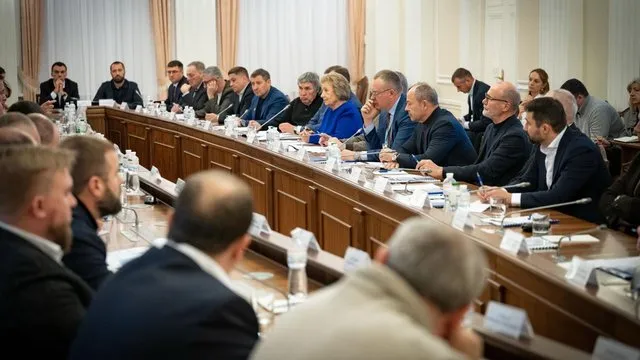
Ukrainian Prime Minister Serhiy Koretsky met with industry representatives to discuss how businesses are operating amid the electricity shortage. Key topics included the ability to maintain stable operations through electricity imports and in-house generation, access to loans, VAT refunds, and export issues. Following the meeting, the prime minister issued a series of directives to the ministries.
One of the main issues discussed at the meeting was the operation of industrial enterprises during power shortages. The government is seeking ways to ensure a stable power supply for manufacturing facilities that meet their own needs through electricity imports or their own generation sources. According to Serhiy Koretskyi, the Ministry of Energy is already working on amendments to the current regulations. The goal is to create conditions under which enterprises can continue operations even when there is a power shortage in the grid.
“The Ministry of Energy is working to improve the existing mechanisms that regulate the operation of enterprises during power shortages. The goal is to create conditions for the stable operation of enterprises that cover their consumption through electricity imports and/or their own generation,” the prime minister wrote on his Telegram channel.
Loans and VAT Refunds
Industrialists also drew attention to the limited access to credit outside the state’s “5-7-9%” program. In response, Koretsky instructed the Ministry of Economy to hold a meeting with state-owned banks and find a solution that would help enterprises obtain financing more quickly. In particular, the government is exploring the possibility of launching a separate loan program worth up to 1 billion hryvnia. It would provide a 5.5% interest rate subsidy. The exact terms and launch date of the program have not yet been specified.
Another topic of discussion was value-added tax (VAT) refunds. Earlier, due to delays in international funding, the government temporarily restricted certain expenditures. This also affected payments to businesses. According to the prime minister, most payments have already been resumed. In October, businesses received 25.9 billion hryvnia in VAT refunds, and in November—another 5.6 billion hryvnia. All payments that had previously been suspended due to a shortage of funds in the treasury account have now been made in full.
Exports and Product Transportation
During the meeting, industrialists also raised the issue of exports. In particular, businesses need more stable and faster ways to deliver products to buyers abroad. Koretsky instructed the Ministry of Infrastructure to explore the possibility of allowing private locomotives to operate on Ukrzaliznytsia’s railways. This issue concerns expanding freight transportation capacity and identifying additional resources for delivering industrial products.
The prime minister also emphasized the need to streamline cargo inspections at border crossing points. These changes should help reduce border crossing times and minimize delays during export. The situation in the metallurgical industry was discussed separately. According to Koretsky, Ukraine has intensified negotiations with the European Union regarding an increase in quotas for Ukrainian metal products. The parties are also working on issues related to the Carbon Border Adjustment Mechanism (CBAM).
This mechanism involves additional payments for carbon emissions generated during the production of certain goods imported into the EU. Its implementation is significant for Ukrainian steel companies, as it could affect the terms under which they sell their products on the European market.
Support for Ukrainian Manufacturers and Insurance Against War Risks
Another topic of discussion was government support for Ukrainian manufacturing. Koretskyi stated that localization will continue to be one of the tools used to assist domestic enterprises. The government also plans to extend the “Made in Ukraine” policy programs into 2027. According to the prime minister, funding for these programs has been allocated in the draft state budget for next year, despite the state’s limited financial resources.
At the end of the meeting, participants discussed the creation of a war risk insurance fund. Its launch is planned for 2027. This mechanism is intended to help enterprises protect their property and production from the potential consequences of Russian attacks. The government is currently developing the fund’s operational model and exploring potential sources of funding. Detailed insurance terms and the procedure for companies to participate have not yet been announced. This was reported by Ukrainian Prime Minister Serhiy Koretskyi following a meeting with industry representatives.
In Ukraine, emergency power outages can be implemented and lifted several times an hour. The reason is the constant Russian attacks on energy infrastructure, which cause the situation in the power grid to change rapidly. DTEK explained why energy providers have to adjust the restrictions so frequently.
Kyiv Mayor Vitali Klitschko responded to President Volodymyr Zelenskyy’s statements regarding the capital’s insufficient preparation for the heating season.




