
Construction of new reservoirs in occupied Crimea has been halted
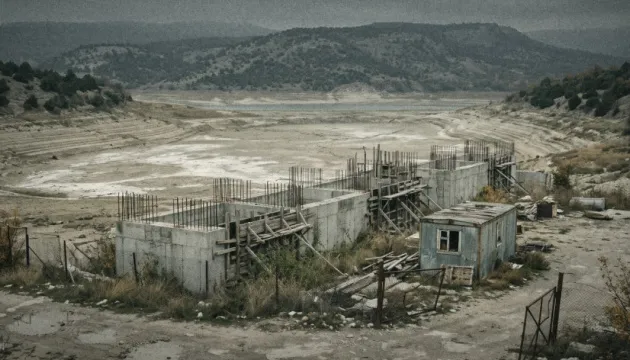
The shortage of fresh water is worsening in the temporarily occupied Crimea, as the occupying administration has effectively halted the construction of new reservoirs due to a lack of funding and corruption. This was reported on November 18, 2026, by the Main Intelligence Directorate of the Ministry of Defense of Ukraine, according to Ukrinform.
Previously, the occupying authorities had planned to build two large artificial mountain-type reservoirs on the southern coast of the peninsula — Soniachnohirsk (on the Ulu-Uzen River) with a capacity of 8.6 million cubic meters and Martovskoye (on the Marta River) with a capacity of 6.5 million cubic meters. These facilities were intended to supply water to the Yalta and Alushta regions. However, due to cuts in Russian budget allocations for the occupied territories, both projects have faced a severe shortage of funds, and their commissioning within the specified timeframes has been derailed.
According to intelligence reports, the situation is complicated by the embezzlement of budget funds and engineering miscalculations. The cost estimate for the Soniachnohirsk Reservoir has increased significantly over two years, reaching several tens of billions of rubles. At the same time, the Martovsky Reservoir project has been sent back for revision on multiple occasions due to errors in assessing the geological stability of the slopes and the high risk of landslides after the reservoir is filled — at the site, they had only managed to clear the forest and carry out initial earthwork. The water pipeline to Feodosia and Kerch from the Nizhyn, Novohryhorivka, and Prostornensk underground water intakes also remains unfinished.
The Main Intelligence Directorate notes that, due to rising military expenditures, Moscow is systematically cutting funding for the occupation program for the development of Crimea and Sevastopol. As of the end of October 2026, expenditures under this program totaled 88 billion rubles, which is 22% less than last year’s figure (112.9 billion rubles), and further budget cuts are planned for 2027–2029.
Against the backdrop of deteriorating infrastructure, the occupation administration continues to haphazardly pump water from underground wells, leading to its mineralization and a worsening of the environmental situation on the peninsula.
Source: Main Intelligence Directorate of the Ministry of Defense of Ukraine.
Russia’s occupation policy is exacerbating the water and environmental crisis in Crimea. The peninsula is rapidly losing its strategic reserves of fresh water, and attempts to compensate for the shortage by drawing on underground sources threaten to deplete aquifers, cause soil salinization, and lead to desertification.
Recently, the “Crimean Titan” chemical plant, located in occupied Armiansk, suspended production. The Russian occupation administration attributes the shutdown to an emergency situation but has not provided any details. Meanwhile, experts link the plant’s shutdown to the energy crisis on the Crimean Peninsula.




