
Koretsky urged businesses to prepare for the worst due to the intensification of Russian attacks
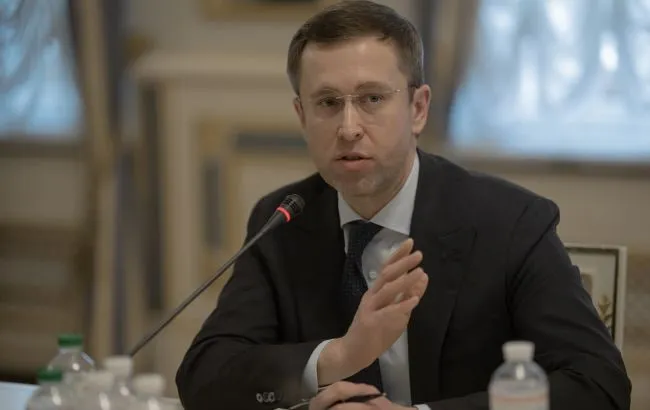
Russian attacks have caused more than $7.7 billion in damage to the Ukrainian economy. Prime Minister Serhiy Koretsky urged business owners to prepare for the worst-case scenario and plan in advance how to resume operations in the event that their production facilities are damaged or destroyed.
According to Koretsky, some business owners hope that Russian strikes will not affect their businesses or industries. However, the prime minister advises against relying on such a scenario and instead recommends seeking alternative production sites in advance, negotiating with partners and suppliers, and preparing facilities for the possible relocation of businesses.
According to Koretsky, during his discussions with business owners, he noticed that some businesses are hoping that Russian strikes will not affect their specific companies or industries. The prime minister urged them not to rely on such a scenario and to plan in advance how to respond in the event of damage to or destruction of production facilities.
“I would strongly urge and recommend planning for the most critical scenario,” he emphasized.
Koretsky advised companies to determine in advance where production could be resumed if their main facility were to be struck.
“Think ahead about alternative production sites: who you can partner with, where you can produce a particular private label product—if we’re talking about consumer goods—in case your facility is hit,” he added.
Entrepreneurs are also advised to discuss alternative cooperation options with suppliers in advance—particularly regarding imported goods—and, if possible, to enter into framework agreements.
Another step is to look for backup facilities where the business can be relocated or operations can be resumed.
“It’s better to be prepared for this—and have it not happen—than to find yourself in an unexpected situation,” the prime minister emphasized.
What losses has Ukraine’s economy suffered?
According to data cited by Koretsky, enemy strikes have already caused more than $7.7 billion in damage. More than 1 million square meters of real estate in the public and private sectors have been damaged or destroyed.
Among the sectors that have suffered significant damage, the prime minister cited energy, metallurgy, logistics, manufacturing, and retail.
Due to these losses, the government expects that by the end of the year, the state budget will fall short of its targets by approximately $1.5 billion.
“Given these losses and the impact of the attacks, we can already see that by the end of the year, the state budget will fall short of its targets and projections by approximately $1.5 billion. This is the baseline forecast we have as of today,” Koretsky explained.
How the government plans to support businesses
Despite financial difficulties, Ukraine’s economy continues to function, and the government intends to continue supporting businesses. According to the prime minister, the state’s resources are limited, but the government continues to allocate funds for preferential loans, grants, and subsidies.
Koretsky explained that businesses—particularly small and medium-sized companies—need assistance to remain resilient and counter the effects of Russian attacks. That is why the government is not abandoning its support programs, even amid a challenging budgetary situation.
In particular, the “Affordable Loans 5-7-9%” program will continue. Since its launch, entrepreneurs have received loans totaling 580 billion hryvnias. Currently, the outstanding principal balance on these loans amounts to approximately 200 billion hryvnias.
In addition, the government previously approved a decision allowing large businesses to receive preferential loans of up to 2 billion hryvnias per group of companies at an interest rate of about 10%.
For 2026, the budget initially allocated 18 billion hryvnias for the “Affordable Loans 5-7-9%” program. Now the government expects funding to increase to 22 billion hryvnias by the end of the year. To achieve this, an additional 4 billion hryvnias must be secured.
“We currently have a shortfall of four billion, but one way or another we’ll cover it, because we believe this is one of the fundamentally important and effective programs that truly supports businesses,” Koretskyi noted.
How compensation for losses caused by Russian attacks will work
Separately, the prime minister emphasized the need to create a mechanism for insuring against war risks and compensating for losses caused by Russian attacks.
One of the proposed options involves creating a special fund with an initial government contribution of $1 billion. It is expected that international partners will be able to double or triple this amount.
“How will this work going forward? It’s a simplified procedure. Compensation should be paid within 30 days of filing a claim. And the premium for this insurance risk should be very basic, symbolic—we’re aiming for about 2 percent. The maximum compensation for damages will be approximately $5 million per claim,” Koretsky explained.
At the same time, the source of funding for the fund has not yet been finalized. In particular, the proposal to raise the value-added tax from 20% to 21% to finance the fund does not yet have sufficient support among representatives of large and medium-sized businesses or in parliament.
Koretsky stated that the government continues to seek an alternative financing mechanism.
This was stated by Ukrainian Prime Minister Serhiy Koretsky, as reported by Interfax-Ukraine.
As a reminder, one in three businesses in Ukraine is on the verge of closing.
Businesses in Ukraine are sounding the alarm over a shortage of workers.
In the first six months of 2026, Ukrainians paid 94.2 billion hryvnia in military levies to the state budget. This is nearly 26% more than during the same period last year. The largest amounts came from taxpayers in Kyiv, Dnipropetrovsk, Lviv, and Kharkiv regions.
Large Russian businesses have called on the government to devalue the ruble instead of introducing a tax on excess profits.




