
Russia has recruited nearly 46,000 foreigners from 151 countries to fight in the war against Ukraine
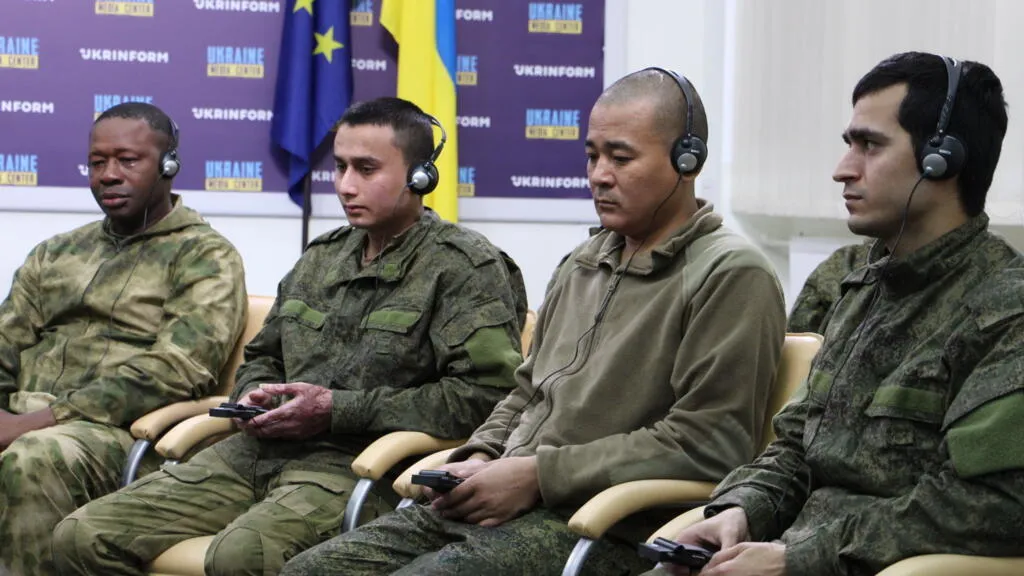
As of October 1, 2026, 45,959 foreign nationals from 151 countries and unrecognized territories who had signed contracts with the Russian Armed Forces had been identified. A survey of foreign prisoners of war revealed that nearly half expected to receive Russian citizenship.
Brigadier General Dmytro Usov, secretary of the Coordination Headquarters for the Treatment of Prisoners of War, announced the new data during the international conference “Crimea Global. Understanding Ukraine through the South.” Information about foreigners who have signed contracts with the Russian army was compiled by the “I Want to Live” project.
Recruitment of foreigners is gaining momentum
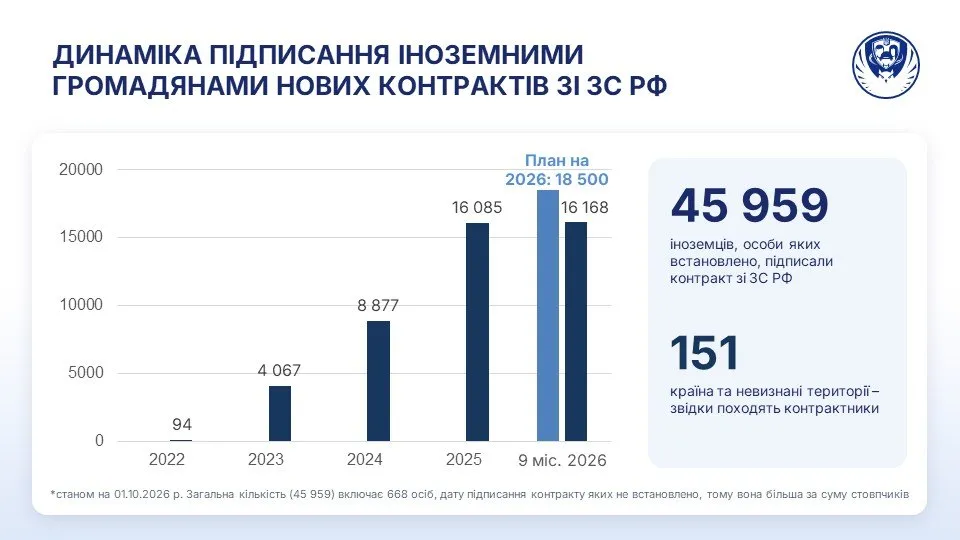
According to the data, the number of identified foreigners who signed contracts with the Russian Armed Forces has been increasing every year:
- in 2022—94 people;
- in 2023—4,067;
- in 2024—8,877;
- in 2025 – 16,085;
- in the first nine months of 2026 – 16,168.
In the first three quarters of 2026, Russia recruited more foreigners than in the entire previous year. The Russian government’s plan for 2026 is to recruit 18,500 contract soldiers from abroad. Currently, according to estimates by the Coordination Headquarters, the Russian army is being reinforced by approximately 1,800 foreigners each month.
If the recruitment rate remains unchanged, Russia could reach its target as early as November. By the end of the year, the number of new foreign contract soldiers could rise to 21,500, according to the headquarters’ forecast.
According to the “I Want to Live” project, the largest number of foreigners were recruited in Uzbekistan, Tajikistan, and Belarus. At the same time, more active recruitment of citizens is being observed in countries in Africa and Latin America.
Specifically, in the first nine months of 2026, 1,449 Colombian citizens, 699 Burundian citizens, 530 Zimbabwean citizens, and 503 Peruvian citizens signed contracts with the Russian army.
A survey of foreign prisoners of war conducted by the “I Want to Live” project revealed that nearly half of the respondents signed a contract in order to obtain Russian citizenship. 46.7% of those surveyed cited this as their motivation.
At the same time, 28% stated that they did not know they would be fighting against Ukraine. Another 41.4% reported that they were recruited through military registration and enlistment offices and recruitment centers. These findings indicate the involvement of Russian state agencies in recruiting foreigners for the war.
The survey also documented the circumstances of their capture and the respondents’ attitudes toward a possible prisoner exchange. According to the data, 48.8% of foreign prisoners of war were captured after being wounded, and 79% want to return to Russia as part of an exchange.
Among those surveyed are some who expected to receive a Russian passport, some who deny having known about their future participation in the war against Ukraine, and some who hope to return home through an exchange. At the same time, the headquarters’ statement does not specify the number of survey participants, so these results cannot be automatically generalized to all foreigners fighting in the Russian army.
The headquarters is calling on the governments of countries whose citizens have ended up in the Russian army and been taken prisoner by Ukraine to increase diplomatic pressure on Moscow. Russia, the headquarters emphasizes, must be held accountable for the fate of the people it has drawn into the war against Ukraine and must facilitate their return home.
Earlier, soldiers from the Third Corps showed footage of combat and prisoners of war during Operation Vivaldi.
A captured Russian soldier stated that he had been in an intimate relationship with his own sister for years.
A captured Wagner Group fighter described crimes committed by Russians against civilians in Mali.




