
Four times as many people want to leave Oleshky for Ukraine than for Russia
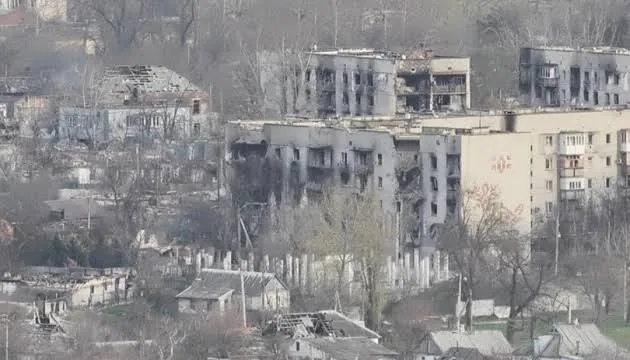
Four times as many people want to leave the temporarily occupied town of Oleshky for territory controlled by Ukraine than for Russia. According to Russian military correspondent Romanov, 17 buses are planned to transport those wishing to go to Ukraine, while only four are scheduled to head toward Russia. He also claims that the Russian side allegedly intends to make it appear as though more buses are heading to Russia by hiding empty passenger compartments behind curtained windows.
In the temporarily occupied town of Oleshky in the Kherson region, significantly more people want to leave for territory controlled by Ukraine than for Russia. This was reported by Russian military correspondent Romanov. According to him, the number of people wishing to travel to Ukraine is approximately four times greater than the number planning to leave for Russia. Romanov states that 17 buses are to be deployed to transport people to Ukraine. In contrast, only four are planned to be sent toward Russia. According to him, this disparity allegedly does not sit well with the Russian side.
The military correspondent also stated that the occupiers may try to conceal the actual number of passengers traveling to Russia. To do this, he said, they plan to display more buses than necessary and cover their windows with curtains. This would make it harder for outside observers to see that the vehicles might be empty inside. Information about this possible scheme comes solely from Romanov’s report at this time. There is no independent confirmation of these plans. Similarly, complete data on the number of people who have actually left the city in each direction has not yet been released.

However, even the ratio cited by the Russian military correspondent shows that among those wishing to leave Oleshky, significantly more people want to go to territory controlled by Ukraine. According to him, a much smaller number of residents are choosing to go toward Russia. Oleshky has been under Russian occupation since the first months of the full-scale invasion. The city is located on the left bank of the Dnipro River, across from Kherson. Due to hostilities, shelling, and the occupation regime, local residents have found themselves in difficult circumstances. Leaving such settlements often depends on the security situation, the availability of transportation, and the ability to pass the necessary checks.
Against this backdrop, the report on the number of people wishing to leave for Ukraine draws particular attention. It contradicts the Russian propaganda narrative, which claims that the occupied territories are supposedly voluntarily choosing Russia. At the very least, the figures cited by Romanov point to a different trend: among those currently seeking an opportunity to leave Oleshky, the majority are people who want to go specifically to territory controlled by Ukraine. At the same time, this data does not provide grounds for drawing conclusions about the political views of all the city’s residents. However, they do show that the Russian narrative of a mass desire among the population to live under Russian rule is not corroborated even by isolated reports from Russian media outlets. This is reported by
Humanitarian mission in Oleshky: 25 buses have been prepared to assist and evacuate civilians.
In the temporarily occupied town of Oleshky in the Kherson region, demining of designated routes has been completed and the humanitarian convoy is ready for departure, according to Dmytro Lubinets, the Verkhovna Rada Commissioner for Human Rights.
Prior to this, a delegation comprising representatives from Ukraine, the U.S., and Russia arrived at the location from which they plan to deliver humanitarian aid to Oleshky.
Dmytro Lubinets, the Verkhovna Rada Commissioner for Human Rights, agreed to travel to the temporarily occupied town of Oleshky in the Kherson region via Russian territory, as there is currently no other safe route for the humanitarian mission. The Ombudsman’s Office explained that the route across the front line is dangerous, and crossing the river is impossible due to landmines.
Russian troops may use the temporary ceasefire in the occupied town of Oleshky to move equipment and troops closer to Kherson. The German newspaper Bild reported on this threat, citing Ukrainian military personnel. According to their assessments, Russian units have stepped up their movements on the left bank of the Dnipro, but there is currently no independent confirmation of preparations for an offensive.




