
The Ukrainian Armed Forces carried out a covert operation in the Kharkiv region and liberated 204 square kilometers
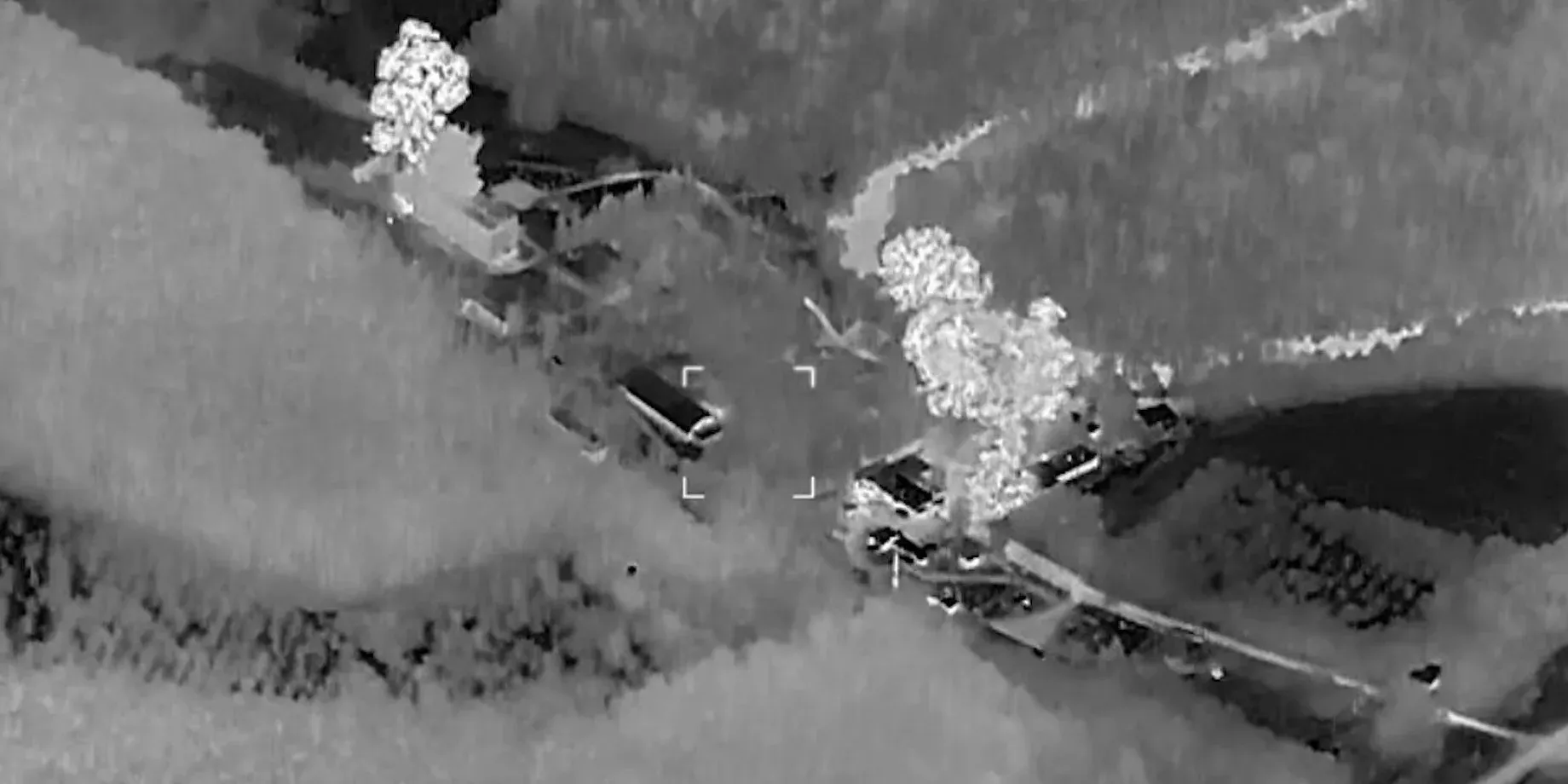
The Ukrainian military carried out an offensive operation called “Bear Trap” in the Kharkiv region and regained control of 204 square kilometers of territory and 14 villages. The fighting took place amid a media blackout, and Ukrainian defenders used Abrams tanks to deceive Russian troops. Soldiers from the 475th Separate Assault Regiment “Code 9.2” provided details of the operation on November 20, 2026.
The operation took place in the north of the Kharkiv region, near the border with Russia. Specifically, it involved the area around the settlements of Bereznyky, Ivashkyne, Vilkhuvatka, Shevyakivka, and neighboring villages. It was there that Russian forces attempted to establish a foothold and advance deeper into Ukrainian territory. On November 20, the 475th Separate Assault Regiment Code 9.2 released a video approximately 20 minutes long. In it, the soldiers showed how they prepared for and carried out the operation, and explained what enabled them to halt the Russian advance.
According to military sources, the Russian army launched its own operation, codenamed “Bear’s Corner,” on June 29, 2026. Its goal was to cross the border and advance further into Ukrainian territory. Russian troops gradually advanced into this area, attempting to establish a foothold in populated areas. On September 10, a Ukrainian regiment was tasked with clearing the area. However, instead of launching direct attacks on enemy positions, the troops opted for a different tactic. They began advancing from the flanks to encircle the Russian units and cut them off from their supply lines.
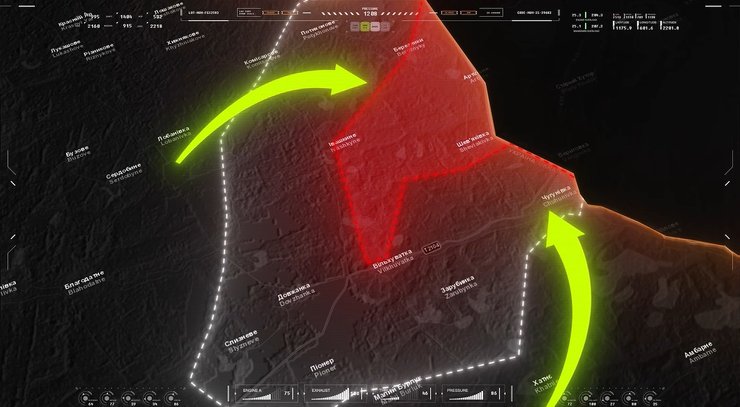
The published diagram shows how Ukrainian assault groups advanced from the north and south. As a result, Russian positions found themselves caught between the two prongs of the Ukrainian offensive. It was this maneuver that gave the operation its name, “Bear Trap.”
How Abrams Tanks Helped Lure the Russians into a Trap
One of the key elements of the plan was a diversionary maneuver using tanks. The Ukrainian military deployed T-80 and Abrams tanks to give the Russians the impression that the main axis of the offensive was passing through the village of Vilkhuvatka. While the enemy focused its attention on this area, Ukrainian infantry advanced from other directions. In this way, they were able to take advantage of the movement of Russian forces and strike at their reserves.
Firepoint drones were also used to strike targets in the rear. According to the soldiers, they used them to attack areas where Russian troops were concentrated, personnel positions, and launch sites for drones. “It was a diversionary maneuver to allow the infantry to advance. And it worked. After that, we launched 18 Firepoint drones at the reserves that had been pulled back from the flanks. We targeted a wide variety of objectives: enemy concentrations, pilot takeoff points, and troop locations. At the same time, assault groups broke through on the left and on the right—encircling the enemy. That was the ‘Bear Trap,’” the military said.
As a result of the operation, Ukrainian defenders regained control of 204 square kilometers of territory and 14 settlements in northern Kharkiv Oblast. That was precisely where Russian units had previously attempted to establish a foothold.
What the combat maps showed
Data from the DeepState analytical project also confirms the changes in this section of the border. On July 27, 2026, analysts first noted the appearance of Russian troops near the village of Artilne. At that time, 4.67 square kilometers of territory were added to the red zone. Subsequently, the gray and red zones on the map gradually expanded. Changes were recorded through October 21. The report notes that no more recent data was available at the time of publication.
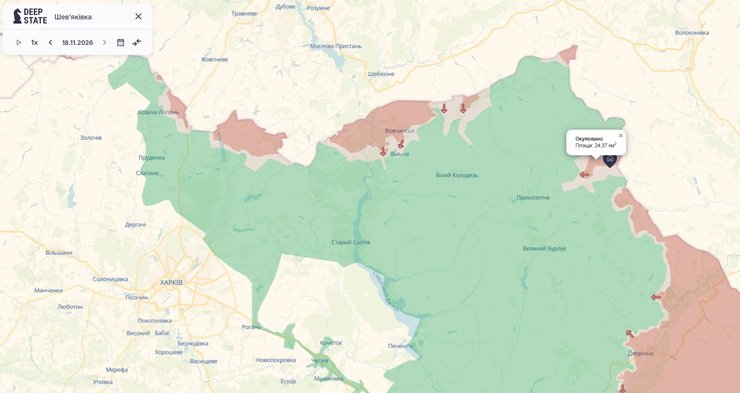
This area is located approximately 45 kilometers west of Vovchansk and 80 kilometers from Kharkiv. The map published by DeepState also shows the front line near Shevyakivka as of November 18.
What other offensive operations did the Ukrainian Armed Forces carry out in 2026?
“Bear Trap” was not the only offensive operation by the Ukrainian military that came to light in the fall of 2026. Earlier, reports emerged of Operation “Vivaldi” in the Lyman sector. It consisted of four phases. During that operation, Defense Forces troops regained control of over 100 square kilometers of territory. Andriy Biletsky, then commander of the 3rd Army Corps, provided details at the time. One of the Ukrainian military’s objectives was also to stop Russian groups from infiltrating the rear of the Defense Forces.
Another large-scale operation took place in the Oleksandrivka sector. It involved soldiers from several assault regiments and other units of the Armed Forces of Ukraine. The offensive began in January, and its results were assessed in August 2026. During this time, the Ukrainian military regained control of approximately 400 square kilometers of territory. Soldiers of the 475th Separate Assault Regiment spoke about Operation “Bear Trap” only after it had concluded. A video detailing the combat operations
">was published on November 20.Soldiers of the 44th Separate Artillery Brigade destroyed four camouflaged Russian artillery pieces in the Huliaipole sector. Among the destroyed equipment were two 2A36 “Hyacinth-B” guns and two 2A65 “Msta-B” guns.
The day before, crews of Ukrainian Su-27 fighter jets struck a location where Russian drone operators were stationed in the town of Bilytske, Donetsk Oblast. The operation was carried out by pilots of the Ukrainian Air Force.
Throughout November 16 and into the night of November 17, units of the Ukrainian Defense Forces carried out a series of successful strikes against the Russian army’s reconnaissance and electronic warfare assets. This was reported by the General Staff of the Ukrainian Armed Forces.
On November 17 and 18, the Ukrainian military struck Russian military logistics facilities in the Luhansk and Kursk regions and confirmed damage to three Russian military transport aircraft. One of the aircraft—an Il-76—sustained very significant damage.




