
Russian "Molniya" rockets in the Kramatorsk area carry up to 20 kg of explosives
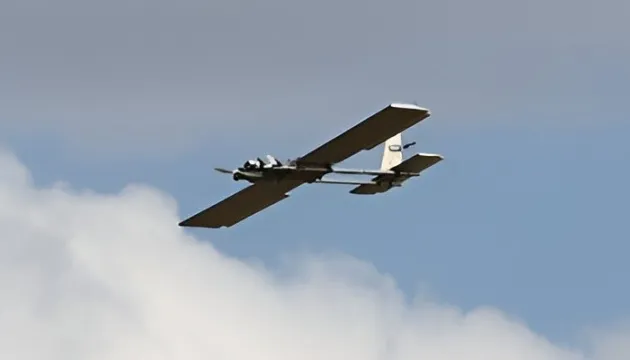
Near Chasovoy Yar in the Donetsk region, Russian troops have stepped up assaults by small groups. They primarily choose cloudy and rainy weather for their attacks, shelling Ukrainian positions with guided aerial bombs and attacking with various types of drones. The “Molniya” drones pose a particular danger, as their newer models can carry up to 20 kilograms of explosives.
Russian forces are attempting to advance during inclement weather. When the sky is overcast and it is raining, it is more difficult for the Defense Forces’ reconnaissance drones to detect the enemy. The Russians are counting on this as they try to approach Ukrainian positions unnoticed.
They deploy small infantry groups for assaults. The soldiers move with minimal equipment and carry almost no food or ammunition. They rely primarily on speed and the support of drones, which accompany the assault troops and deliver necessary supplies to them. “The emphasis is on lightness, which is why the enemy doesn’t carry much ammunition or provisions. They go out with an assault rifle, four loaded magazines, and a minimal amount of food. They’re guided by a drone, and it’s the drone that provides their supplies,” Petrychak explained.
He noted that the Russians are trying to advance by relying on the sheer number of groups. They’re counting on the Ukrainian military being unable to detect all the assault troops. Even if most of the groups are eliminated, individual fighters may manage to reach the positions and hide in shelters. “The enemy is advancing; there are many of them. And they’re banking on the fact that not all of them will be found or killed. Out of 10 groups, perhaps one has slipped through, holed up in a basement, and is just sitting there,” said the representative of the 24th Brigade.
In addition to infantry attacks, the Russian army is actively using guided aerial bombs, artillery, and drones in this sector. Among them are FPV drones—particularly those operated via fiber-optic cable—as well as fixed-wing drones.
“Molniya” drones pose a particular threat. According to Petrychak, these drones have an unusual design: on one end, their aluminum tube is sealed, while the other end remains open. Thanks to this design, the drones can be launched from various locations, including buildings damaged by Russian shelling. “On one end, the aluminum tube is sealed; on the other, it’s hollow. It’s precisely through these air tubes that it can be launched from anywhere. The enemy launches these drones from damaged high-rises, from apartments, and from windows with broken glass,” the military officer explained.
Despite the drone’s light weight, it can carry a powerful warhead. According to Petrychak, one variant of the “Molniya” is equipped with an anti-tank mine weighing about 10 kilograms. Newer versions carry two such mines, meaning the total weight of the explosive payload reaches 20 kilograms. “This drone is very light, but it carries an anti-tank mine weighing 10 kilograms. And the next generations of this drone carry two such mines—20 kilograms,” noted the representative of the 24th Mechanized Brigade. Ivan Petrychak, head of the communications department of the 24th Separate Mechanized Brigade named after King Danylo, spoke about the situation on this section of the front line during a broadcast on “Suspilne News.”
Russian troops are effectively attacking Ukraine with strike drones around the clock. During the day, the occupiers launch more than 100 drones, and at night, that number can reach 200.
As a reminder, Russia carried out one of its most powerful attacks on Ukraine, firing up to a hundred missiles, according to Ignat.
On the night of November 20, Russian forces launched a massive attack on Kryvyi Rih using jet-powered drones. The strikes caused significant damage to infrastructure, including a gas station, and left part of the city without power. There were no fatalities or injuries.
As a reminder, Russian jet drones attacked Lviv and the Lviv region. Explosions were heard several times over Lviv, and air defense forces repelled the attack, according to Regional Military Administration Head Maksym Kozytskyi and Mayor Andriy Sadovyi.




