
Up to 30% of cactus species could go extinct due to droughts — RMF24
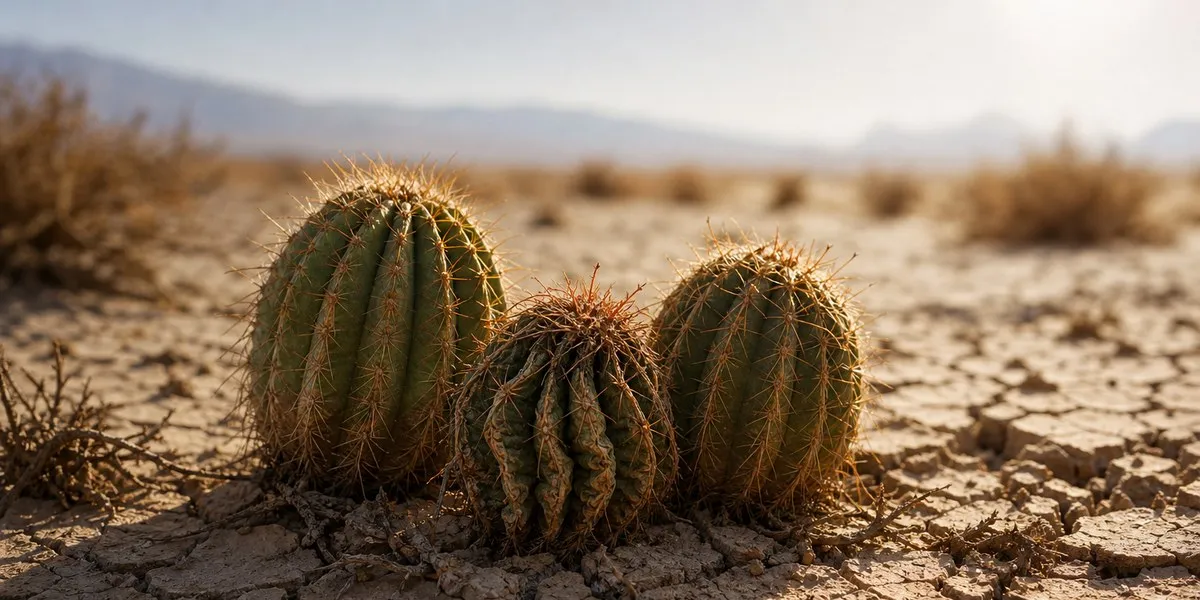
By the end of the century, up to 30% of cactus species could become extinct because of increasingly prolonged and severe droughts. This forecast is contained in a study published in the journal Nature, RMF24 reports.
The cactus family includes more than 1,900 species, most of which grow only in the Americas. Despite these plants' adaptation to arid climates, rapid climate change poses a risk to them. As Pablo Guerrero Martín of the University of Concepción in Chile explained, growing evidence suggests that cacti are not protected from the consequences of climate change.
Extreme droughts change the forecast
The authors of the study noted that previous forecasts for plants mainly considered average temperatures and average annual precipitation. For cacti, the duration and severity of drought are also important. High temperatures accelerate soil drying and increase plants' need for water.
Scientists analyzed more than 688,000 cactus observations and prepared projections for 993 species through the end of the century. Models accounting for extreme droughts showed that the suitable habitat range would shrink for 66% of the species studied. In models that did not account for severe droughts, this figure was 55%.
More current news is available on the UA.News Telegram channel Telegram.
The greatest losses are projected in the Americas
If cacti are unable to spread to areas with a more favorable climate, 84–85% of species could lose suitable conditions for survival. Even if they can spread over distances of up to 100 kilometers, 69–72% of the studied species would remain at risk, according to the authors' estimates.
More than half of cactus species could lose at least a quarter of their currently suitable areas, while for 25–35% of species, such losses could reach 80%. The largest decline in the number of species is projected in Chile, near the Chilean-Argentine border, in Central America, Peru, Ecuador, and central Colombia. In some areas of Central America, on Venezuela's coast, and in northwestern Brazil, the number of species could decline by more than half.
Currently, according to estimates by the International Union for Conservation of Nature, 31% of cactus species are threatened. In addition to climate change, the plants are harmed by habitat destruction and illegal removal from the wild.




