
Drones sink merchant vessel off Bulgaria — Deutsche Welle
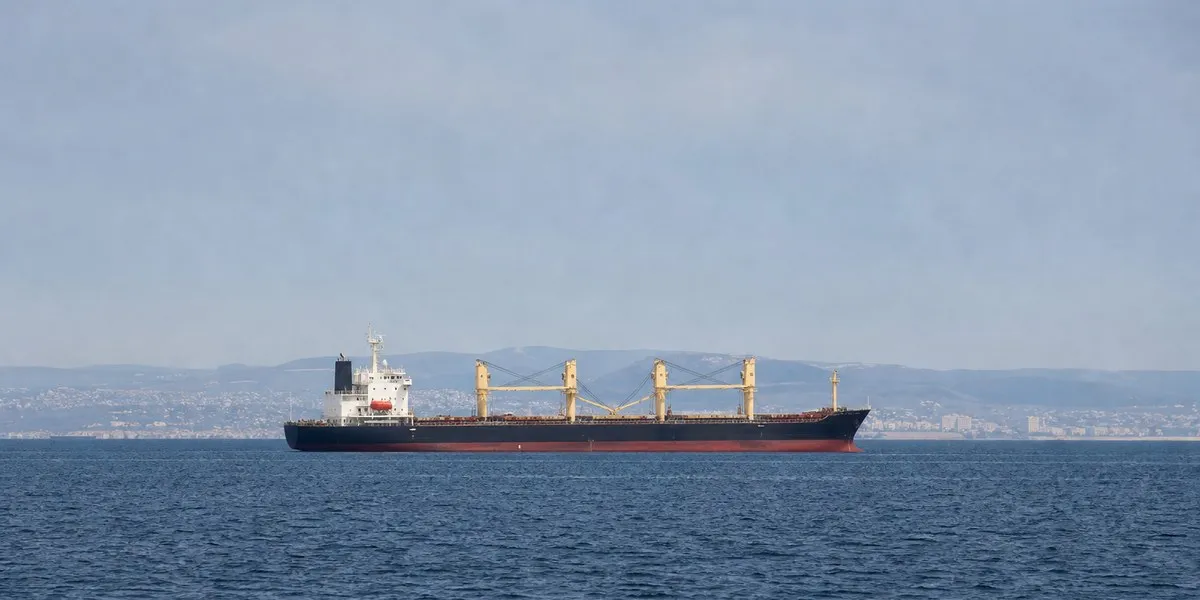
On October 6, drones struck two merchant vessels off Bulgaria’s Black Sea coast, one of which sank. The attack caused alarm and outrage in Bulgaria and the EU, Deutsche Welle reports.
The incident occurred at a time when the European Union is seeking to strengthen Bulgaria’s role as one of the key entry points for Asian goods arriving in the bloc via the Middle Corridor. This route, also known in the EU as the Trans-Caspian Transport Corridor, connects China and Europe through Kazakhstan, Azerbaijan, Georgia and Turkey. It combines rail and road transport, as well as short sea sections across the Caspian and Black seas.
Bulgaria as a transport hub
Bulgaria’s Kapitan Andreevo border crossing with Turkey is already among the busiest in Europe, with queues of trucks regularly forming there. The country also has the strategic Black Sea ports of Varna and Burgas. A new railway section between Istanbul and the Bulgarian border is due to open in autumn.
In September, European Commissioner for Enlargement Marta Kos called Bulgaria “Europe’s gateway for connectivity” because of its location on this route. She had previously stated that the Middle Corridor could potentially reduce cargo delivery times from Asia to Europe from 45 to 15 days.
More current news is available on the UA.News Telegram channel Telegram.
Security and infrastructure risks
The route has become more attractive because of problems on traditional trade routes. The overland Northern Corridor through Russia, an aggressor state, lost a significant share of its cargo traffic after its full-scale invasion of Ukraine in February 2022. The sea route through the Red Sea and the Suez Canal also faces the risk of disruptions due to wars and instability in the Middle East, forcing some cargo to be transported around Africa.
Vessela Cherneva, deputy director of the European Council on Foreign Relations, noted that the Middle Corridor bypasses routes through Russia and the Middle East but has security limitations. Among other problems, she cited weak institutions and bureaucracy in the countries along the route, as well as possible Russian influence. Additional challenges include falling water levels in the Caspian Sea and insufficient capacity at ports and railways.
The European Union plans to mobilize €12 billion in public and private investment to develop transport connectivity, diversify trade routes and reduce cargo transit times. According to Cherneva, the investments could support Bulgarian railways, ports and road connections, including in the country’s north.




