
Former Foreign Minister Zarif urges Iran to change its approach to security — The National
In Iran, a video of former foreign minister Mohammad Javad Zarif questioning Tehran’s reliance on military threats and calling for diplomacy and economic opportunities to be prioritized has sparked a sharp reaction from conservative media. The recording appeared online on Saturday, The National reports.
In the speech, delivered in May 2025, shortly before the 12-day war with Israel, Zarif said that nuclear weapons do not guarantee deterrence. According to him, at that time Iran did not have enough uranium to build a nuclear bomb.
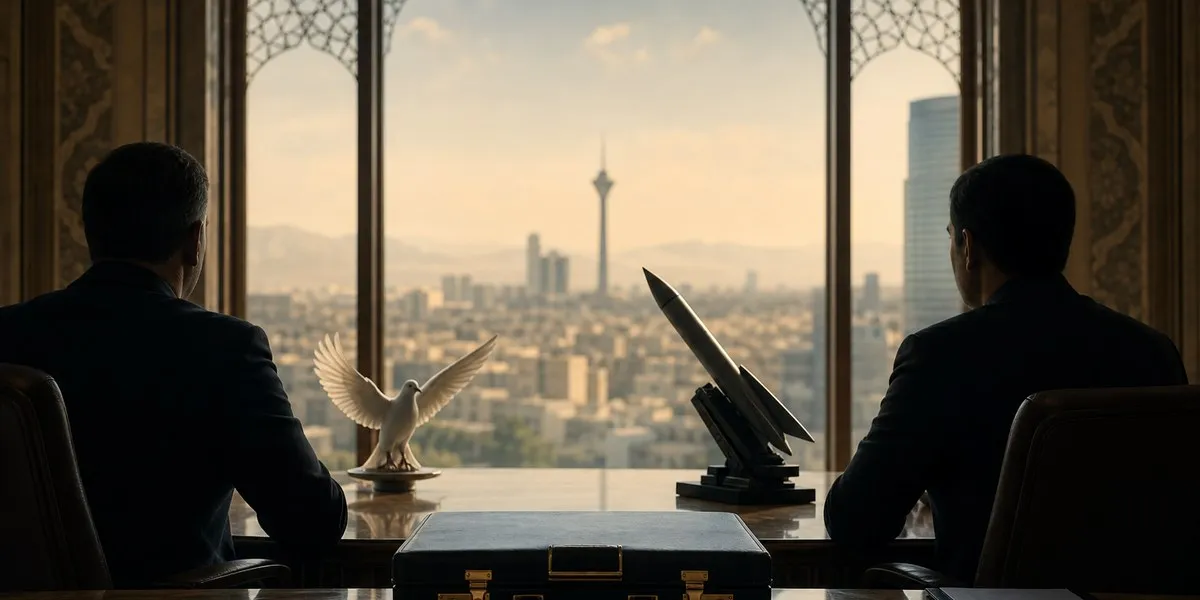
Diplomacy or a force-based approach
The former minister believed that the focus on security had distorted Iran’s nuclear strategy and regional diplomacy, limiting opportunities to protect the country’s economic and diplomatic interests. He contrasted viewing neighboring states as threats with an approach under which they are regarded as potential partners.
More current news is available on the UA.News Telegram channel Telegram.
Zarif said that if the region is perceived as a threat, ambassadors should be representatives of the Quds Force, a unit of the Islamic Revolutionary Guard Corps responsible for operations abroad. Conversely, if the region is viewed as an opportunity, ambassadors should be businesspeople and diplomats, in his opinion. He also criticized the tendency to interpret social issues, including the wearing of the hijab, through the prism of security.
Conservative reaction
The ultra-conservative newspaper Kayhan accused Zarif of undermining national security and helping Washington. The Tasnim agency published an editorial demanding an apology, while Raja News raised the question of possible action by the judiciary. The source did not report any confirmed formal legal action against the former minister.
The reaction came amid economic pressure on Iran, including the consequences of economic restrictions and the US blockade of shipping through the Strait of Hormuz, the publication writes. Hossein Marashi, secretary-general of the Executives of Construction Party, said Iran should avoid decisions that could trigger a new war, even if this requires tactical concessions. Omid Memarian, an analyst at the human rights organization Dawn, called the dispute a manifestation of a deep divide in Iran over ways to prevent a new conflict with the United States.




