
Expedition reports rapid glacier melting in Xinjiang — The Express Tribune
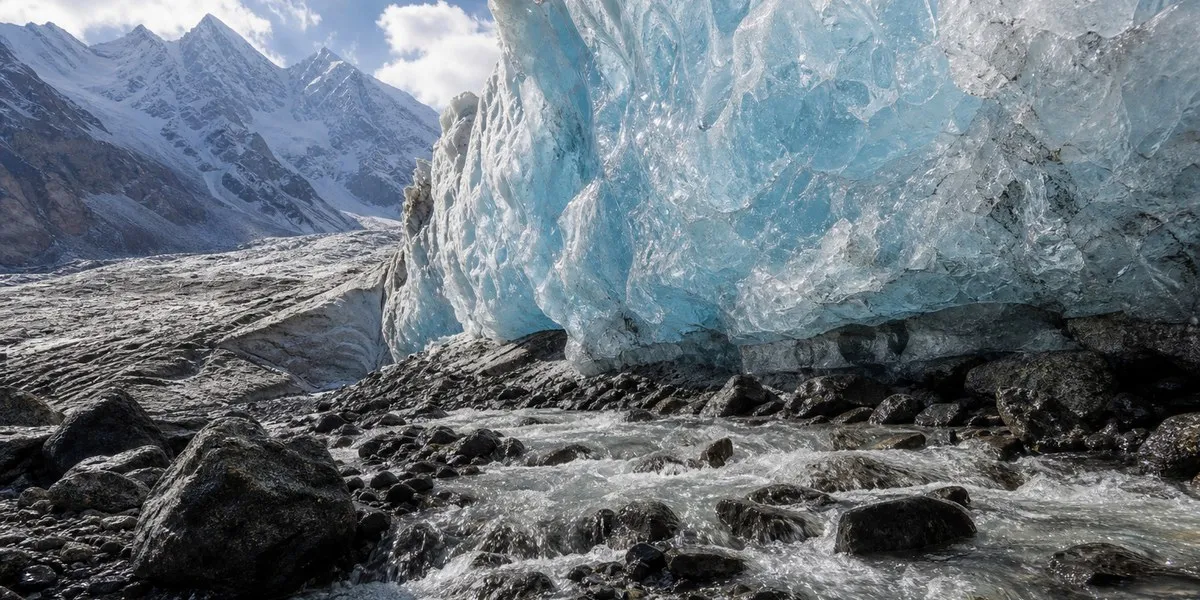
In the Xinjiang Uyghur Autonomous Region in northwestern China, a scientific expedition identified 24,202 glaciers with a total area of 23,629 square kilometers and warned of accelerating melting. The data were presented at a press conference in Urumqi, The Express Tribune reports.
Losses of glacier cover
According to participants in the Third Scientific Expedition to Xinjiang, the region lost 2,167 square kilometers of glacier area from the 1990s to 2020. Most areas with large ice reserves are experiencing rapid melting.
Glacier researcher Li Zhongqin of the Northwest Institute of Eco-Environment and Resources at the Chinese Academy of Sciences named global warming as the main cause. Over the past three decades, temperatures in Xinjiang have risen by 0.34 degrees Celsius per decade — about 1.7 times faster than the global average and 1.13 times faster than the average for China.
More current news is available on the UA.News Telegram channel Telegram.
Risks for rivers and population
Glaciers are the sources of many rivers in the inland region. Faster melting may increase river runoff, but it also raises the risks of ice collapses, floods, and mudflows. Scientists expect glacier collapses in the region to become more frequent.
According to Li Zhongqin, the surface area of lakes and wetlands in Xinjiang has increased by about one-third, partly due to glacier melting. Researchers use satellite remote sensing and drones to monitor ice movement and temperature changes.
The expedition also conducted cross-border glacier research with Tajikistan, including identifying glaciers there and publishing their atlas. The joint project, recognized by UNESCO, provides for assessing glacier changes in Tajikistan, forecasting trends, and studying the risks of glacial disasters.




