
EU presents new Arctic strategy — Deutsche Welle
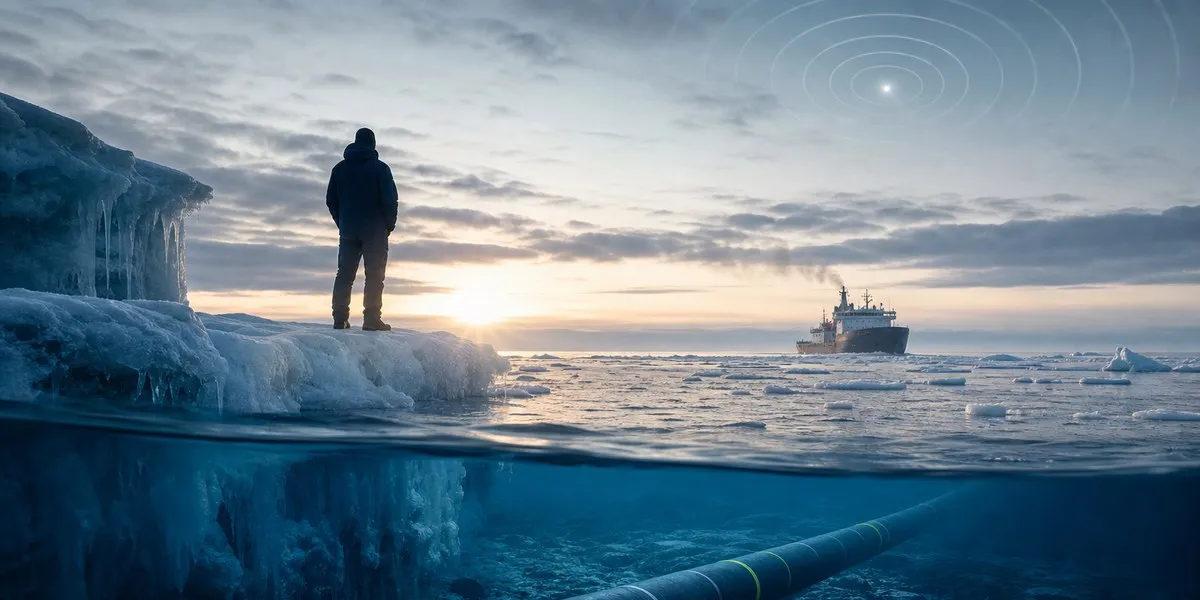
The European Union has presented a new strategy for the Arctic, focused on security, climate research, infrastructure and engagement with the region’s residents. The document was unveiled amid competition for influence in the Arctic between the EU, Russia, the United States and China, Deutsche Welle reports.
European Commission President Ursula von der Leyen said that the “tectonic plates of geopolitics” are colliding in the Arctic. According to her, the EU must change its strategic approach, as sovereignty, territorial integrity and security rules in the region can no longer be taken for granted.
Security and surveillance
EU High Representative for Foreign Affairs and Security Policy Kaja Kallas said that the Russian Federation, an aggressor state, has restored Soviet-era bases in the Arctic and is testing new weapons there. According to her, drone intrusions, GPS signal jamming and sabotage of undersea cables are undermining the region’s security.
More current news is available on the UA.News Telegram channel Telegram.
The EU plans to establish a maritime security center in the region to exchange information from the seabed to space, expand European icebreaker capabilities and satellite surveillance. European Commissioner for International Partnerships Jozef Síkela stressed that these measures are not intended to compete with NATO, which, he said, will remain the foundation of defense and deterrence in the Arctic.
Climate and cable connectivity
The Arctic is warming approximately four times faster than the global average. Melting ice and glaciers pose risks to Europe of longer heat waves, droughts and floods. The strategy provides for strengthened climate research, observation and monitoring, as well as projects using artificial intelligence to forecast extreme weather and cascading disasters, including coastal flooding.
The EU also does not intend to expand extractive drilling in the Arctic. European Commissioner for Energy and Housing Dan Jørgensen said that oil, coal and gas must remain in the ground. Separately, the strategy provides for resilient undersea cable connectivity that will directly connect Greenland with Europe and could in the future be extended to Canada and Japan. The EU also plans to expand dialogue with Indigenous peoples and Erasmus+ opportunities for Arctic youth.




