
Photo: A fisherman in Poland caught a giant catfish nearly three meters long
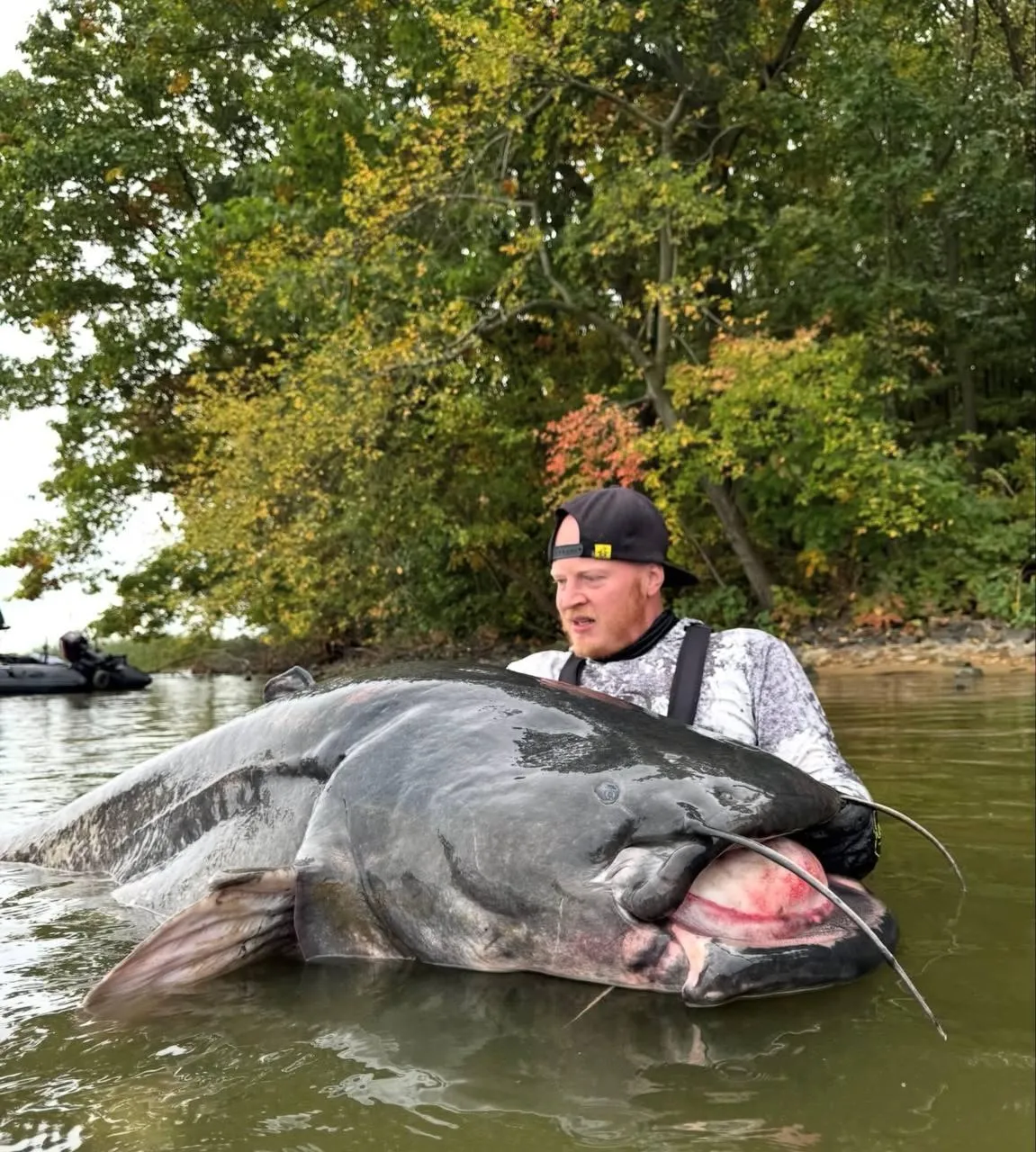
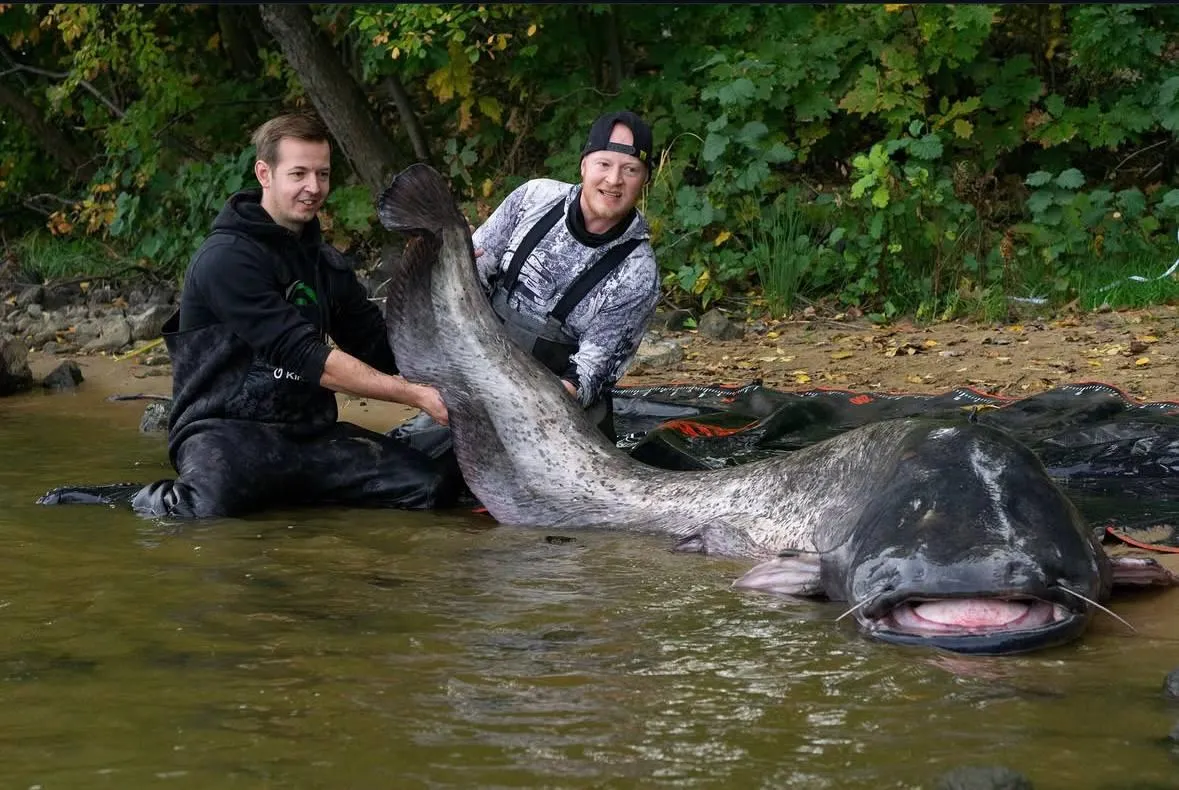
German angler Oliver Schäfer, along with his partner from the Netherlands, Kevin Kremers, caught a giant catfish measuring 2.92 meters in a reservoir in the Polish city of Rybnik. The impressive catch was one of the highlights of an international fishing tournament held on October 10–11.
About 150 anglers representing 70 teams from various European countries took part in the competition. Schäfer and Kremers traveled to Poland specifically to compete in the predatory fish tournament.
34-year-old Oliver Schäfer realized he had hooked a large fish even as he was reeling it in. However, he only fully grasped the true size of his catch when the catfish first surfaced.
The anglers used a special rod designed for catching large catfish and a soft plastic lure. While Schäfer fought the fish, Kremers kept the boat on course against the wind.
The fight lasted over half an hour. Only then were the men able to bring the giant catfish ashore.
Upon returning to shore, the judges measured the fish. The catfish was 292 centimeters long. In accordance with tournament rules, it was released back into the reservoir after being measured.
Shefer explained that the fish is hauled ashore on a tarp to avoid damaging the protective layer of mucus on its body.
Despite the impressive catch, a single large catfish was not enough to win the tournament. The results were determined by the total number of points scored.
According to the rules of the Polish Anglers’ Association (PZW Katowice), Oliver Schäfer and Kevin Kremers took second place with a score of 28,930 points.
Their other catches were also counted toward the overall standings. In particular, the anglers caught zander at dawn, and one of the fish they caught measured 81 centimeters in length.
The giant catfish from Rybnik may be familiar to local anglers. According to media reports, the competitors suspect that this is the same fish that was caught during a tournament in October 2025.
At that time, Polish anglers Krzysztof Pira and Adrian Gontarz also caught a catfish measuring 292 centimeters in length. According to the Berliner Zeitung, the fish has not grown any longer since then, but has noticeably increased in girth.
The International Game Fish Association (IGFA) keeps records of catfish by weight, while there is no official world record list based on length.
In 2023, Italian angler Alessandro Biancardi caught a catfish 2.85 meters long in the Po River. That is why the Polish town of Rybnik is considered among anglers to be the place where one of the longest known catfish was caught.
Following his success, Oliver Schäfer has not given up on his ambitious goal. In an interview with Bild, he said that he now wants to catch a catfish three meters long.
According to Germany’s Federal Agency for Nature Conservation, the European catfish is the continent’s largest native freshwater fish. It can reach three meters in length and weigh up to 150 kilograms.
The catfish has an elongated, scaleless body, a broad head, and six barbels that help it navigate in murky water. Fish make up the bulk of its diet, although large specimens sometimes prey on small waterfowl and mammals.
In 2026, the European catfish was named Fish of the Year in Germany.
The reservoir in Rybnik has a unique feature: it is used as a cooling pond for a coal-fired power plant, from which the heated water is returned to the reservoir. According to Schaefer, fish feed more actively at higher water temperatures. Thanks to this, catfish, carp, and pikeperch in the reservoir can grow faster.
Climate change is also influencing the spread of the European catfish. Initially, this species was found primarily in the Danube and Rhine river systems. Over time, thanks to stocking programs that began as early as the 19th century and the development of waterways—particularly the Main–Danube Canal—its range has expanded significantly.
According to biologist Jürgen Geist, as quoted by Focus magazine, catfish populations are increasing both in terms of geographic range and density. At the same time, cold-water species, particularly brook trout, are losing favorable conditions for survival.
Despite their considerable size, European catfish generally do not pose a serious danger to humans. They have small teeth, and the risk of dangerous behavior outside the spawning season is considered low.
However, there have been reported cases of attacks on swimmers. In June 2025, a catfish about two meters long bit several people in Brombachsee in Middle Franconia. The swimmers sustained minor injuries.
This was reported by the German news outlet Euronews.
As a reminder, at the end of October, the fishing season in Ukraine enters the late fall phase. At this time, the water cools rapidly, and non-predatory fish gradually migrate to wintering grounds and become less active. Predators, on the other hand, begin their so-called fall feeding frenzy, trying to build up fat reserves before winter.




