
Spain’s opposition shared a deepfake featuring the prime minister’s wife — The Guardian
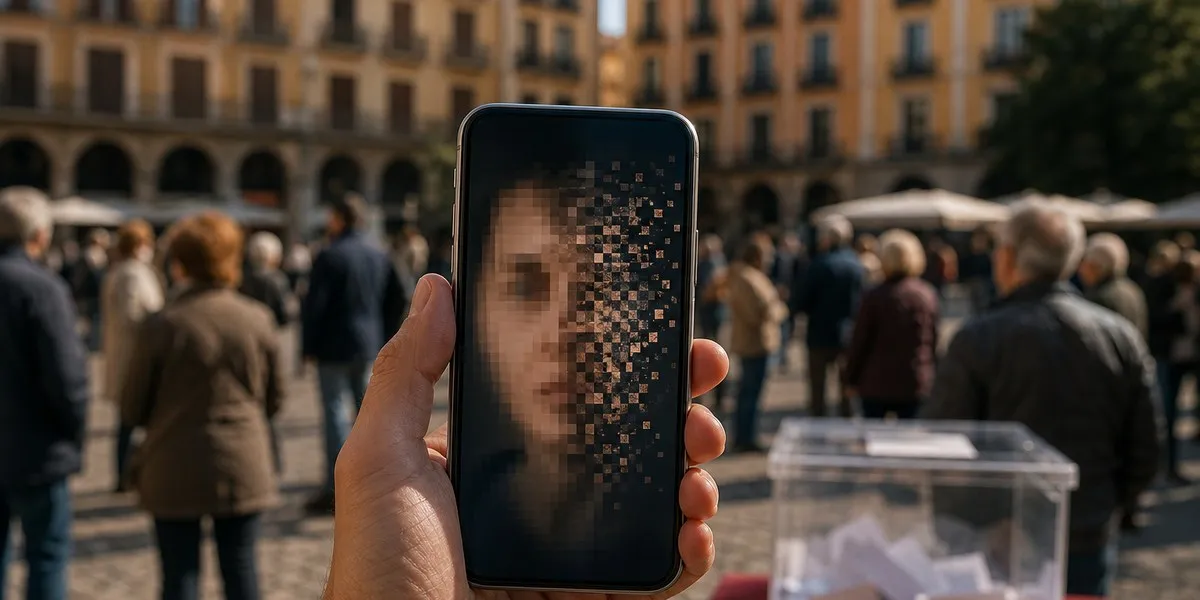
Spain’s conservative People’s Party (PP) published an election video created using artificial intelligence on its social media accounts. It used fabricated images of Prime Minister Pedro Sánchez’s wife, Begoña Gómez, and other people connected to the Socialist Party. The video sparked outrage and debate over the use of AI in political campaigning ahead of the general election on November 29, The Guardian reports.
What the video contained
In the video, AI versions of people connected to the socialists supposedly confessed to ordering sexual services and receiving kickbacks. In particular, the generated image of Begoña Gómez says that she obtained a university position thanks to her husband’s work. A deepfake of former Socialist Prime Minister José Luis Rodríguez Zapatero mentions jewellery hidden in a safe.
These episodes refer to ongoing investigations in which Gómez and Zapatero have denied any wrongdoing. By Friday, the video had garnered nearly 2 million views. The video included a notice about the use of AI, but it was placed in small, almost transparent type at the bottom of the screen.
More current news is available on the UA.News Telegram channel Telegram.
Reaction and legal claims
Spain’s Minister for Digital Transformation, Óscar López, said that people unfamiliar with AI technology could easily mistake the video for reality. He criticized the distribution of such a video from the party’s official accounts.
Former Socialist Party member Leire Díez, whose image was also used in the video, went to court against the PP and demanded the immediate removal of the advertisement. According to The Guardian, she accused the party of defamation and unlawful use of her digital identity. In the video, her image alluded to accusations that she allegedly tried to undermine the work of judicial and law enforcement bodies in order to help the socialists.
Most of the nine lawyers surveyed by the newspaper El País believed that the video was not illegal because it was labelled as AI-generated and was satirical in nature. PP representative Borja Sémper dismissed the criticism, saying that the party had not intended to convince the audience that the depicted characters were real, but had used digital tools to criticize the socialists.




