
Fire destroys Hitler’s Eagle’s Nest in Bavaria — The Guardian
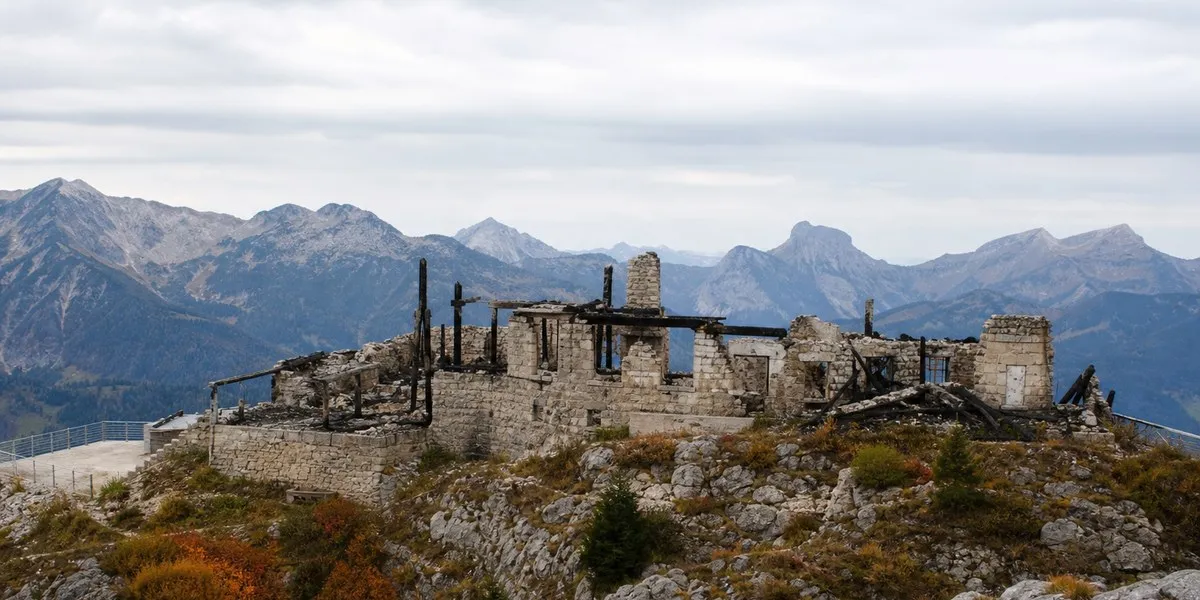
In Bavaria, a fire destroyed the Kehlsteinhaus, known as the Eagle’s Nest, a mountain guesthouse from the era of the Nazi dictatorship on Mount Kehlstein near Berchtesgaden. The fire broke out on October 23. Despite the overnight work of 200 firefighters, only charred ruins remain of the structure, which was a tourist attraction and place of remembrance. It has been closed indefinitely.
Local authorities believe the fire may have been started deliberately. The Kehlsteinhaus was closed to visitors on the day of the blaze, so no one was injured. The building belongs to the state of Bavaria and received more than 300,000 visitors annually, The Guardian reports.
The future of the Kehlsteinhaus
Bavaria’s Culture Minister Markus Blume said that a commission of experts in heritage preservation, construction and Holocaust remembrance will be involved in determining the future of the Kehlsteinhaus. According to him, any reconstruction must take historical responsibility into account because of the structure’s inseparable connection to the Nazi regime and its crimes.
More current news is available on the UA.News Telegram channel Telegram.
The Kehlsteinhaus was completed in 1938. It was built over more than a year by 3,800 workers as a prestige project of the Nazi regime. A winding road through five tunnels leads to the building, while visitors were taken to the entrance by a brass-clad elevator built into the rock.
Debate over reconstruction
Historian of the Nazi era Felix Bohr spoke out against rebuilding the Kehlsteinhaus. In his view, the remains of the structure should be secured as much as possible and used to explain the history of the site, rather than restoring the scenery of Nazi propaganda.
Sven Keller, director of the Obersalzberg Documentation Center, believes that simply reproducing Nazi architecture would be inappropriate, but that the site should not be left only as ruins either. He proposed combining the surviving material remains with new educational information, showing the different stages of the site’s history, including its tourist use since the 1950s and the consequences of the current fire.




