
President Lee calls for democratic movements to be included in Constitution — Korea Herald
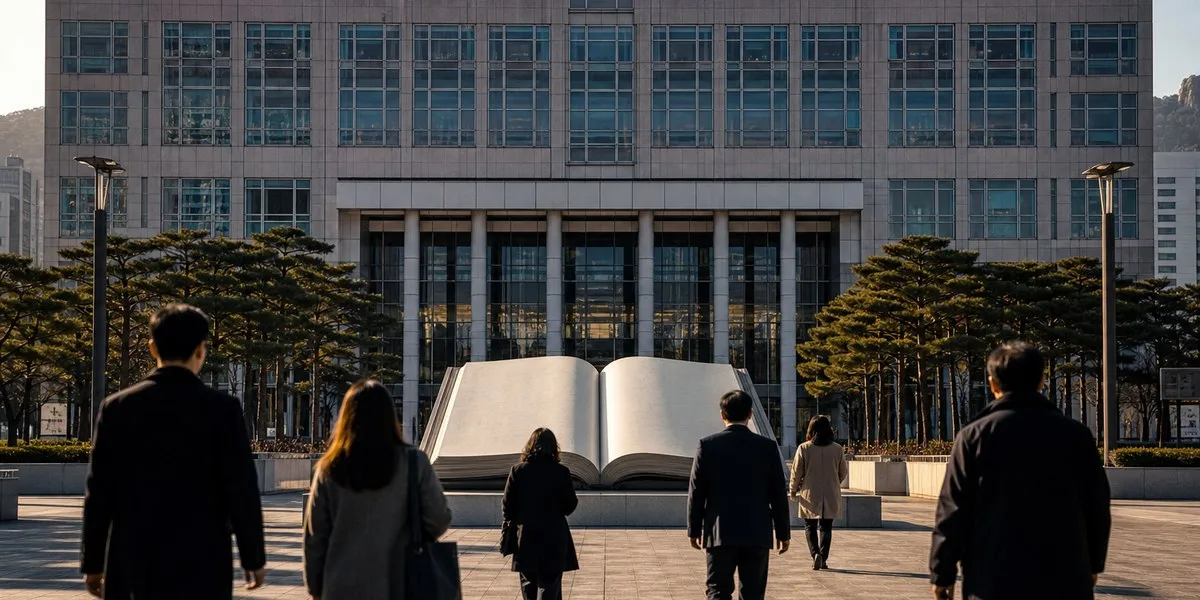
South Korean President Lee Jae Myung on October 16 called on the National Assembly to begin discussions on constitutional reform that would add references to the country’s democratic movements to the Constitution’s preamble. He made the statement in Busan at a ceremony marking the 47th anniversary of the Bu-Ma Democratic Uprising, Korea Herald reports.
Call for constitutional reform
Lee proposed enshrining the 1979 Bu-Ma Uprising and the 1980 Gwangju Democratization Movement in the Constitution’s preamble. According to him, this would be the minimum step needed to preserve the memory of citizens’ struggle for democracy and popular sovereignty.
The president also called on parliament to promptly begin gathering public opinion and hold a well-founded discussion on amendments to the Basic Law. A constitutional amendment previously proposed by the ruling Democratic Party of Korea failed to pass the National Assembly in May. South Korea’s Constitution was last amended in 1987.
Lee also supports replacing the current system of a single five-year presidential term with a model under which a president can serve two consecutive four-year terms. However, during the ceremony, he focused specifically on recognizing historical democratic movements.
More current news is available on the UA.News Telegram channel Telegram.
Anniversary of the Bu-Ma Uprising
The Bu-Ma Uprising began on October 16, 1979, with student protests at Pusan National University and later spread to Masan, now part of the city of Changwon, and other areas of South Gyeongsang Province. Participants opposed President Park Chung-hee’s Yushin system, which strengthened presidential power and imposed significant restrictions on political freedoms.
Authorities harshly suppressed the protests: martial law was imposed in Busan, and 1,058 people were detained. In Masan and Changwon, a garrison decree was used to deploy the military against protesters. Ten days after the demonstrations began, Park Chung-hee was assassinated, bringing the Yushin regime to an end.
South Korea designated October 16 as a national commemorative day in 2019. Official ceremonies marking the uprising’s anniversary are held annually, alternating between Busan and Changwon.




