
Rubio Explained Why Trump Paused Before Imposing Sanctions on Russia — Reuters
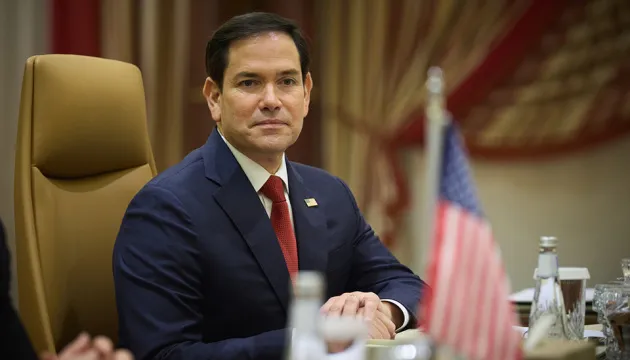
U.S. Secretary of State Marco Rubio stated that Donald Trump wants to take up to 60 days to assess the potential consequences of sanctions against Russia and tariffs on countries that purchase Russian energy resources. According to him, Washington must consider how such restrictions will affect the global economy and the United States itself. Meanwhile, Trump has suspended the sanctions and tariffs mandated by law and has not yet announced a final decision on them.
Marco Rubio explained the U.S. administration’s position before departing for Uzbekistan. He said that Trump wants to use this time to understand the consequences that restrictions would have for Russia and for countries that continue to purchase its energy resources. “I think the president wants to use this 60-day period to, so to speak, analyze what consequences the imposition of both sanctions and tariffs will have on the global economy and even on the U.S. economy,” Rubio said.
On Friday, Trump signed an executive order suspending the application of key sanctions and tariffs provided for in Senator Lindsey Graham’s bill. This document provides for restrictions against Russia, as well as additional tariffs on goods from countries that import Russian energy resources. Rubio emphasized that before making a final decision, the U.S. must assess the potential impact of these measures. After all, the sanctions could affect not only Russia but also countries that depend on its oil and other energy resources.
As an example, the Secretary of State cited India—an important partner of the United States. The country is trying to diversify its energy sources so as not to depend on a single supplier. At the same time, India still relies heavily on Russian oil. Therefore, Washington will have to take into account not only the political impact of sanctions but also the potential economic consequences for other countries and for the United States itself.
The U.S. has reached an agreement with Russia on diesel fuel supplies
Separately, Rubio defended the agreement between the U.S. and Russia, which is intended to increase the supply of diesel fuel to global markets. According to the Secretary of State, this will help stabilize prices, which have risen due to the war with Iran and disruptions in energy supplies. Rubio explained that Russian diesel fuel will end up on the market anyway. The question, he said, is who will reap the economic benefits from its sale. “This diesel fuel will be sold one way or another. The only difference is how much of it the United States would receive,” he noted.
The Secretary of State linked this agreement to the decision to temporarily suspend sanctions. He said the situation illustrates how difficult it is to make decisions when conflicts in different parts of the world affect the same markets. “These conflicts around the world are beginning to intersect,” Rubio said. Thus, Washington must simultaneously consider the consequences of the war in Ukraine, the situation in the Middle East, and the risks to global energy supplies.
Trump Has Not Yet Announced a Final Decision
On Saturday, the day after signing the executive order, the U.S. president stated that he had not yet made a final decision on sanctions and tariffs. “Many of you don’t yet know what decision I’ve made, but we’ll figure it out, and you’ll find out too,” Trump told reporters at his Mar-a-Lago club in Palm Beach. Lindsey Graham’s bill called for tough restrictions on Russia and countries that purchase its energy resources. Specifically, within 30 days of the law taking effect, the U.S. president was to impose 100 percent tariffs on all goods from the five countries that purchase the most Russian oil.
The bill also called for sanctions against a number of Russian companies and other entities, as well as 500 percent tariffs on all imports of Russian energy resources into the U.S. The deadline for implementing these provisions was October 18. However, Trump decided to suspend the measures provided for by the law. Now the U.S. administration must assess their potential impact before deciding on next steps.
Earlier, Ukrainian President Volodymyr Zelenskyy stated that suspending the sanctions is only the first step and may be followed by further decisions. In his view, this approach will not help stop the war but may, on the contrary, encourage Russian President Vladimir Putin to continue his aggression. Thus, Washington has now paused before potentially imposing new restrictions. According to Rubio, U.S. authorities want to determine how sanctions and tariffs will affect Russia, international trade, and the U.S. economy itself. At the same time, Trump’s final decision regarding the future of these measures remains unknown, Reuters reports.
Kirill Dmitriev, a special representative of the Russian dictatorial regime, welcomed U.S. President Donald Trump’s decision to suspend certain provisions of the “Graham Act”—the so-called “hellish sanctions.” These provisions call for the imposition of restrictions against Russia. Dmitriev called the American leader’s move a “historic moment.”
On October 16, U.S. President Donald Trump signed an executive order suspending the broad tariffs, restrictions, and sanctions that the late Senator Lindsey Graham had proposed to impose on the purchase of Russian energy resources.




