
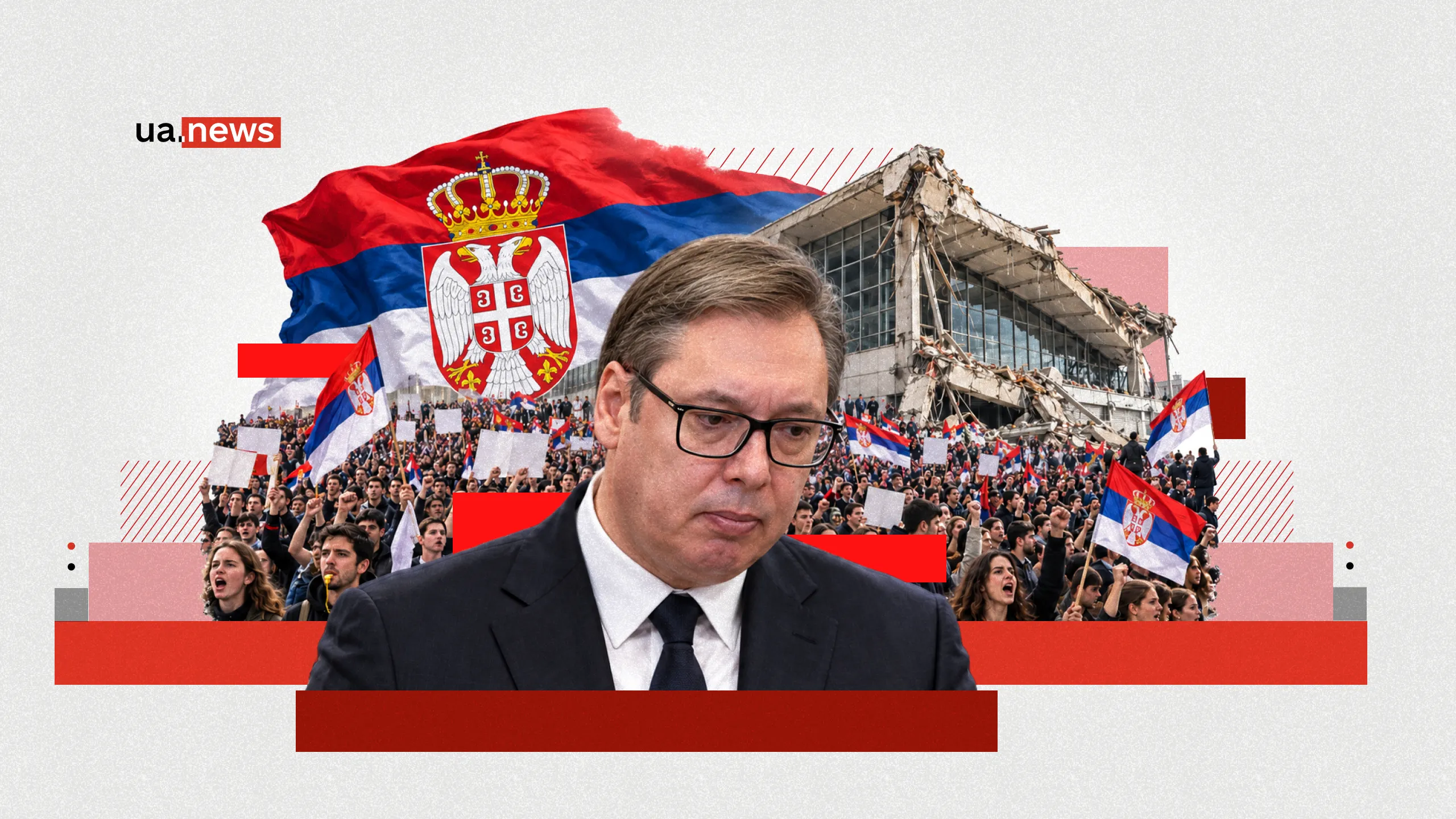
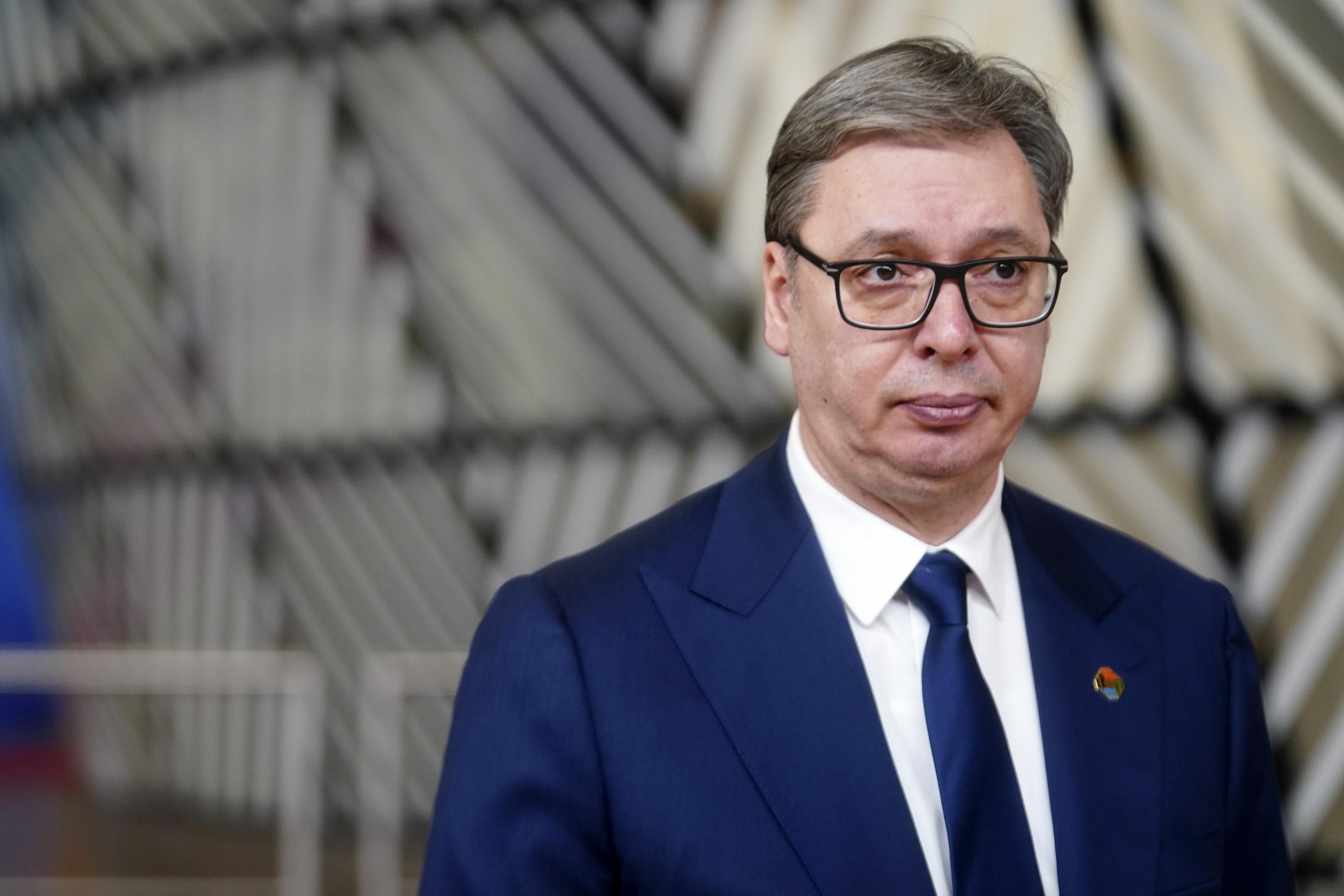
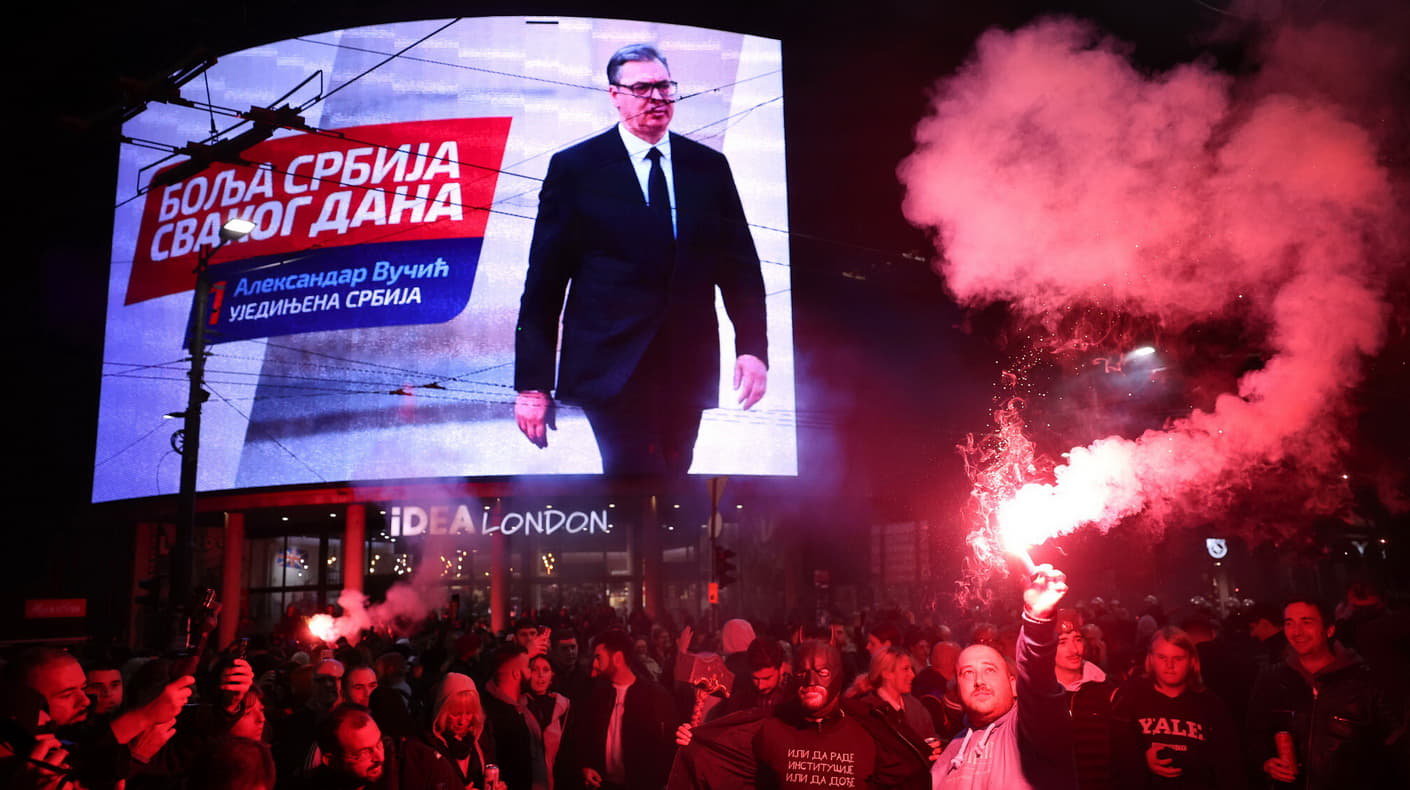
Aleksandar Vučić has been a constant figure in Serbian politics and the country’s de facto leader for 14 years—since 2012, when his Serbian Progressive Party (SPP) came to power. First as deputy prime minister, then as prime minister, and since 2017 as president, he embodied a certain political tradition that some called order and stability, while others called it nothing short of authoritarianism.
And now, it appears, this era is coming to an end. In the snap parliamentary elections on October 25, his “United Serbia” coalition suffered a crushing defeat at the hands of the “Student List”—a movement that grew out of the protests that erupted two years ago. To Vucic’s credit, he did not cling desperately to power: the politician has already officially conceded defeat and announced that he is joining the opposition.
This whole story didn’t just come out of nowhere. It was preceded by two years of large-scale street protests, accusations of corruption, and criticism of the government’s inefficiency. But the most interesting thing about this case isn’t even the outcome itself, but how Vučić tried to avoid it. He himself called for early elections and stepped down as president ahead of schedule because he wanted to pull off a risky “multi-step maneuver”: to win not as president, but as party leader, and to head the government as prime minister. After all, Serbia is a parliamentary republic, and according to the constitution, it is the prime minister who holds real power there.
But this plan didn’t work. In fact, it failed spectacularly.
Why did this happen? What was Vucic’s “multi-step plan”? Why did Serbs protest en masse for two whole years, and what does an ordinary train station in Novi Sad have to do with it? What will happen now to this important Balkan country, which is balancing between Europe and Russia? UA.News political analyst Mykyta Trachuk looked into the matter.
The Tragedy That Sparked the Crisis: How the Novi Sad Train Station Led to the President’s Resignation
This story begins on November 1, 2024, in the Serbian city of Novi Sad. There, following a large-scale renovation—which, incidentally, had cost a considerable amount of money—a concrete canopy over the train station platform suddenly collapsed. It fell directly onto the people who were there. Sixteen people were killed, including young children.

This tragedy came as a profound shock to the entire country. But it quickly became clear that this was not merely an accident. The renovation was marred by signs of corruption, violations of building codes, and a lack of proper oversight by the government. For many Serbs, the collapse of the canopy became a symbol of a much deeper problem: a rotten system in which funds are embezzled and no one is held accountable for people’s safety.

Students were the
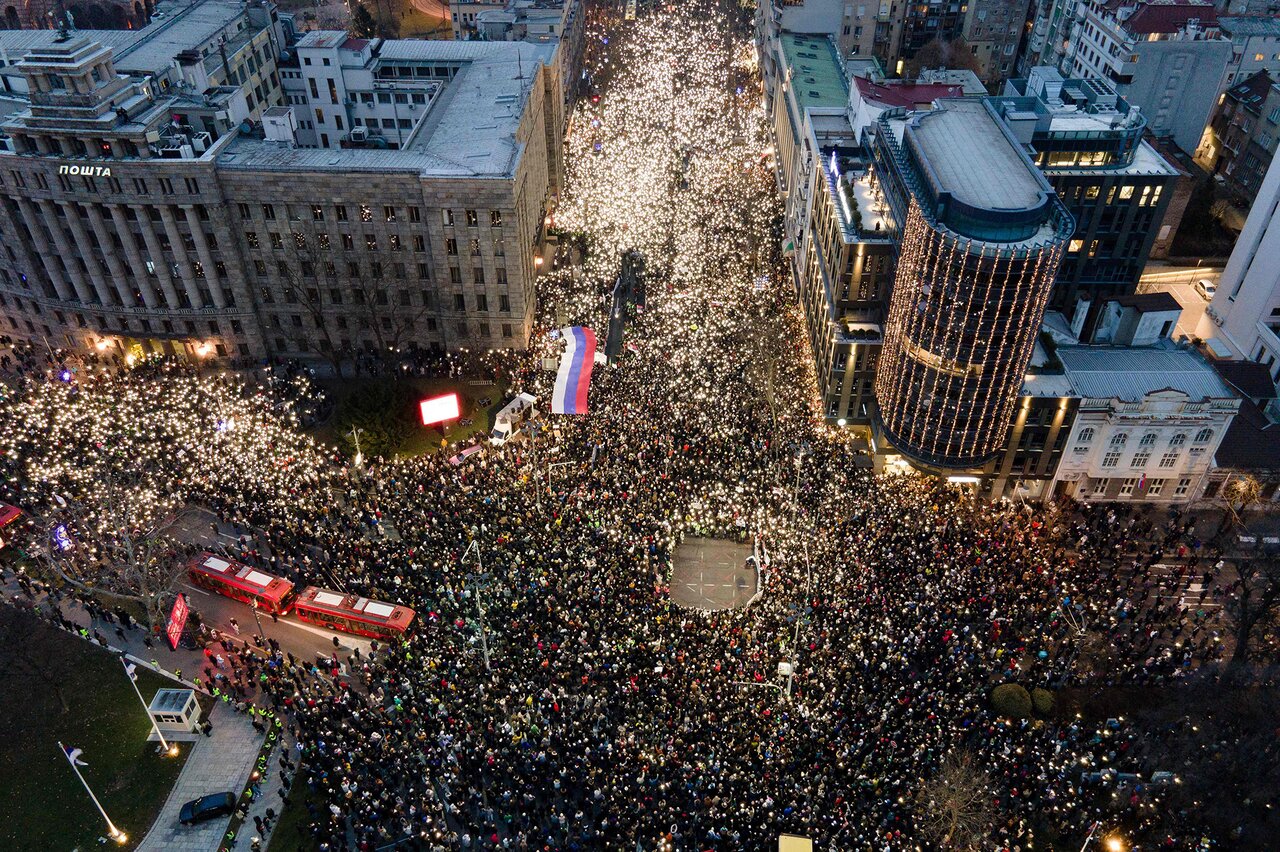
first to take to the streets. At first, they demanded only one thing: that those responsible for the tragedy be punished. But over time, these demands grew into a broad anti-government movement. Students blocked universities, blocked roads, organized protest marches lasting many hours, spoke out in the media, and more. It is worth noting that, despite isolated incidents of violence, these were generally not aggressive riots: the atmosphere at the demonstrations was often almost carnival-like. People played chess, drank coffee, listened to music, set up tents to stay overnight, and so on. But the key message was crystal clear: the authorities must be held accountable for the deaths. It’s one thing when a government official buys himself a new car through corruption, but it’s quite another when, because of that same corruption, 16 ordinary Serbian citizens died at the same time.
The protests would die down and then flare up again, but they never stopped completely and lasted for nearly two years, right up until the early elections of 2026. It was from this environment that the “Student List” emerged: a new political force to which students delegated the representation of their interests. It is worth noting that today this group is, of course, no longer just students, but a broad conglomerate of civic activists, intellectuals, businesspeople, and politicians united by a common goal—to put an end to Vučić’s rule.
Vucic’s
“Multi-Move Strategy”: How He Bet on the Prime Minister’s Office and Miscalculated Badly
Despite all the purely political accusations of authoritarianism, Serbia remains—albeit with certain caveats—a democratic country according to all international indices and in essence. Aleksandar Vučić has never been a dictator in the classical sense of the word. Moreover, it is difficult to even accuse him of autocracy—although certain “tendencies” in that direction have been evident. At the same time, Serbs have always been free to protest, free to vote against the government, and the country has radically oppositional media outlets and television channels, among other things. But Vučić’s critics rightly pointed to the gradual concentration of power, pressure on the media, a lack of transparency in decision-making, and the dominance of the SPS party in all branches of government.
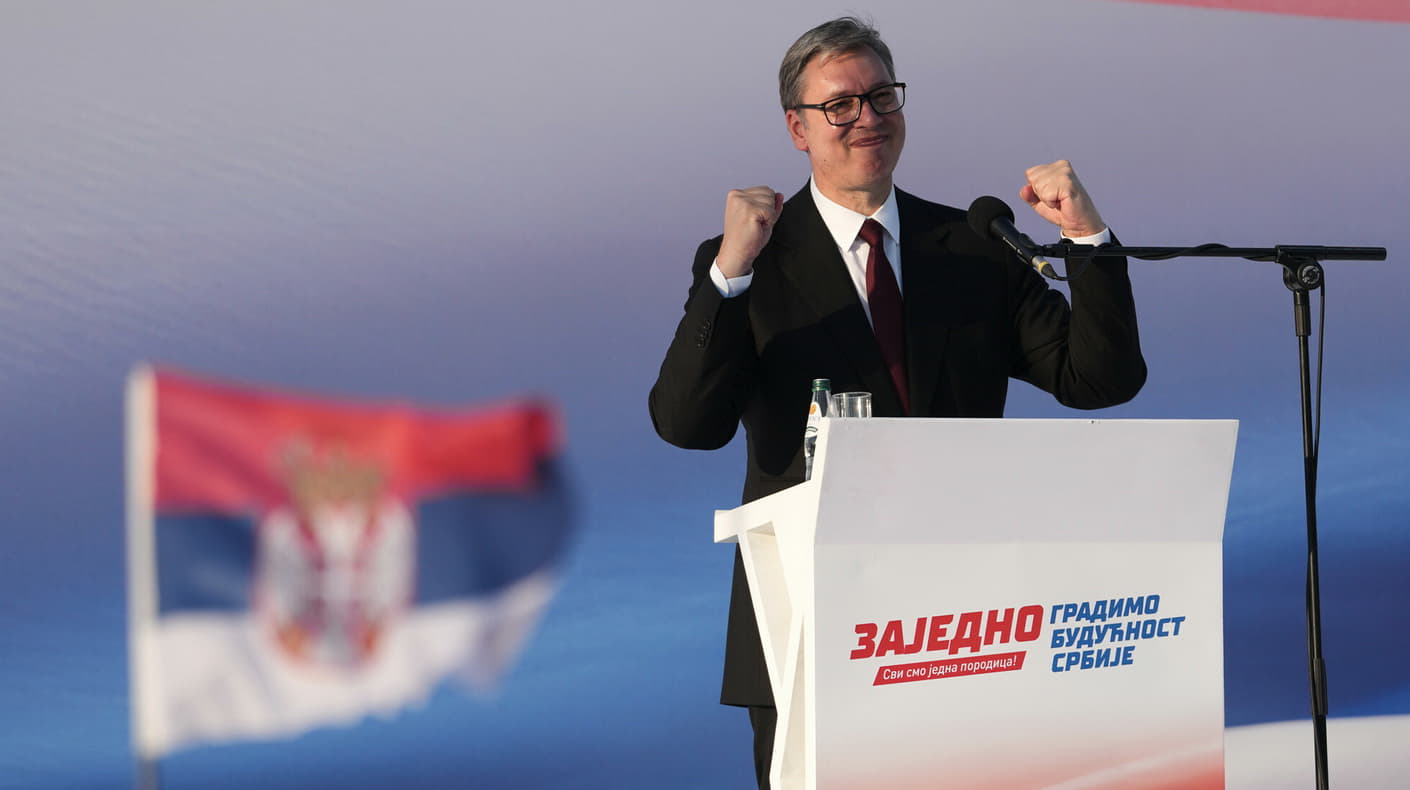
Vucic’s problem was that his second presidential term was set to expire in May 2027, and under the constitution, he could not run for a third term. That is precisely why the now-former Serbian leader decided to take preemptive action and resorted to a move unprecedented in Serbia. In late September, Vučić suddenly and unexpectedly resigned from the presidency ahead of schedule. The plan was as follows: to run in the early parliamentary elections not as president, but as an ordinary party leader; to defeat the “Student List” (which he publicly called “hooligans”); to form a government and become its head— that is, prime minister.
Formally, this appeared to be a certain downgrade in status, since the president is, after all, the head of state. But Serbia is, in fact, a parliamentary republic, and the prime minister there is the key figure who leads the government and sets policy. It was during Vučić’s tenure that the office of president acquired very broad powers thanks to his party’s control over parliament (he was accused of authoritarian tendencies in part because of this). So the plan was to outmaneuver the system: to remain in power, but now at the head of the government. This was the only way to maintain control over the system after 2027.
But in the end, “Akela missed the mark”: the politician’s calculation proved to be wrong. First, he underestimated the extent of public fatigue with his rule. Second, he failed to take into account that the “Student List” would be able to mobilize voters not only in major cities but throughout the entire country. Third, the very idea of a “multi-step maneuver” seemed overly complicated, questionable from the standpoint of the spirit of the law, and could have alienated even a portion of his own electorate. The result was a decisive defeat.
What the Election Results Showed
Serbia’s snap parliamentary elections took place on Sunday, October 25, with a record-high turnout of about 69%. This in itself was a bad sign for the government: high turnout usually works in the opposition’s favor, especially when the public is weary and on edge. And the results confirmed this. The “Student List,” led by cardiologist and university professor Ilija Srdanović, won a decisive victory, garnering over 53% of the vote. This gave the bloc between 135 and 141 seats in Serbia’s 250-member National Assembly. Vucic’s “United Serbia” coalition received about 40% of the vote and between 103 and 105 seats.
This means that Serbia’s political landscape has undergone a tectonic shift: instead of 14 years of one-party dominance, the country now has a de facto two-party system, in which the “Student List” has enough votes to form a government on its own or with smaller partners.
To Vucic’s credit, he did not cling desperately to power. The politician officially conceded defeat even before the official results were announced. He has already stated that he is joining the opposition.
“The
Student List” and Serbia’s Future
The “Student List’s” victory is undoubtedly a historic event, but it poses numerous complex challenges for Serbia. The main problem is that this political force is an extremely diverse conglomerate. Unlike the SPS, which had a clear chain of command, a single leader (Vucic), and a party apparatus built up over decades, the “Student List” is more of a broad movement than a traditional party. It lacks a single leader capable of replacing Vučić as a charismatic figure. Nor is there a single ideology: the movement has drawn people with diverse views—from liberals to moderate nationalists—united primarily by their rejection of corruption and Vučić’s authoritarian tendencies. This creates a risk of internal conflicts and complicates the formation of a stable government.
The
second distinctive feature is geopolitical. In Serbia, there is no simplified division into “pro-Russian” and “pro-European” forces, as is common in Ukraine. Vučić was not a pro-Russian politician in the strict sense: he consistently steered the country toward the EU—but at the same time maintained good relations with Moscow, refused to impose sanctions against Russia, and used this balance as a foreign policy tool. Serbia’s main geopolitical strategy during Vučić’s tenure was multi-vectorism.
The “Student List” promises to follow the same course, but objectively speaking, this party is more pro-European. Its electoral base consists of young people, urban residents, and those with higher education, among others. On the whole, they tend to favor closer ties with the EU and reforming the country according to European standards.
However, there is a fundamental problem here that cannot be ignored. Serbian society as a whole remains deeply Euroskeptic. According to European Commission polls conducted this summer, only 31% of Serbs support EU accession, while 40% believe the country will never become a member of the European Union.
And this is no coincidence, nor is it some kind of innate Euroskepticism or Russian propaganda. The roots of the problem go back to as recently as 1999, when NATO forces bombed Serbia, including Belgrade, for months. According to various estimates, between 1,500 and 5,700 civilians were killed at that time, tens of thousands were wounded, and hundreds of thousands became refugees. In addition, during the Yugoslav Wars, the West always sided with Serbia’s opponents. And when Kosovo declared independence in 2008, 22 out of 27 EU countries recognized it.
At the same time, Russia has consistently supported Serbia. As a result of all this, Serbs have been left with a deep national trauma and distrust of the West, which has been passed down through generations. About 71% of the population views Russia favorably. Therefore, even a thoroughly pro-European government in Belgrade will be forced to take these sentiments into account and is unlikely to be able to sharply pivot the country toward Brussels without risking the loss of support from a significant portion of society.
Thus, the most likely scenario for the coming years is the continuation of Vučić’s general foreign policy course, but with a gradual shift in emphasis: slightly more integration with the EU and a slightly more cautious approach toward Moscow. However, this will most likely not be a sharp turnaround, but rather a slow political evolution.

In
summary, the defeat of Vučić and his political party in the elections is not merely a change of power in a single Balkan country. It is also a signal that societies always grow weary of leaders who remain in power indefinitely, even if those leaders remain relatively democratic. Ultimately, it is also an indicator of the health of Serbia’s political system: it allows for mass protests, public discontent, fairly transparent and honest elections (albeit not without their nuances), and—most importantly—it allows for the possibility that the ruling party could suffer a crushing defeat in these elections. Consequently, Serbia is certainly not an autocracy—a fact for which the Serbs, who lived through the regimes of Josip Broz Tito and Slobodan Milošević, deserve nothing but sincere and heartfelt congratulations.
The tragedy in Novi Sad served as a catalyst that set in motion a process which ultimately led to the end of Aleksandar Vučić’s 14-year rule. But the story does not end there. The former president is joining the opposition, leaving open the possibility of becoming prime minister after all—sometime in the future, in the next election. The “Student List,” meanwhile, has gained power and a broad mandate of public trust, but along with it, the full burden of responsibility.
The “Students” will have to govern a divided country torn between European aspirations and pro-Russian sympathies, between hope for change and fear of the unknown. And the greatest challenge for the new generation of politicians lies not in staying in power, strictly speaking, but in proving that Serbia can be different—a country where corruption is eradicated, where the law applies to everyone, and tragedies like the one in Novi Sad become impossible. Only time will tell whether the new government will succeed in all this.




