
Thailand plans to develop rail transport in five provinces — Bangkok Post
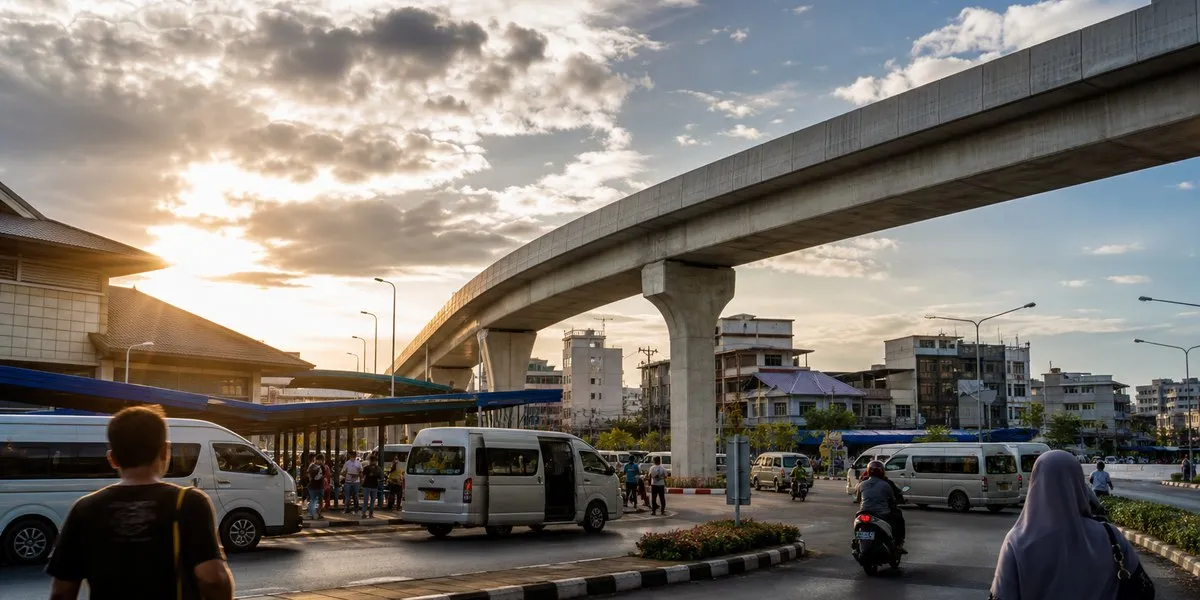
In Thailand, the Mass Rapid Transit Authority (MRTA) plans to develop rail public transport in five provinces — Chiang Mai, Phuket, Nakhon Ratchasima, Phitsanulok and Songkhla. The initiative is intended to improve transport connectivity, attract investment and support economic growth in regions outside Bangkok, Bangkok Post reports.
Projects for the regions
The MRTA has been assigned responsibility for regional mass transit projects by the Thai government and the Ministry of Transport. The authority said that each project will be assessed individually for feasibility, cost-effectiveness, environmental impact and benefits for local residents.
The assessment will also take into account urban planning, geography, weather, the existing transport network and residents’ travel habits. The MRTA believes that effective connections between new lines and existing public transport and infrastructure are important for attracting passengers.
Monorail in Hat Yai
As an example of a regional project, the MRTA cites a proposed monorail system in the city of Hat Yai in Songkhla province. It was initially developed by the Songkhla Provincial Administrative Organization. The plan provides for a 12.54-kilometre line with 21 stations, connecting the Khlong Hwa intersection with the minibus terminal.
More current news is available on the UA.News Telegram channel Telegram.
The MRTA is awaiting royal approval of a draft decree that would grant it the authority to operate rail transport in Songkhla. After the decree takes effect, the authority plans to commission a review of the feasibility study and a redesign, taking into account changes in urban development and the experience of the major flooding that occurred in Hat Yai in 2025. The line is tentatively scheduled to open in 2035, provided that the necessary planning and approval procedures are completed.
For Chiang Mai, Phuket and Nakhon Ratchasima, the MRTA has already submitted information on the proposed routes for alignment with existing transport plans. In Phitsanulok, the authority has completed a review of the terms of reference for hiring consultants to assess and design the proposed Red Line, as well as revise the project schedule in view of the planned high-speed railway.
Separately, the MRTA wants to strengthen the financial sustainability of future networks by developing commercial opportunities near stations, improving transfer hubs and cooperating with private businesses. The authority views stations not only as passenger boarding and alighting points, but also as centres connecting transport, business and communities.




