
Thailand plans to hire workers from Sri Lanka for the first time — The Japan Times
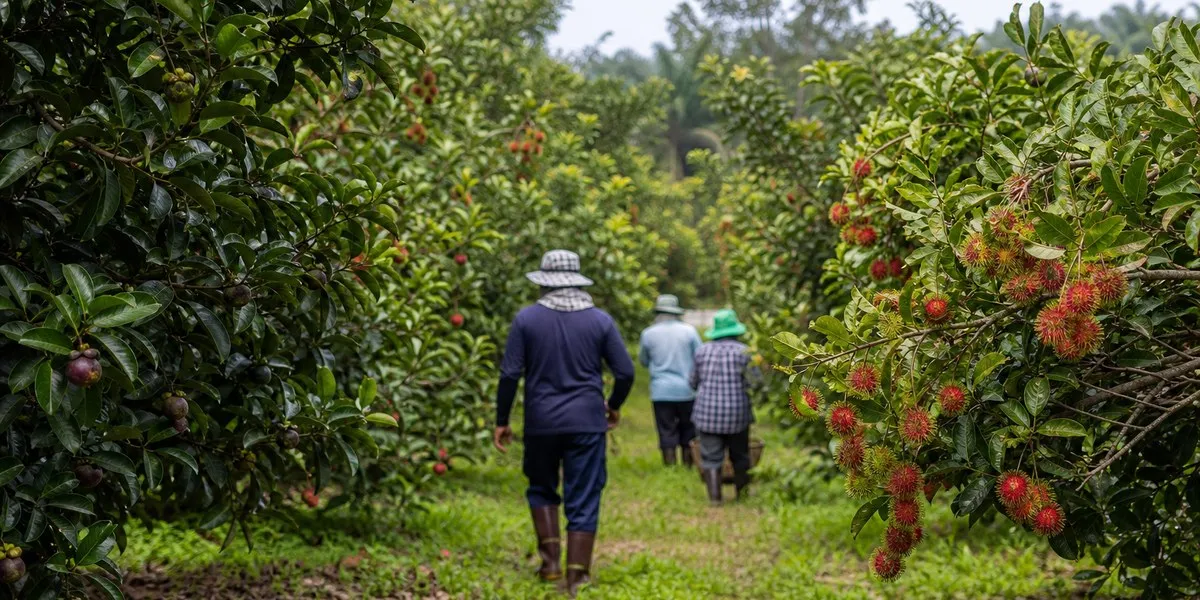
Thailand plans to recruit migrant workers from Sri Lanka, Nepal and Bangladesh for the first time amid a labor shortage that has left part of the harvest rotting on trees in the country’s eastern fruit-growing regions. The Japan Times reports.
In Chanthaburi province, where durian, mangosteen and rambutan are among the crops grown, farmers are facing fierce competition for workers. Local producer Jomsak Puthirattana said that after five Cambodian workers left when a border dispute disrupted border crossings, daily wages in some cases rose from 350–400 baht to 800–1,000 baht. At such costs, harvesting cheaper fruit became unprofitable.
Dependence on migrants
Migrants make up about one-tenth of Thailand’s workforce. Workers from Myanmar, Cambodia and Laos are traditionally employed on farms, construction sites and in factories, where employers find it difficult to recruit Thai nationals. At the same time, an increasing number of migrants work in the service sector in Bangkok and other major cities.
More current news is available on the UA.News Telegram channel Telegram.
The country’s domestic labor market is shrinking due to an aging population. Meanwhile, the inflow of workers from neighboring states is declining: because of the border dispute with Cambodia, many Cambodians have left Thailand, while political instability and employment restrictions in Myanmar have made it harder to recruit new workers.
First workers in January
Labor Minister Julapun Amornvivat said the first workers from Sri Lanka are expected to arrive in January, mainly for construction projects. Thailand is also discussing a pilot recruitment of about 10,000 people, while labor agreements with Nepal and Bangladesh are expected next year.
The need for workers is particularly acute in construction: according to Lisa Ngamtrakulpanit, president of the Thai Contractors Association, migrants account for 60–70% of the industry’s workforce of approximately 4.2–4.5 million people. The government is also preparing a program for accelerated renewal of work permits for migrants and the legalization of those already in the country without documents.




