
Gasoline sales limits have been lifted in 15 regions of Russia
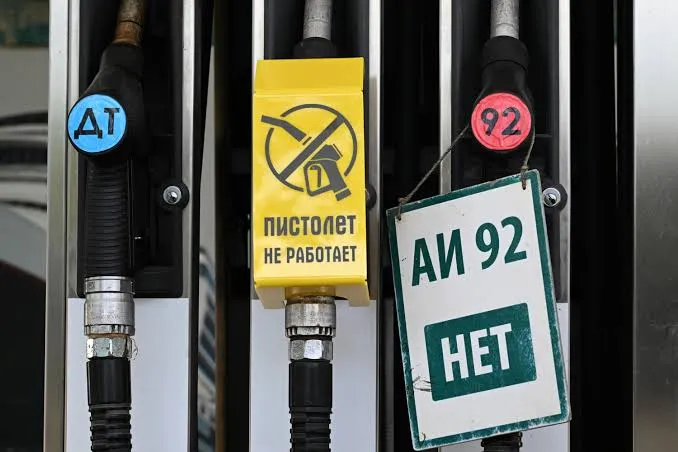
In October, at least 15 Russian regions resumed the free sale of gasoline after Ukrainian attacks on oil refineries subsided. At the same time, fuel supply problems in Russia persist.
Restrictions were lifted, in particular, in the Ryazan, Lipetsk, Kostroma, Voronezh, Novosibirsk, Tyumen, Sverdlovsk, and Tomsk regions, as well as in the Krasnodar and Stavropol territories.
Restrictions have also been completely lifted in the temporarily occupied Crimea and in Sevastopol, where the fuel crisis was among the most acute.
At the same time, restrictions remain in place in some Russian regions. In particular, in the Tambov Region, limits on the amount of fuel that can be purchased by a single person and a ban on filling jerry cans remain in effect. In the Yamalo-Nenets Autonomous Okrug, gasoline is also sold under quotas, and in some districts of the Leningrad Oblast, there are reported difficulties with fuel delivery.
Actual Fuel Availability at Gas Stations and Price Levels
Despite the easing of limits, the aggressor state’s fuel market is far from stabilizing. According to data from the specialized monitoring service “Benzonavt,” as of October 28:
A-92 gasoline was available at only 42% of Russian gas stations;
A-95 gasoline was available at only 34% of stations;
diesel fuel was available at 37% of gas stations;
high-octane A-98 and A-100 gasoline grades had virtually disappeared from widespread availability—they were available at 1% and 3% of gas stations, respectively.
In mid-October, Russian Deputy Prime Minister Alexander Novak claimed that the situation was stabilizing thanks to oil refineries resuming operations after repairs and the strengthening of their defenses. At the same time, this shift coincided with U.S. President Donald Trump’s demands to halt strikes on Russian oil refineries. After that, Ukraine carried out only a few strikes. The most recent ones targeted a facility in Ryazan on October 15 and a refinery in Surgut on October 16.
From October 20 to 26, Russian statistical agencies reported a decline in gasoline prices in 57 regions. Prices fell the most in the Kamchatka Krai—by 12.6%—and in the Ivanovo Oblast—by 11.4%. The average retail price of gasoline was 98.4 rubles per liter, while diesel fuel rose to 100 rubles.
According to estimates by the analytical group “OMT Consult,” which monitors more than 18,000 gas stations, the average price per liter of A-95 fell to 77.51 rubles, A-92 to 72.48 rubles, and diesel fuel—to 82.87 rubles.
Executives at industry companies note that a significant drop in retail prices should not be expected in the near future. According to their assessments, infrastructure damage and shortages have brought the market value of petroleum products to a new baseline.
As a reminder, Ukrainian forces have attacked about 30 oil refineries in the aggressor state, Russia.
Trump’s son-in-law again asked Zelenskyy to stop strikes on Russian oil refineries.
Zelenskyy is willing to refrain from striking Russian oil refineries in exchange for an expansion of Starlink.




