
A secret bunker used by Churchill, which had been hidden underground for 60 years, is being opened to the public in Britain
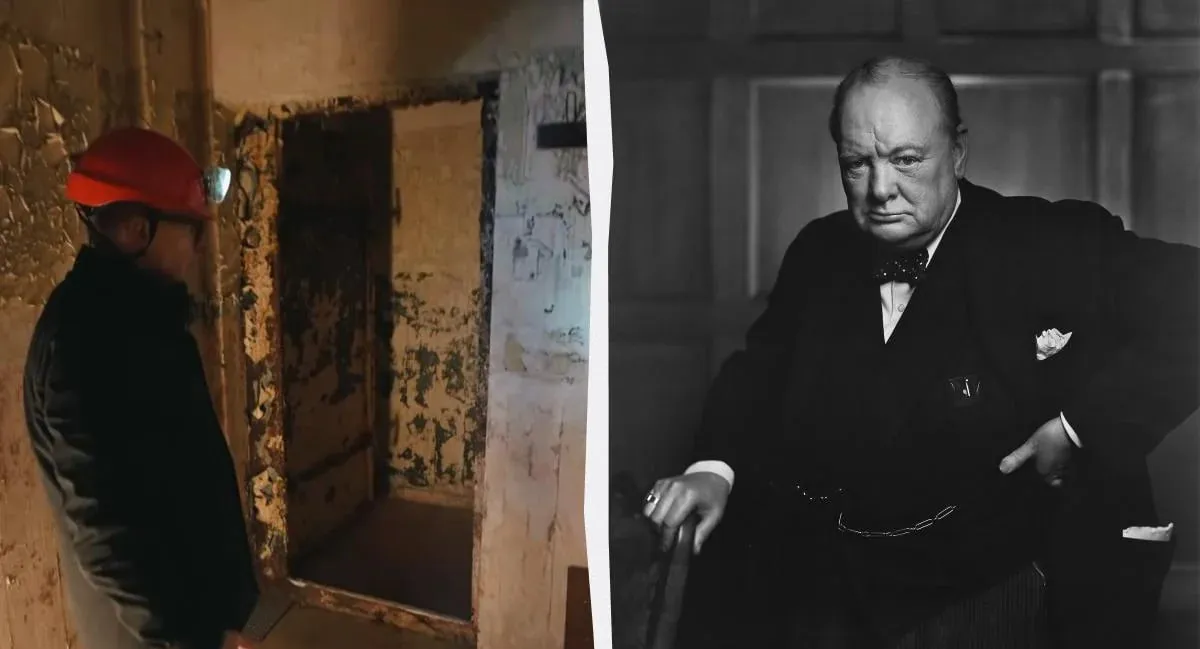
In the United Kingdom, a unique World War II command bunker—built on the orders of then-Prime Minister Winston Churchill—will open to the public starting Friday.
The underground command post housed a 1.8-meter-long electromechanical computer that tracked the locations of ships. It was from here that British military personnel coordinated artillery strikes against German ships in the English Channel.
The underground command post in the Fan Bay area, protected by concrete structures, housed the first land-based computerized artillery guidance system. According to John Barker, who led the archaeological excavations on behalf of the National Trust, it served as the “brain” of the artillery battery that defended Dover and attacked German ships in the English Channel.
Barker was the first person to enter the bunker after its rediscovery in 2017. Prior to that, the site had been secretly decommissioned in 1957 and, due to its military significance, remained classified until 1981.
“For an archaeologist studying military conflicts, it was a moment akin to the discovery of Tutankhamun’s tomb. We had done a tremendous amount of work researching the people who served here, and then suddenly we found ourselves right in their office. It was incredibly exciting,” he said.
How Churchill Ordered the Creation of a Secret Command Post
The creation of the command post and the artillery it commanded is directly linked to Winston Churchill. Shortly after his famous speech about the need to “fight the enemy on the beaches,” he visited the coast of Kent and was concerned that enemy ships were passing unhindered through the Strait of Dover.
At that time, Dover was on the front line of Britain’s defenses, which were regularly subjected to artillery fire from German guns positioned in occupied France.
In a memo dated July 1940, Churchill wrote:
“We must fight for control of the straits with artillery, destroy enemy batteries, and fortify our own.”
He ordered the use of the most advanced technology available at the time and demanded weekly reports on the progress of work to create a new defense system for Dover. The gun emplacements were ready in 100 days, and 64 days later, construction of the bunker with the command post was completed.
“The locals called these guns ‘Churchill’s favorites,’” Barker noted.
According to him, traces of the haste with which the facility was built can still be seen on site. In particular, rough holes for laying cables remain in the walls and floor. Contemporary accounts describe how the equipment was installed even before the blueprints for its layout were ready.
The control room housed a 1.8-meter-long electromechanical computer, known as an artillery fire control console. It calculated the positions of moving ships at the moment the shells struck and transmitted firing commands to the artillery crews, the article states.
Barker compared the discovery of the bunker to the rescue in the 1990s of Bletchley Park—the British center for decoding German codes during World War II, located in Buckinghamshire.
“We didn’t know about it back then, but now it’s part of our national consciousness. The command post at Fan Bay is a new chapter in our hidden history,” he said.
The archaeologist added that the typical image of artillery fire control is associated with dramatic scenes from war movies, where women from the Royal Naval Women’s Service move tokens around on a map. However, in Fanbei, it’s not about a map, but a real, cutting-edge electromechanical computer, which, according to Barker, is one of a kind.
In 1957, the computer was deliberately destroyed to prevent it from falling into enemy hands.
Up to ten people could work in the control room at the same time. Barker hopes to find relatives of those who served in the bunker to better understand how the machine worked.
“Everything we know about it is based on the manual and barely visible marks on the floor. I would very much like to hear from people whether their relatives served at Fan Bay, since very few documents have survived,” the researcher explained.
So far, only a few people who worked with the computer have been identified. Among them is Wallace Eaton, an actor who later played Senator Ludicrus Sextus in the comedy TV series *Up, Pompeii!* alongside Frankie Gowerd.
The documents also mention a man named W. P. Bryant, who held the military rank of junior bombardier and worked as a control station operator. “He was a tailor, so he probably had a knack for working with numbers,” Barker speculated.
The bunker has been preserved exactly as archaeologists found it
Starting Friday, the bunker will be open to visitors as part of tours organized by the National Trust. You can enter through a hatch in the middle of a field. The site has been preserved exactly as archaeologists found it.
Among the items left inside are old newspapers on the floor, shoes, and official notices. A chalk inscription on one of the walls of the service tunnel also remains: “The Heroes of Fan Hall—Dodds and Pettit.” Barker speculates that these individuals may have been involved in laying cables to the bunker.
“They probably declared themselves heroes, since they were responsible for laying thick cables through particularly awkward tunnels,” the archaeologist joked.
The Guardian reports on this.
A stolen photo of Churchill has been found in Italy.
Winston Churchill’s former home in London has been put up for sale




