
The European Parliament called for the establishment of a sanctions regime against corrupt officials
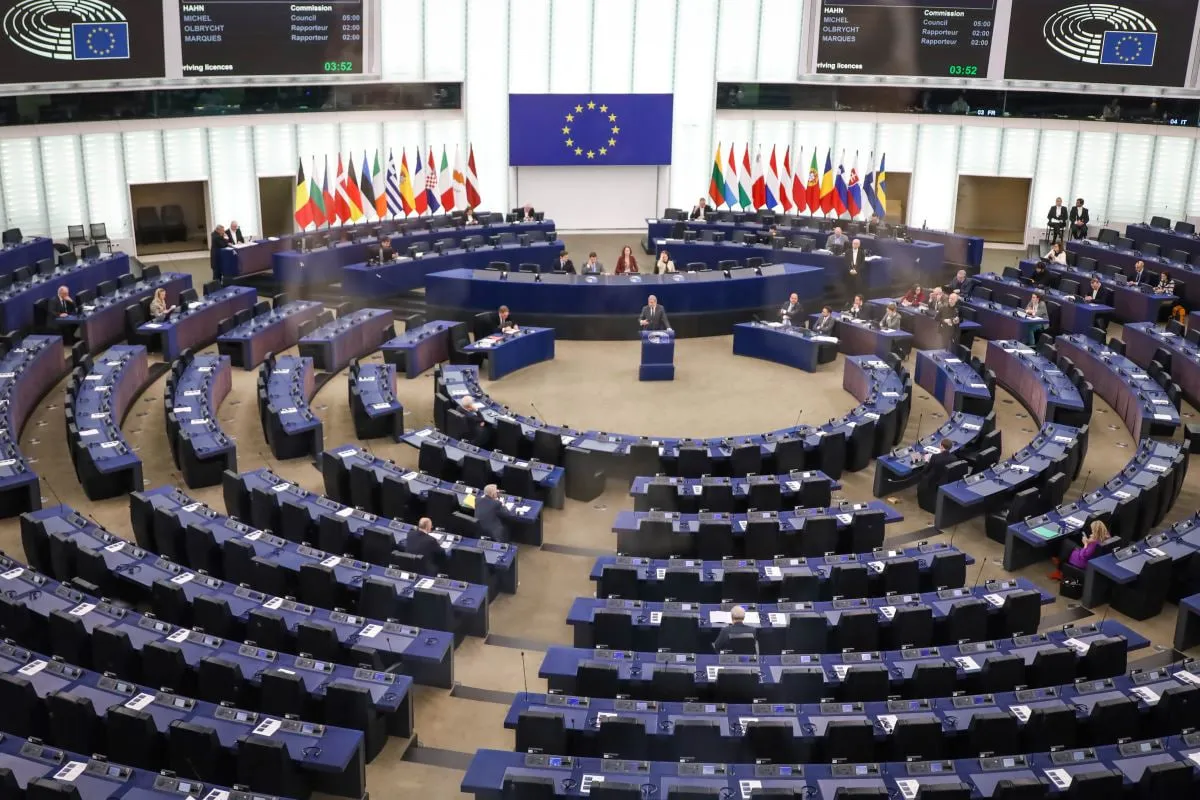
A group of Members of the European Parliament has called on EU institutions, as well as the heads of state and government of member states, to introduce a new sanctions regime against corrupt individuals and organizations. The initiative calls for the creation of a mechanism known as the “Magnitsky sanctions regime.”
In a letter addressed to the 27 leaders of EU countries, as well as the presidents of the European Parliament, the European Commission, and the European Council, it is proposed to amend the European Union’s current sanctions regime, the “EU Global Regime on Human Rights and Anti-Corruption Sanctions” (“European Magnitsky Act”).
As the parliamentarians note, EU sanctions should cover not only human rights violations but also serious acts of corruption—in particular, bribery, embezzlement of public funds, and the laundering of proceeds from such acts.
It is also proposed to rename the sanctions regime the “EU Global Regime on Sanctions in the Field of Human Rights and the Fight Against Corruption” in honor of Sergei Magnitsky, a Russian lawyer known for exposing a corruption scheme involving law enforcement officials and government officials in the Russian Federation.
As noted in the letter, the introduction of these changes became possible following the change of government under Viktor Orbán in Hungary.
“For many years, the requirement for unanimity within the EU was repeatedly used by the previous Hungarian government to block or delay sanctions and other foreign policy decisions. The new Hungarian government is committed to closer cooperation with the EU and to implementing anti-corruption reforms, which creates a real opportunity to adopt the proposed system of anti-corruption sanctions without further delay,” the MEPs’ statement reads.
MEPs point out that “Magnitsky laws” are currently in effect in the United States, Canada, the United Kingdom, and Australia, and each of these countries allows sanctions to be imposed both against human rights violators and against individuals involved in serious corruption. In contrast, such a practice does not currently exist in the EU.
“This allows corrupt foreign officials, against whom sanctions have already been imposed by other Western partners, to continue benefiting from EU institutions and its financial systems,” the statement emphasizes.
The lawmakers note that in 2023, the EU’s top diplomat, with the support of the European Commission, proposed a special EU sanctions regime targeting serious corruption. However, the proposal is still awaiting approval by the Council.
“We also reiterate Parliament’s request to officially link Sergei Magnitsky’s name to this regime—a call first made back in 2019. There is now an opportunity both to align the EU sanctions regime with those of its closest partners and to officially recognize it as the ‘EU Magnitsky regime,’ the letter adds.
This is stated in a letter from Members of the European Parliament, which was published on social media by Latvian MEP Rihards Kols.
As a reminder, the European Parliament has adopted common rules to combat corruption in EU countries.
The key suspect in the European Parliament corruption case has reached a plea deal with investigators.
MEPs called on EU ministers to resume negotiations on the time change — The Local Sweden.
The European Parliament has named the ICC as a finalist for the Sakharov Prize — Dawn.
The European Parliament is investigating a fake letter ahead of the election for vice-chair of the EPP Group — Politico Europe




