
In Serbia, student movement becomes challenge for Vučić’s party ahead of elections — BBC News
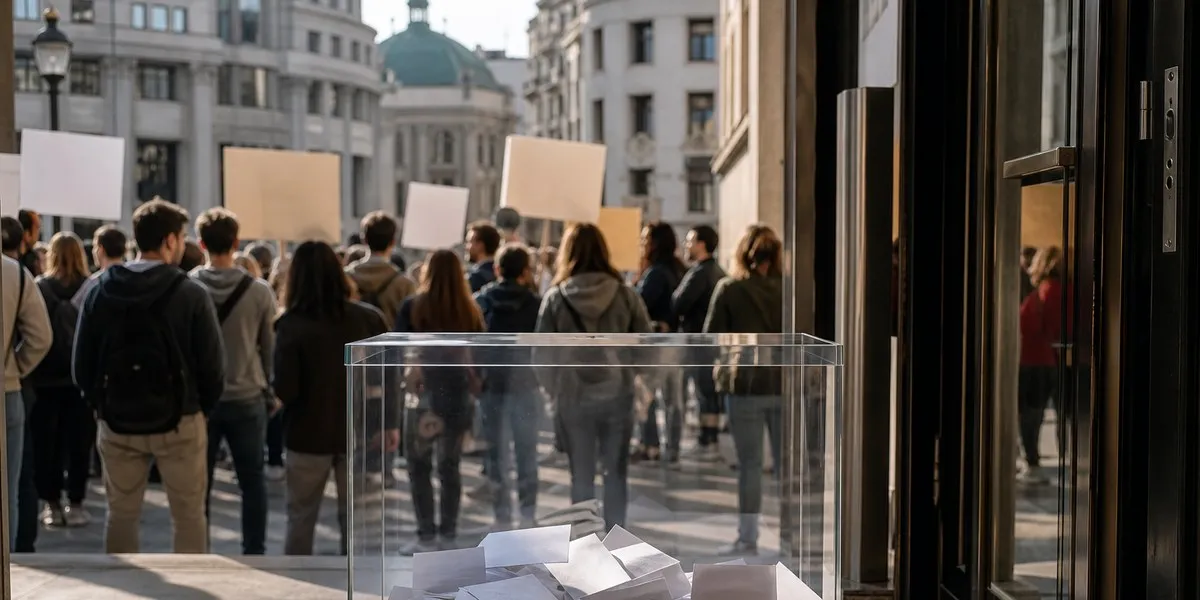
Serbia will hold early parliamentary elections on Sunday, ahead of which the student movement “Student List — Students Win” has become the main challenge for President Aleksandar Vučić’s Serbian Progressive Party. On Thursday, the final day of the election campaign, rallies were held across the country. The vote comes after two years of student protests that grew into a nationwide movement, BBC News reports.
The protests began after a concrete canopy collapsed at the railway station in Novi Sad on November 1, 2024. Sixteen people were killed. Critics linked the tragedy to corruption and negligence, as well as to the station’s reconstruction, with which Vučić closely associated himself. Several weeks after the protests began, the prime minister resigned.
A movement without formal leaders
The student movement has no obvious leaders and is organized through student assemblies, or plenums. At the same time, it has drawn not only young people but also farmers, actors and judges into the protests. Several opposition parties withdrew from the elections in support of the “Student List.”
The movement’s candidates are not students: the list includes teachers, university professors, doctors, farmers, scientists and actors. The top candidate is Ilija Srdanović, a cardiologist and professor from Novi Sad. Other candidates include former basketball player Dejan Bodiroga, actor Tihomir Stanić and former head of the National Bank of Serbia Dejan Šoškić.
More current news is available on the UA.News Telegram channel Telegram.
The movement’s 11-point programme provides for the creation of a police unit to detain those responsible for corruption, the removal from the Interior Ministry of officials who violated rules while suppressing protests or have links to organized crime, media reform, and an end to the appointment of party loyalists as heads of state-owned enterprises. Vučić and his party deny accusations of corruption and influence over the media.
Concerns over the fairness of the vote
Serbia’s parliament has 250 lawmakers elected under a proportional system in a single nationwide constituency. The country has 6.45 million registered voters. Eighteen lists are taking part in the election, seven of which submitted a full slate of 250 candidates; a 3% threshold is required to enter parliament.
European observers will monitor the elections. The Parliamentary Assembly of the Council of Europe has already said that the election climate is tense and polarized, with an atmosphere resembling a referendum. Independent organization CRTA reported threats, physical violence and surveillance of opposition activists, and also said that state and local authorities were involved in “electoral engineering.” The European Centre for Press and Media Freedom recorded around 160 attacks on media outlets and journalists in Serbia this year.




