
Photo: Rare mushrooms have been found in the Odesa region, including the Bohemian truffle
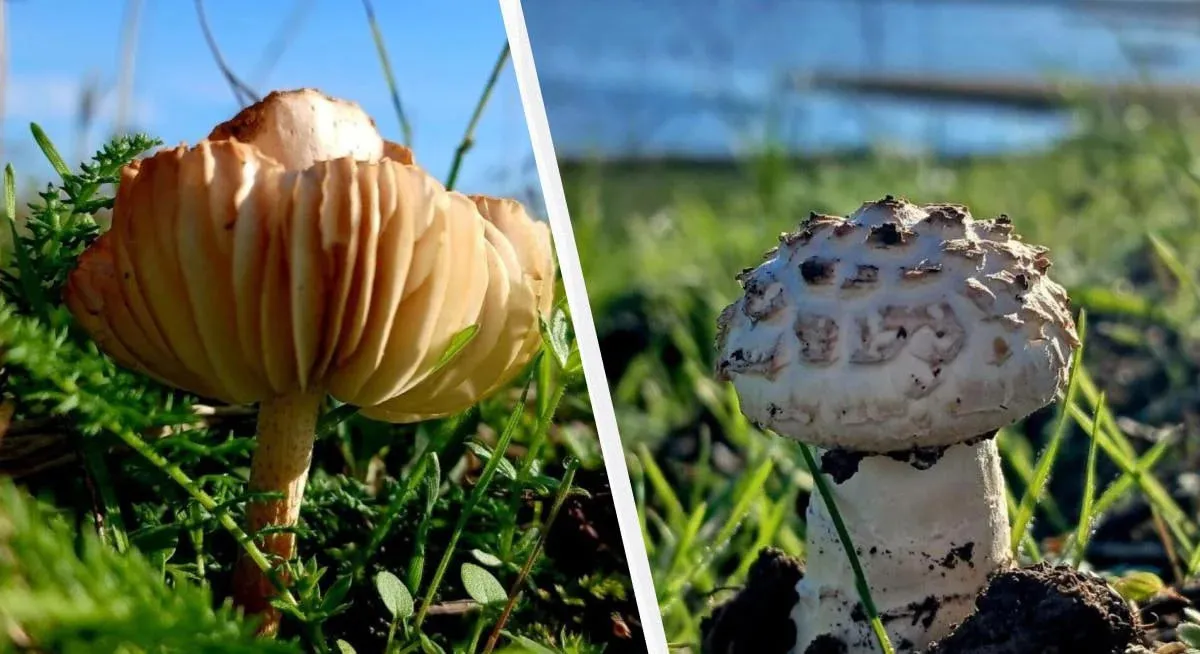
Rare species of mushrooms have been discovered within the “Tuzlivski Limany” National Nature Park in the Odesa region. The local ecosystem is rich not only in birds, mammals, reptiles, and various plants, but also in unusual fungi. Among them is the rootless pisolite, known in Europe as the “Bohemian truffle.”
As noted by the national park, fungi are an important part of the natural cycle of matter. They belong to a separate kingdom of living organisms, decompose organic matter, and return nutrients to the soil, supporting the functioning of ecosystems.
Some species of mushrooms also form mutually beneficial partnerships with plants, helping them absorb water and minerals.
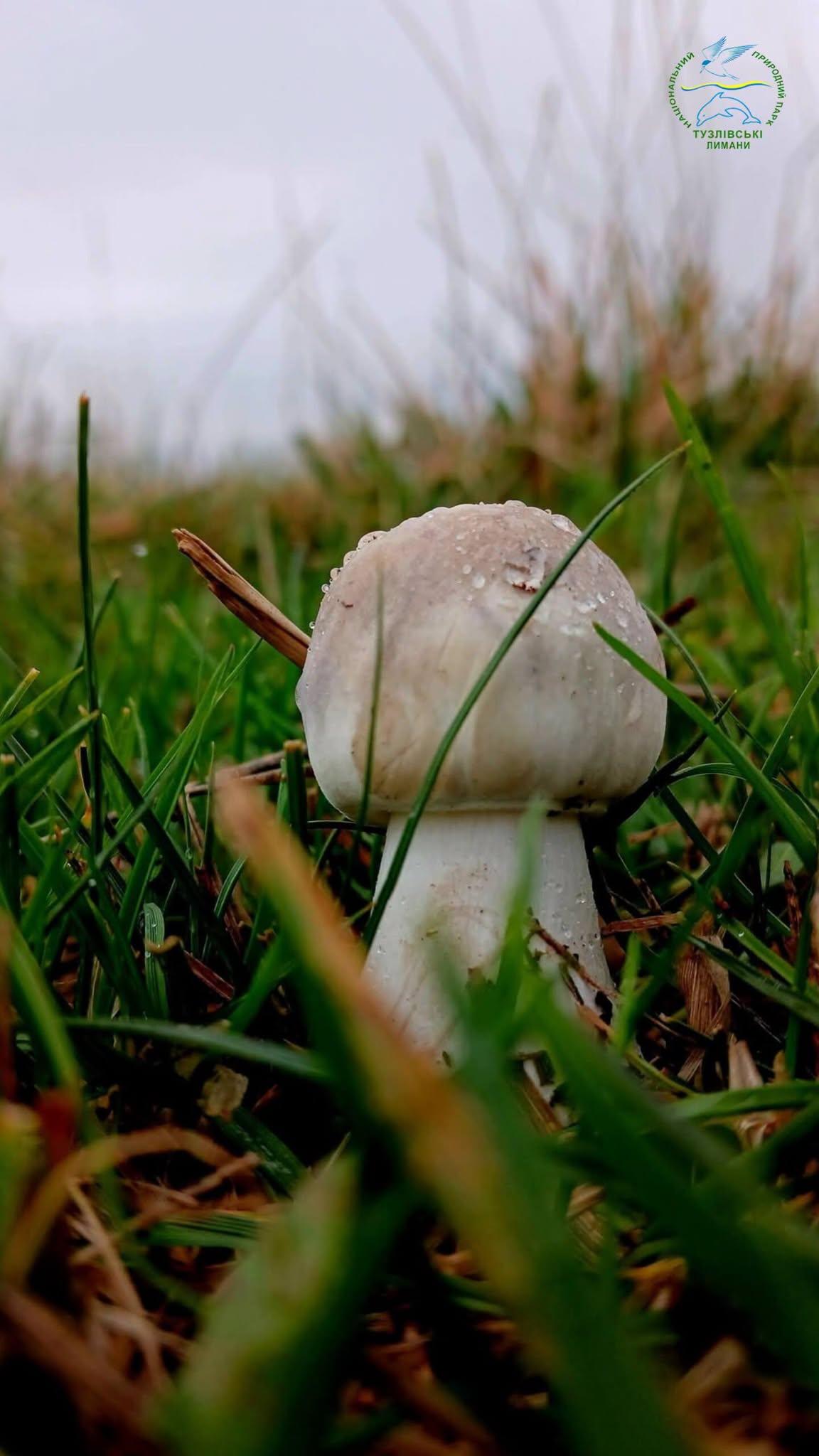
The fungal diversity of the “Tuzly Estuaries” is much richer than it might seem at first glance, experts say. Various macromycetes—fungi that form fruiting bodies visible to the naked eye—are found here. Among them are rain fungi, poronia, montanea, paneola, and other unusual representatives of the fungal world.
Rare species in need of protection are of particular value. According to research findings, five species of macromycetes listed in Ukraine’s Red Book have been identified within the national park.
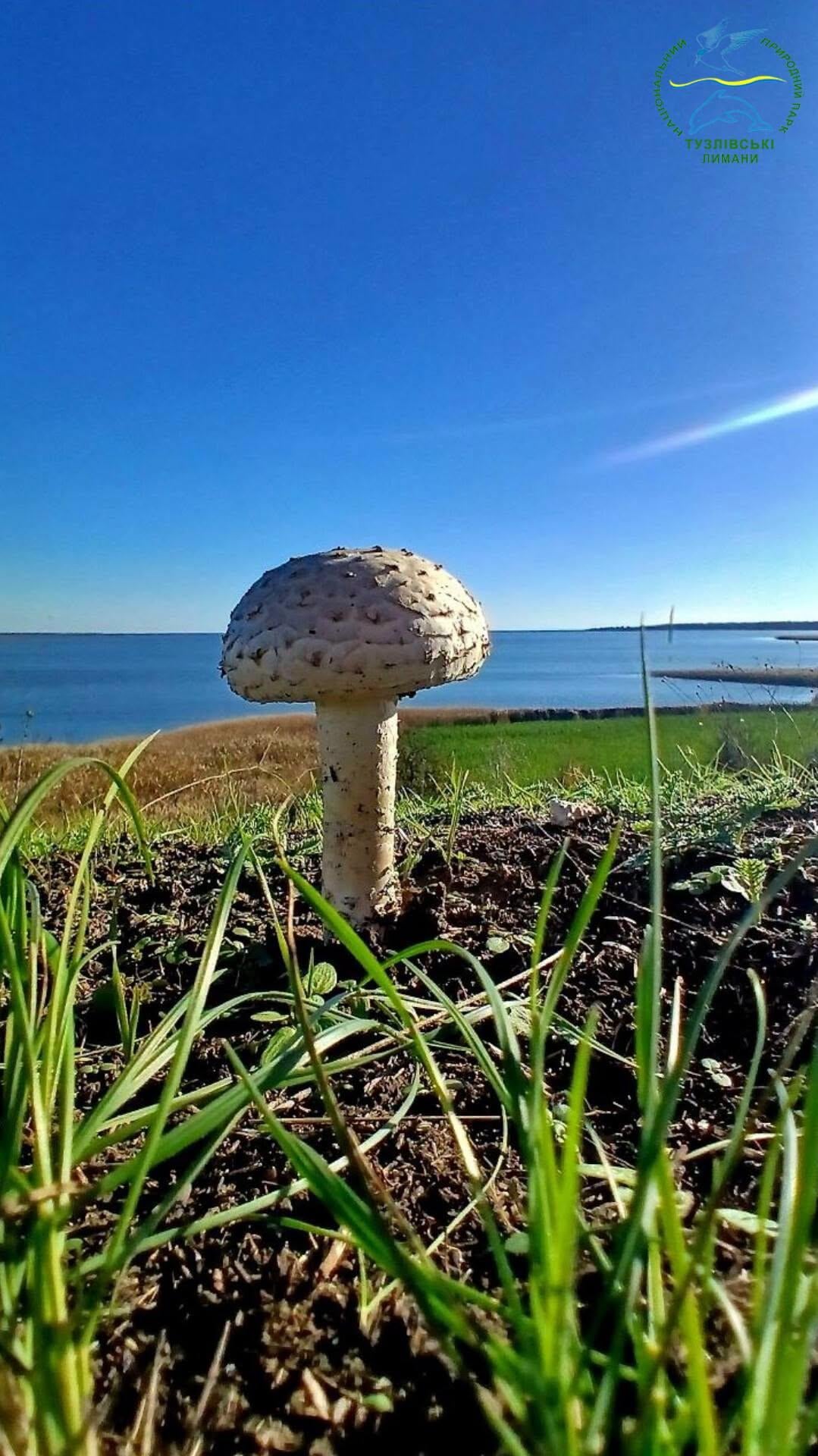
In particular, Montagnea radiosa grows here—an unusual mushroom adapted to life in arid conditions, particularly on sandy soils.
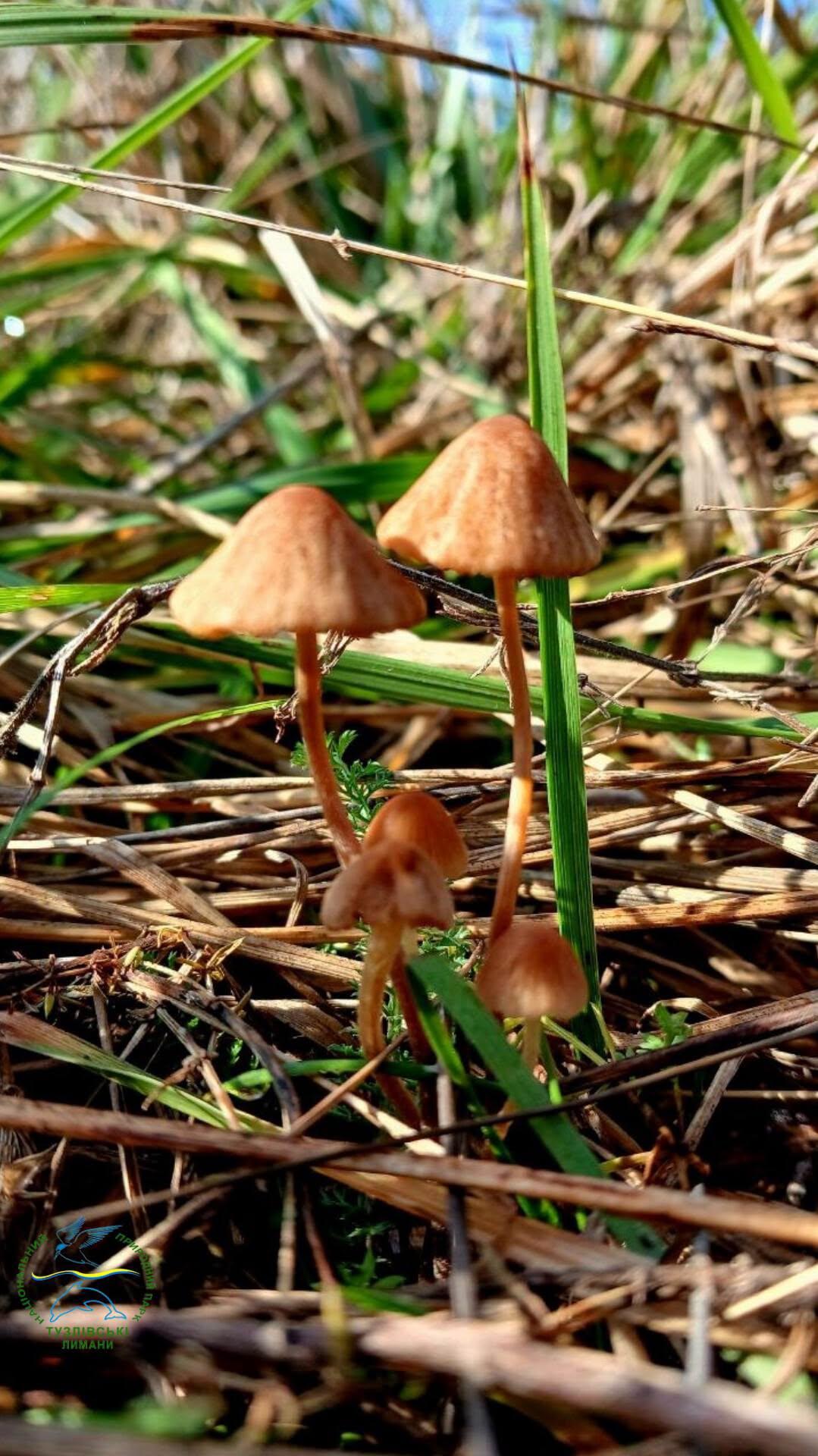
Another rare species is Panaeolus desertorum, which is found in open, arid habitats.
The list of Red Book fungi also includes Pisolithus arhizus. Its fruiting bodies have a distinctive structure: inside, they consist of numerous spore-bearing chambers. This fungus forms a mycorrhiza—a mutually beneficial relationship with tree roots.
Poronia punctata is distinguished by its small fruiting bodies with characteristic round depressions on the surface. It grows exclusively on old manure from herbivorous animals.
The fifth species is the long-rooted white mushroom (Leucoagaricus barssii). It was discovered within the park in October 2025, and this discovery represented a new addition to the reserve’s fungal diversity. The mushroom has an unusual, root-like stem and resembles a common champignon in appearance. In Ukraine’s Red Book, it is listed under the synonym Leucocoprinus macrorhizus.
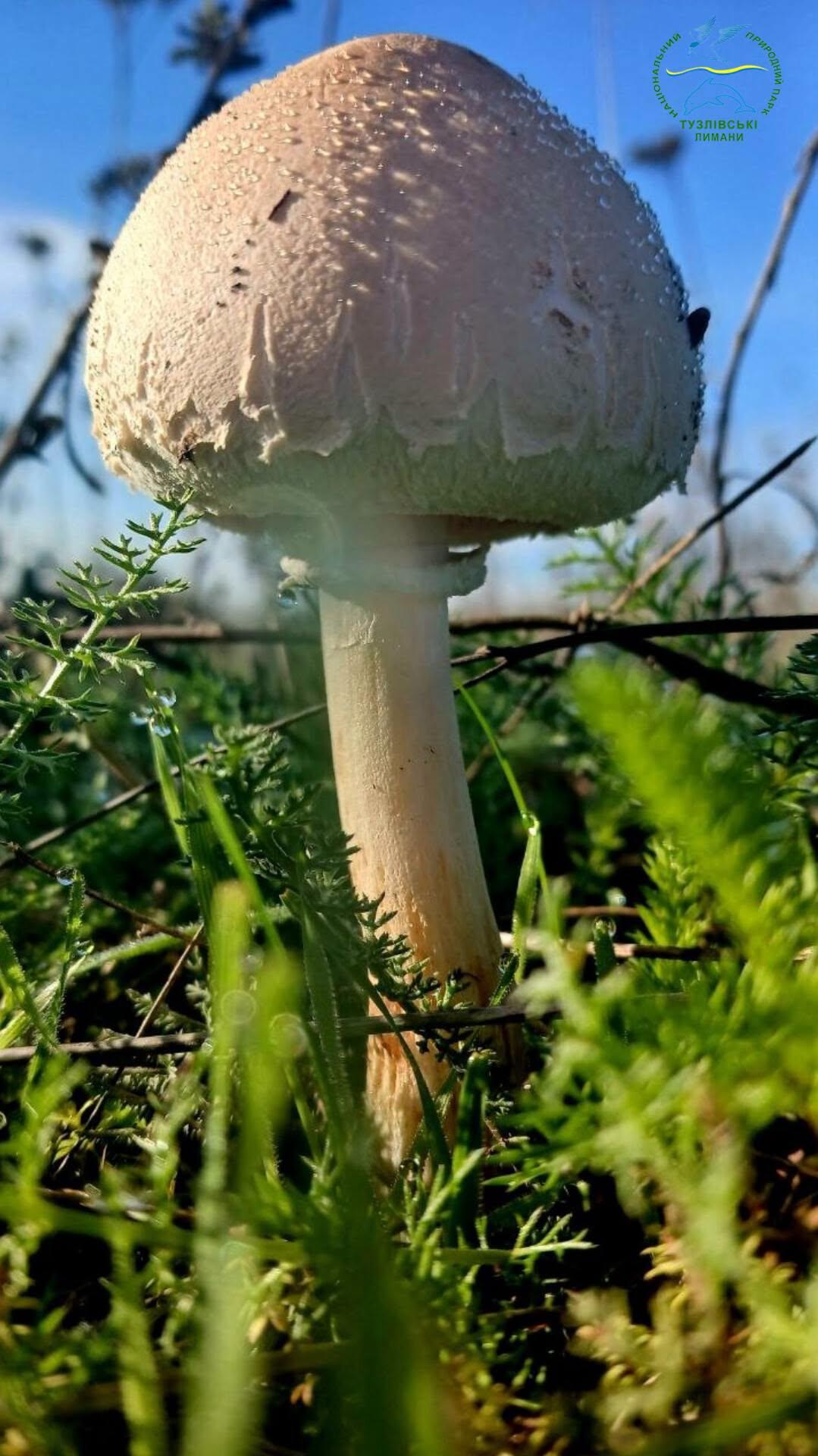
It is reported that last year, scientists not only recorded a Red Book species new to the park but also confirmed the growth of two other rare mushrooms—the spotted poronia and the desert paneola. Many mushrooms are hard to spot: they may lack bright colors or large fruiting bodies. Their appearance depends on humidity, temperature, soil characteristics, and other natural conditions.
Park officials urge visitors to be attentive during their walks and not to pick unfamiliar mushrooms or those they are unsure how to identify. Among them may be both poisonous and rare species listed in Ukraine’s Red Book.
What else is known about rare species
Montanea radiata (also known as Montanea arenaria) is a rare mushroom of the Agaricaceae family, adapted to life in arid conditions. According to open sources, the young fruiting body develops underground and resembles an oval cocoon of a grayish-straw color. The stem is woody, stiff, and resembles a dry twig—it extends upward and carries the cap to the soil surface. The cap is small, brittle, and often covered with sand or soil. Over time, its edges crack and turn outward, exposing black radial (ray-like) plates with spores, giving the mushroom the appearance of a withered black flower.
Pizolit is rootless—in Europe it is known as the “Bohemian truffle,” and in Australia it is called the “horse manure mushroom.” The lower part, with a root-like, branched growth, resembles a stem, most of which is buried in the soil. The thin, smooth, bumpy peridium is very brittle. When young, the mushroom is ochre-yellow; later, it turns yellow-brown, reddish-olive, or dark brown. As it grows, it can lift and damage asphalt.
Poronia punctata is a rare marsupial fungus of the Xylariales family. The fruiting body is initially club-shaped, later taking on a disc-like form (round, oval, or sometimes spatulate) with a diameter of 0.4–1.5 cm on a central stem. The surface is initially matte and white, later darkening to brown (especially near the edge) and turning black. A characteristic feature is the irregularly spaced black perithecia openings, appearing as dark dots, through which spores are released. The stem is 0.5–1.5 cm tall and 0.2–0.4 cm in diameter.




