
Lubinec traveled to the occupied town of Oleshky via Russia to rescue civilians
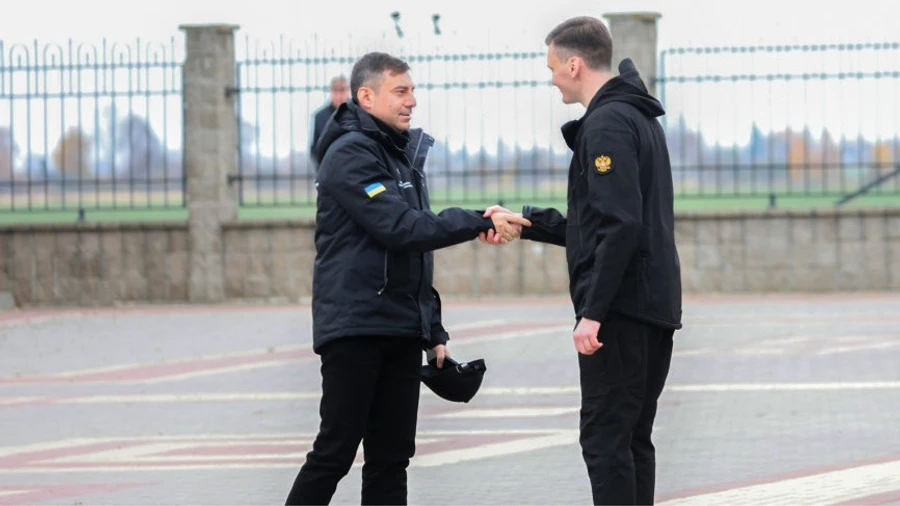
Dmytro Lubinets, the Verkhovna Rada Commissioner for Human Rights, agreed to travel to the temporarily occupied town of Oleshky in the Kherson region via Russian territory, as there is currently no other safe route for the humanitarian mission. The Ombudsman’s Office explained that the route across the front line is dangerous, and crossing the river is impossible due to landmines. As of October 29, Lubinets was still en route; the mission’s goal is to deliver aid to civilians and create conditions for their safe departure.
Dmytro Lubinets, the Verkhovna Rada Commissioner for Human Rights, agreed to a route through Russian territory to reach the temporarily occupied town of Oleshky. This was reported by the Ombudsman’s press service in a statement to journalists on October 29. The Office explained that there are currently only two possible routes to the city: across the front line or through Russian territory. The first option involves serious risks and restrictions, and crossing the river is impossible because the area is mined.
“That is why, given the situation and the need to ensure the speed and safety of the humanitarian mission, the Commissioner agreed to the route through Russian territory,” the Ombudsman’s Office noted.
The press service emphasized that the safety of civilians remains the top priority. The mission aims to deliver humanitarian aid to people remaining in Oleshky, as well as to facilitate the departure of those who wish to leave the occupied territory. The Ombudsman’s Office added that Lubinets is ready to answer questions regarding the route and details of the trip after the mission is completed. Until then, they urge people not to jump to conclusions and to wait for official information.
What Is Known About the Humanitarian Mission in Oleshky
A Ukrainian delegation led by Dmytro Lubinets set out for Oleshky on October 29. This was announced by Davyd Arakhamia, head of the “Servant of the People” parliamentary faction, who noted that the mission participants will monitor the progress of the operation and report on its results as soon as they are able to communicate. Lubinets himself confirmed that he is participating in the trip personally. According to him, the delegation’s task is not only to deliver aid but also to assess the situation on the ground and work to ensure that civilians can safely leave the city.
Prior to the trip, routes for delivering the cargo were being prepared in the area of the humanitarian mission. In particular, demining operations were underway in the territories through which the operation was planned to take place. According to Lubinets’ report on October 29, humanitarian aid for the city’s residents was being prepared for shipment the following day—October 30. At that time, the ombudsman also reported that the ceasefire in the mission area had been in effect for more than two days, and that, according to him, the parties were adhering to the agreements reached.
This mission is taking place under Russian occupation, so the organizers must coordinate not only the delivery of aid but also the safety of travel. Routes must be passable, and any ceasefire agreements must be upheld for the agreed-upon duration. A separate objective is to help civilians who wish to leave the city reach safer territory. At the same time, the specific results of the mission and the circumstances of the trip must be confirmed by official statements after its completion.
How the Ceasefire Was Agreed Upon
To carry out a humanitarian mission in the Oleshky area, a ceasefire was implemented in designated territories on October 27. According to Lubinets, it took effect at 3:00 a.m. Kyiv time. The agreement stipulates that the ceasefire will last until 10:59 p.m. on November 1. Its purpose is to create conditions for preparing and conducting the humanitarian operation, including clearing routes of mines, delivering aid, and organizing the possible evacuation of civilians.
Lubinets stated that as of the evening of October 27, the Ukrainian and Russian sides were adhering to the agreements, and no violations of the ceasefire had been recorded. He released similar information on October 29, when he reported that the ceasefire had been in effect for 54 hours. At the same time, these statements pertain to a specific period and designated territories related to the humanitarian mission, rather than the entire front line.
According to the ombudsman, the agreements were coordinated during negotiations with Yana Lantratova, the Human Rights Commissioner of the Russian Federation. He also mentioned the mediation and coordination efforts of U.S. First Lady Melania Trump. Lubinets thanked everyone who participated in the process and emphasized that the most important thing now is to help people and ensure their safety.
What Lubinets Himself Said
On October 29, Dmytro Lubinets reported that he was still en route to Oleshky and that the humanitarian mission was ongoing. He drew attention to social media posts claiming he was on Russian territory and noted that many questions and provocative posts were circulating regarding the trip. The Ombudsman explained that he had traveled to the city to see the situation firsthand and to provide updates on the operation’s progress. “Please trust official sources and do not draw conclusions from unverified reports. Because you cannot even imagine how difficult these negotiations were—and how long they took—for me to be here where I am now,” Lubinets wrote.
He added that at that point, the delegation had only covered part of the way toward the planned outcome, so he asked that questions be held until his return. According to the ombudsman, participating in the mission is not a formality for him, but an opportunity to personally assess the situation and ensure that the agreements reached are being implemented. He also thanked U.S. citizens who helped organize the process and Ukrainians who held protests abroad to draw attention to Oleshko’s situation.
Explaining why he decided to go in person, Lubinets emphasized his responsibility toward people in need of help. “Because when it comes to saving people, it’s important to be there. It’s important to understand what’s happening on the ground and to do everything possible to ensure that the agreements reached are implemented. And if I had to go for the sake of just one person—I would go again,” the ombudsman said.
Why the situation in Oleshky requires humanitarian aid
Oleshky is located on the left bank of the Dnipro River in the Kherson region and is under Russian occupation. Due to hostilities, dangerous road conditions, and landmines, access to the city is difficult. This creates additional obstacles to the delivery of essential supplies and the evacuation of people who wish to leave the occupied territory. That is precisely why a humanitarian mission requires prior arrangements and the planning of safe routes.
Under such conditions, it is important not only to deliver food and other essential supplies but also to organize aid in a way that does not expose civilians to additional danger. Clearing routes of mines is one of the key stages of preparation, as even during a ceasefire, mines and other explosive devices remain a threat. It is equally important that ceasefire agreements remain in effect for the entire duration of the operation.
Another key area of work is ensuring that civilians can leave safely. This requires coordinating the route, conditions of movement, and the actions of the parties controlling the relevant territories. At the same time, not all details of the operation can be made public while it is underway, as premature disclosure of information could create additional risks for the participants and the people they are trying to help. Therefore, final conclusions about the mission’s results should be drawn after the participants have issued an official report.
What’s Next
As of October 29, Lubinets reported that the convoy was continuing toward Oleshky. According to the initial plan, the humanitarian aid was to be delivered to the city on October 30, and the ceasefire was agreed upon until the evening of November 1. However, the scheduled dates do not mean that all stages of the mission have already been completed: the outcome depends on the security situation, the condition of the routes, and compliance with the agreements.
The Ombudsman’s Office stated that once the humanitarian mission is complete, Lubinets is ready to answer questions regarding the route and circumstances of the trip. Until then, official statements remain the primary source of information on the progress of the operation. Its key objective is to deliver aid to the residents of Oleshky and to enable the safe evacuation of civilians in need.
Thus, the Ombudsman’s Office explained the decision to travel through Russian territory by the lack of any other viable route and the need to conduct the humanitarian mission as safely as possible. Details of the trip and its results are expected to be released after the operation is completed. The Ombudsman’s press service reported this in a statement to journalists.
Lubinec called for information to be provided about residents of the occupied town of Oleshky for the humanitarian mission.
Dmytro Lubinets, the Ukrainian Parliament’s Commissioner for Human Rights, held an online meeting with Russian Ombudswoman Yana Lantratova. During the conversation, the parties discussed the details of the humanitarian mission in Oleshky, which had already been preliminarily agreed upon.
The General Staff of the Armed Forces of Ukraine announced that Ukraine will implement a ceasefire in a designated area of the temporarily occupied town of Oleshky in the Kherson region starting at 3:00 a.m. on October 27, Kyiv time. This is necessary to carry out a humanitarian operation in the town. Military officials stated that they will make every effort to assist the residents of Oleshky and ensure their safety.




