
November 20, 2026 — Birthday of the Ukrainian People's Republic: How the Third Universal Changed the History of Ukraine
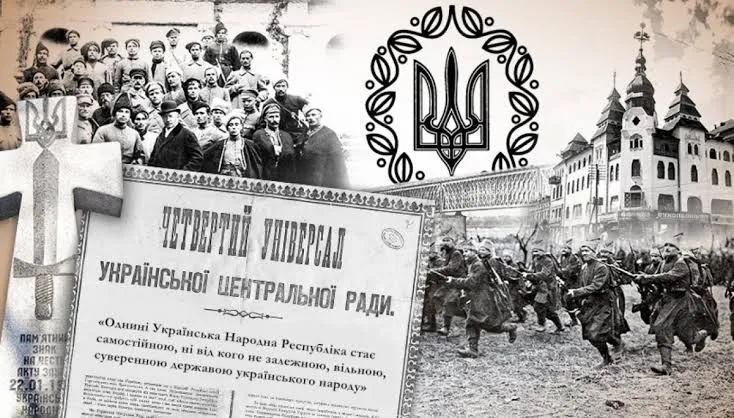
On November 20, Ukraine commemorates the proclamation of the Ukrainian People’s Republic—an event that marked one of the key stages in the restoration of Ukrainian statehood in the 20th century. On this very day in 1917, the Ukrainian Central Rada adopted the Third Universal, proclaiming the establishment of the UPR. This did not yet mean full independence from Russia, but it was an important step toward it: the UPR was officially declared a fully independent state in January 1918.
November 20, 2026, marks the 109th anniversary of the proclamation of the Ukrainian People’s Republic. This date is associated with the Third Universal of the Ukrainian Central Rada, which was adopted on November 20, 1917, according to the new calendar. According to the old Julian calendar, which was in use at the time, this was November 7. That is why historical documents and studies often feature a dual date: November 7 (20).

This is not a public holiday with an official day off, but a historic commemorative date that is remembered in Ukraine in the context of national history and the struggle for independence. It commemorates the moment when the Ukrainian political movement took an important step from demanding autonomy to establishing its own republic. The UPR had its own governing bodies, a government, legislative decisions, and a territory over which its authority extended. Despite difficult circumstances and the war, Ukrainian leaders sought to build a state based on democratic principles and citizens’ rights.
It is important to understand that on November 20, 1917, Ukraine had not yet declared full independence. The Third Universal defined the UPR as a republic that was to maintain a federal relationship with the Russian Republic. The final break with this plan occurred on January 22, 1918, when the Central Rada adopted the Fourth Universal and proclaimed the UPR an autonomous and independent state. Therefore, November 20 is not the date of the declaration of independence, but the birthday of the Ukrainian People’s Republic.
What Happened in Ukraine Before the Proclamation of the UPR
To understand the significance of the Third Universal, we must go back to the events of the spring of 1917. At that time, a revolution took place in the Russian Empire, as a result of which Emperor Nicholas II abdicated the throne, and power was taken over by the Provisional Government. The imperial system began to crumble, and the peoples who had previously been under the rule of St. Petersburg gained the opportunity to more actively assert their own political rights. Ukrainians also seized this opportunity and began demanding self-government and national rights.

In March 1917, the Ukrainian Central Rada was established in Kyiv. It brought together representatives of Ukrainian political parties, civic organizations, cultural societies, and other groups. The historian and public figure Mykhailo Hrushevsky became the chairman of the Central Rada. The organization gradually evolved into the main representative body of the Ukrainian national movement. Its mission was to achieve political self-government for Ukraine and to protect the interests of the Ukrainian people.

The first major step was the First Universal, proclaimed on June 23, 1917. In it, the Central Rada declared that the Ukrainian people had the right to independently govern their lives on their own land. The document effectively proclaimed Ukraine’s autonomy, although it did not yet provide for separation from Russia. Later, in July, the Second Universal was issued—a compromise with the Provisional Government. The Central Rada agreed to postpone a final decision on the issue of autonomy until the All-Russian Constituent Assembly, and in return secured partial recognition of its powers.

In the fall, the situation escalated sharply. In October 1917, the Bolsheviks staged a coup in Petrograd, overthrew the Provisional Government, and seized power. A new conflict began in Russia, and the central government effectively lost control over many territories. Ukraine faced the threat of chaos and armed conflict. The Central Rada understood that it was necessary to establish a more robust system of government and define the political status of Ukrainian lands. It was precisely these circumstances that prompted it to proclaim the Ukrainian People’s Republic.
How the Third Universal Was Adopted
The decision to proclaim the Ukrainian People’s Republic was adopted at a session of the Small Council of the Ukrainian Central Rada in Kyiv on November 20, 1917. Mykhailo Hrushevsky addressed the deputies. He emphasized that the country needed a strong and clear system of government capable of maintaining order during a political crisis. In his view, the proclamation of an independent republic was to serve as the foundation for this.

In the text of the Third Universal, the Central Rada addressed the Ukrainian people and all peoples living on the territory of Ukraine. The document began by noting the difficult times facing the Russian Republic and the danger of anarchy. The authors emphasized that Ukraine, too, could descend into chaos if it lacked a unified government. This was followed by the document’s key historical declaration: “From this day forward, Ukraine becomes the Ukrainian People’s Republic.”

The Universal proclaimed the UPR but at the same time provided for the preservation of a federal relationship with the Russian Republic. The Central Rada still hoped at that time that Russia would become a federation of equal and free peoples. In other words, Ukraine was to have its own governing bodies and independently resolve internal matters, while formally remaining part of a broader federal union. This approach reflected the political views of a significant portion of Ukrainian leaders at the time, who were not yet ready to immediately declare full independence.
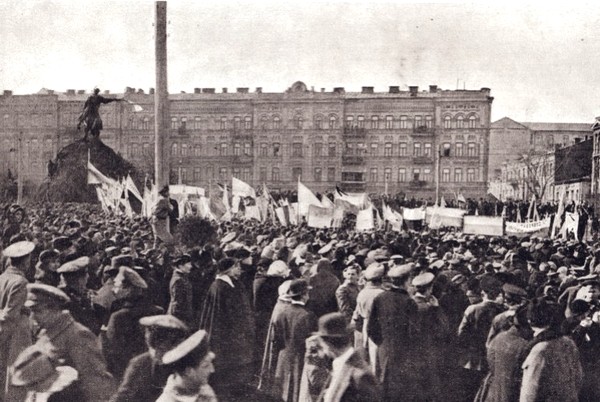
After the document was adopted, its text was made public, and the news of the establishment of the UPR became a major event for Ukrainian society. Two days later, on November 22, a solemn prayer service was held at St. Sophia Cathedral in Kyiv. Military units lined up near the cathedral, and the event was accompanied by festive celebrations. This became one of the first public commemorations of the establishment of the Ukrainian People’s Republic.
What Changes Did the Third Universal Envisage?
The Third Universal was not merely a declaration of the establishment of a new republic. It contained specific decisions intended to transform political, economic, and social life. The Central Rada sought to demonstrate that the UPR would be a state in which the government would take into account the interests of ordinary people. The document addressed land, labor, civil liberties, the courts, and the rights of national communities.
One of the most important issues was land. The Universal abolished private ownership of land held by landowners, monasteries, churches, and other large non-agricultural landowners. The land was to be transferred to land committees, which were to determine how it would be used. This decision met the expectations of many peasants, who demanded land redistribution and opposed large landowner estates.
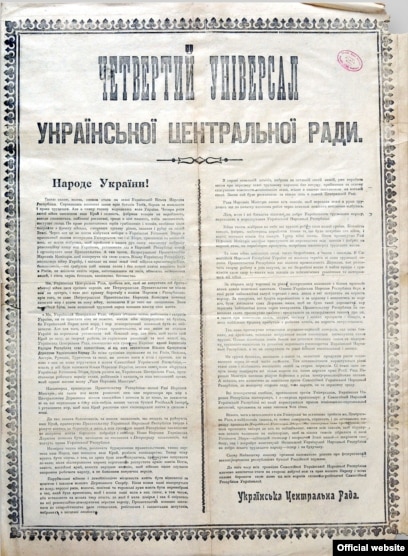
The document also provided for the introduction of an eight-hour workday. This was an important issue for workers, as at the beginning of the 20th century, people at many enterprises worked significantly longer hours. The Central Rada promised to establish state control over production and to take measures to end the war as quickly as possible. In a country undergoing a revolution and the First World War, these provisions were of particular importance.

A separate section addressed the rights and freedoms of citizens. The Third Universal proclaimed freedom of speech, the press, religion, assembly, association, and strike. It guaranteed the inviolability of the person and the home, abolished the death penalty, and declared an amnesty for political prisoners. It also addressed the reform of the judicial system and the establishment of an independent court. For that time, these were quite bold democratic provisions.
Attention to national minorities was also important. Ukraine was a multinational territory where Jews, Poles, Russians, and representatives of other peoples lived alongside Ukrainians. The Universal granted them the right to national-personal autonomy. This meant the opportunity to independently develop their own cultural, educational, and civic life. Thus, the Central Rada sought to build a republic not only for Ukrainians but also for all the peoples living within its borders.
Which territories were part of the UPR
The Third Universal also defined the territory of the Ukrainian People’s Republic. It was to comprise nine provinces in which the Ukrainian population constituted a majority. These were the Kyiv, Volyn, Podillia, Chernihiv, Poltava, Kharkiv, Katerynoslav, Kherson, and Tavria provinces. At the same time, Crimea was not included in the territory of the UPR at this stage.
The borders were not considered final. The document noted that the question of annexing parts of the Kursk, Voronezh, and Kholm provinces, as well as other adjacent territories where Ukrainians constituted the majority of the population, should be resolved with due regard for the will of the local residents. In other words, the Central Rada sought to define borders based on the national principle, rather than simply mechanically replicating the administrative boundaries of the former empire.
Kyiv became the capital of the UNR. It was here that the Central Rada and its government—the General Secretariat—operated. Until the Ukrainian Constituent Assembly was convened, they were to exercise legislative and executive power. The Constituent Assembly was to be convened so that representatives of the people could determine the future form of government and enshrine it in law.

Interestingly, the Universal not only defined the republic’s territory but also outlined a specific political plan for the coming months. Elections to the Ukrainian Constituent Assembly were scheduled for January 9, 1918, and the assembly was to convene on January 22. However, due to subsequent military and political events, it was not possible to implement this plan as originally intended.
Why the UPR Did Not Become Independent Immediately
Today it may seem strange that after proclaiming its own republic, Ukraine still maintained ties with Russia. But for the political figures of 1917, this was part of the state-building plan at the time. The Central Rada hoped that after the revolution, Russia would transform into a democratic federation in which different nations would have equal rights. Ukraine was to be one of these constituent entities and decide its internal affairs independently.
However, events quickly showed that reaching an agreement with the new Bolshevik government would be difficult. The Bolsheviks did not recognize the Central Rada’s political course and sought to extend their own authority over Ukrainian territories. By the end of 1917, the confrontation between Kyiv and the Bolshevik leadership had intensified. Ukraine faced a real threat of armed intervention.

In January 1918, the Central Rada took the next step. On January 22, the Fourth Universal was adopted, proclaiming the Ukrainian People’s Republic “an autonomous, independent, free, and sovereign state of the Ukrainian people.” Thus, the UPR definitively declared its independence from Russia. This document was a logical continuation of the process that began with the proclamation of the republic in November 1917.

However, the struggle to preserve statehood continued. The UPR had to withstand the Bolshevik offensive, weather political upheavals, and navigate complex international negotiations. From 1918 to 1921, Ukrainian troops and the government continued to fight for independence, but they were unable to maintain the state amid the military conflict. Despite this, the experience of the UPR became an important part of the history of Ukrainian statehood, and the idea of an independent Ukraine did not disappear.
How the Day of the Proclamation of the UPR Is Observed Today
The Day of the Proclamation of the UPR does not have the status of a separate national holiday with an official day off. It is, first and foremost, a historical date commemorated as part of events dedicated to the Ukrainian Revolution of 1917–1921 and the struggle for independence. In Ukraine, there is no single mandatory format for commemorating this day, as there is, for example, for Independence Day or Constitution Day. At the same time, historians, museums, archives, educational institutions, and civic organizations regularly highlight the events of November 1917.

Museums may open themed exhibitions for this date, displaying copies of historical documents, photographs, and materials about the activities of the Central Rada. Visitors learn about Mykhailo Hrushevsky, Volodymyr Vynnychenko, Symon Petliura, and other figures in the formation of the Ukrainian state. Special attention is given to the texts of the Universal Declarations, as they help illustrate how the political demands of the Ukrainian movement evolved during 1917–1918.

Schools and universities can use this date as an opportunity for thematic lessons, lectures, and discussions. Students learn about the history of the Ukrainian Revolution, compare the First, Second, Third, and Fourth Universal Declarations, and discuss why the Central Rada initially sought autonomy but later proclaimed independence. They also hold history quizzes, screenings of documentaries, and meetings with researchers.

The publication of historical documents and archival materials plays an important role. Thanks to digital archives, today you can read the text of the Third Universal, view its historical copies, and learn exactly how the proclamation of the Ukrainian People’s Republic took place. This allows people not only to commemorate the date but also to familiarize themselves firsthand with the document that became one of the key acts of Ukrainian statehood.

In Kyiv, St. Sophia Square and St. Sophia Cathedral hold special symbolic significance. It was there, on November 22, 1917, that the celebrations marking the proclamation of the UPR took place. Therefore, historical tours of the capital’s center, stories about the Central Rada, and reflections on the events near St. Sophia are among the ways to commemorate this date. At the same time, modern events do not necessarily recreate the events of 1917—their format depends on the organizers and the specific year.
Interesting Facts About the Third Universal and the UPR
- The UPR was proclaimed following the Bolshevik coup in Petrograd. The Central Rada feared that the political chaos in Russia would spill over into Ukrainian territory. Therefore, the creation of the republic had not only symbolic but also practical significance—it was necessary to determine who would govern Ukraine.
- The Third Universal was not a declaration of full independence. The document referred to a federal relationship with the Russian Republic. The UPR’s independence was officially declared only on January 22, 1918, by the Fourth Universal.
- The UPR had its own capital—Kyiv. The document defined nine provinces that were to become part of the republic. At that time, Crimea was not included in this list.
- The Third Universal contained social provisions that were progressive for its time. It provided for an eight-hour workday, the abolition of the death penalty, amnesty for political prisoners, and democratic freedoms. It also called for the abolition of large-scale landownership by the landed aristocracy.
- The document provided for the protection of national minorities. In particular, Russians, Jews, and Poles living in Ukraine were granted the right to national-personal autonomy. This was an important provision for the multinational society of that time.
- The proclamation of the UPR was accompanied by celebrations in Kyiv. Two days after the adoption of the Universal, a prayer service was held at St. Sophia Cathedral, while military units and citizens gathered in the square. The text of the document was read aloud during a public assembly.
Why This Date Is Important for Modern Ukraine
The proclamation of the Ukrainian People’s Republic was one of the key moments in the restoration of Ukrainian statehood in the 20th century. It demonstrated that, after centuries of living within the boundaries of empires, Ukrainians aspired to have their own government institutions, laws, and the ability to determine their own future. The Central Rada did not merely declare political ambitions; it sought to establish state institutions and enshrine citizens’ rights in a specific document.
The history of the UPR also serves as a reminder that statehood does not arise merely through a proclamation. It must be defended, developed, and filled with real substance. The Ukrainian People’s Republic faced war, internal conflicts, and external pressure. Its leadership had to make decisions under conditions where the situation was changing very rapidly, and there was almost no time to build stable state institutions. Today, the Third Universal is important not only as a historical document. It shows that the Ukrainian tradition of statehood has deeper roots than the 1991 declaration of independence. The UPR became part of this tradition, and the experience of the Ukrainian Revolution influenced the subsequent understanding of Ukrainian independence.
Therefore, November 20 is an opportunity to remember the people who, over a century ago, sought to build their own republic, as well as the decisions that became pivotal to Ukrainian history. The Third Universal did not end the struggle for independence, but it ushered in a new phase in the restoration of Ukrainian statehood. For this very reason, the proclamation of the UPR remains one of the events worth remembering and discussing not only on its anniversary but also in the context of Ukraine’s contemporary history.




