
Zelenskyy signed a decree on the protection of national broadcasting during wartime
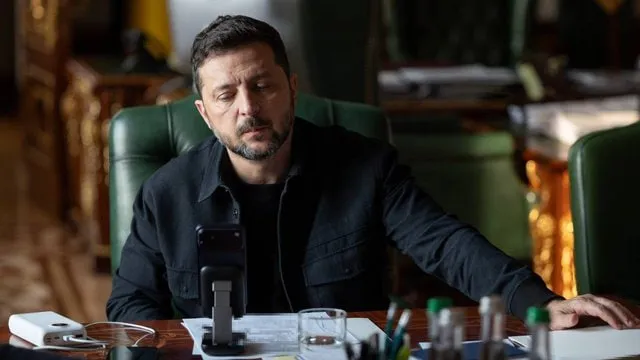
Ukrainian President Volodymyr Zelenskyy signed Decree No. 1080/2026, which enacted the decision of the National Security and Defense Council regarding the neutralization of threats to the stable operation of national broadcasting under martial law.
The NSDC’s decision is aimed at ensuring the stable operation of national broadcasting in Ukraine during the war.
The NSDC adopted the relevant decision on September 9, 2026. The President has entrusted the Secretary of the National Security and Defense Council of Ukraine with overseeing its implementation.
The document outlines a set of measures to ensure the uninterrupted operation of Ukrainian television and radio broadcasting, particularly following Russian shelling. This is stated in the presidential decree published on the head of state’s official website.
Specifically, the State Special Communications Administration, together with the Radio Broadcasting, Radio Communications, and Television Concern, must immediately ensure the restoration of damaged and destroyed television and radio broadcasting facilities. This specifically refers to television towers and transmission equipment.
The decree also provides for the creation of a reserve of necessary equipment. This should allow for the prompt replacement of technical equipment destroyed as a result of Russian attacks and reduce the time required to restore the signal.
A separate provision concerns the stable and uninterrupted broadcasting of television channels on the MX-7 digital network. This is a state-owned DVB-T2 multiplex that provides digital terrestrial television broadcasting.
The Cabinet of Ministers must immediately secure funding for the planned measures. Thus, the government must allocate funds both for the restoration of damaged infrastructure and for the creation of a technical reserve.
This was reported with reference to a presidential decree.
Zelenskyy signed decrees extending martial law and mobilization until January 29, 2027.
As a reminder, Russia’s war against Ukraine could last at least until the spring of 2027, and a new window of opportunity for peace talks may open only then. This opinion was expressed by political analyst and head of the “Delovaya Stolitsa” analytical center, Vadym Denysenko.
Prior to this, President Volodymyr Zelenskyy submitted draft laws to the Verkhovna Rada that provide for the extension of martial law and general mobilization in Ukraine for another 90 days.
Earlier, Zelenskyy assessed the prospects for new peace talks with Russia.
Against this backdrop, Sibiga explained why serious negotiations with Russia are not yet possible.




