
Starshield restrictions are hindering efforts to shoot down Russian drones, says Zelenskyy
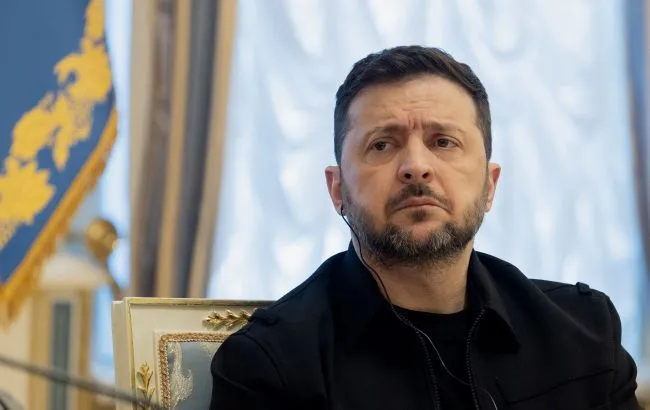
On the night of November 14–15, Russian troops launched strikes on energy facilities in five regions of Ukraine. Railway infrastructure in three regions was also targeted, and the total number of casualties reached 16. Volodymyr Zelenskyy stated that Ukrainian interceptor drones are hampered by speed limitations on Starshield terminals and called on the U.S. to resolve this issue.
According to Zelenskyy, Russia continues to carry out massive attacks on Ukrainian infrastructure. In the past week alone, Russian forces launched more than 2,300 attack drones at Ukraine, dropped 1,590 guided bombs, and fired 15 missiles of various types. On the night of November 15 and into the morning, Russian drones attacked energy facilities in the Zaporizhzhia, Sumy, Odesa, Zhytomyr, and Kirovohrad regions.
Separately, the Russians targeted railway infrastructure. Facilities in the Dnipropetrovsk, Kharkiv, and Zaporizhzhia regions came under attack. The enemy also attacked the Kyiv and Donetsk regions. According to preliminary data, 16 people were injured as a result of the shelling.
Why Starshield restrictions hinder the shooting down of Russian drones
Zelenskyy emphasized that Russian troops are deliberately targeting energy infrastructure—particularly substations—with “Shahed”-type attack drones. According to the president, some Russian drones reach their targets due to issues arising from the operation of Ukrainian interceptor drones. This refers to speed limitations on Starshield satellite communication terminals used along the front lines and in temporarily occupied territories.
Zelenskyy explained that Ukrainian drones lose contact with operators when they accelerate to speeds exceeding 161 km/h, or 100 miles per hour. As a result, operators cannot fully control the interceptor drones while pursuing Russian targets. This problem is particularly acute when combating jet-powered “Shaheds,” which move faster than conventional strike drones. Due to the loss of communication, Ukrainian interceptor drones may not be able to catch up to such targets in time.
The president hopes that these restrictions can be lifted. He emphasized that the ability to more effectively defend Ukrainian cities and energy facilities ahead of winter depends on this. “We expect these restrictions to be lifted. The protection of lives and Ukraine’s energy sector ahead of winter depends on this,” Zelenskyy said.
Ukraine has appealed to the U.S. and SpaceX
To resolve the issue, the president instructed representatives of the Ministry of Foreign Affairs, the Ministry of Defense, and the Office of the President to strengthen cooperation with the U.S. and SpaceX, which operates satellite communication systems.
Ukraine is counting on U.S. support and a review of the restrictions, which, according to Zelenskyy, are affecting the operation of interceptor drones. “It’s important to be on the right side of history. We must help Ukraine,” the head of state concluded. The President of Ukraine announced this on November 15 on his Telegram channel.
As a reminder, U.S. Senators Jean Shaheen and Tom Tillis called on Congress to investigate Ukraine’s reports of disruptions in the Starshield satellite system, which Ukrainian forces use to control drones and munitions.
On November 12, during a meeting with NATO Secretary General Mark Rutte, Ukrainian President Volodymyr Zelenskyy reported disruptions in the Starshield satellite communication system along the front lines and in the temporarily occupied territories, which significantly complicates efforts to counter enemy attacks.
Ukrainian units are reporting significant disruptions in the Starshield satellite system’s operation along the entire front line and in the temporarily occupied territories. President Volodymyr Zelenskyy made this statement on November 12 following briefings by Defense Minister Yevhen Khmara and Commander-in-Chief of the Armed Forces of Ukraine Mykhailo Drapaty.




