
Putin Sees Russia's Victory Where Trump Wants to Strike a Deal — CNN
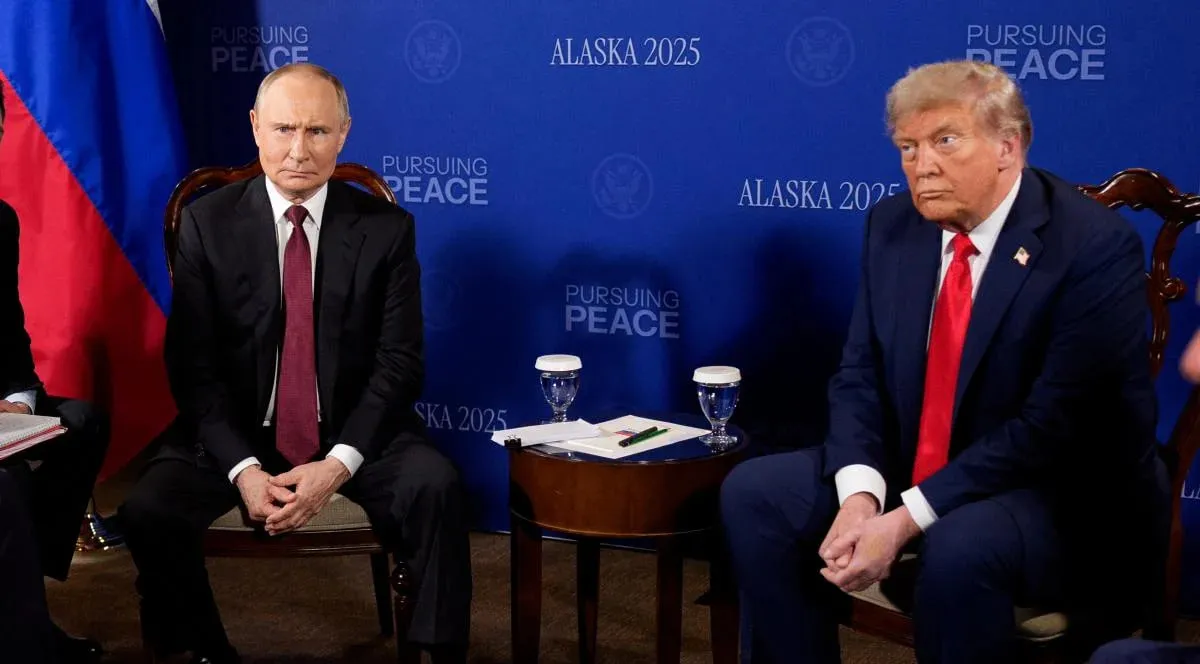
Russian dictator Vladimir Putin may exploit U.S. President Donald Trump’s desire to quickly end the war in Ukraine by offering large-scale economic deals and making ostensibly humanitarian gestures. CNN’s chief international correspondent, Matthew Chance, highlighted this in his analysis.
According to the journalist, if Trump were leading Russia, he would likely agree to a quick deal to end the war and might claim he could achieve this within 24 hours. From the U.S. president’s perspective, such an option would seem like the obvious solution.
Chance notes that a ceasefire could halt the deaths of thousands of young people, whom Trump has repeatedly mentioned in public. At the same time, the lifting of sanctions—which would pave the way for lucrative trade agreements—could serve as a significant incentive for Moscow.
In other words, peace and prosperity would reign. But, of course, Trump is not the president of Russia. That title belongs to Kremlin dictator Vladimir Putin. And he shows very little interest in compromising on the stated goals of his war in Ukraine. Not for the sake of Russian and Ukrainian lives—not even for the sake of billions of dollars for his state treasury, the article states.
This is a fundamental misunderstanding
It is precisely this that has driven the Trump administration’s fruitless efforts to mediate a ceasefire. And this misunderstanding resurfaced during the latest critical meeting in St. Petersburg—between Steve Witkoff (a business associate of Trump’s who became his chief negotiator) and Putin himself.
At the negotiating table, Putin told Witkoff that he was “interested” in hearing about the results of the meetings in Norway that had taken place the day before. There, representatives from the U.S., Europe, and NATO met with Ukrainian President Volodymyr Zelenskyy to develop new potential peace proposals, including economic incentives for Moscow.
Later, a high-ranking Kremlin aide confirmed that Trump’s envoy had briefed the Russian leader on the progress of those discussions. And then—inevitably—he added: “Frankly, they had little of value to offer for resolving the Ukrainian crisis.”
This was an entirely predictable outcome from the Kremlin, which stubbornly refuses to back down from its hardline positions. These include gaining control over the entire Donbas region in eastern Ukraine and having a say in Kyiv’s future security agreements.
The White House had hoped that the Kremlin would show greater willingness to compromise
especially after Trump lifted sanctions on Russian diesel fuel exports last week. This move had a political motive—Trump was attempting to lower fuel prices in the U.S. ahead of the midterm elections. But it also represented a huge economic victory for Moscow, according to media reports.
Later, Trump announced an energy truce—which would force Ukraine to halt its devastating drone strikes on Russian oil refineries. Trump also called for a change in Ukraine’s leadership. “That was music to the Kremlin’s ears,” the article states.
For Moscow, however, all these deals, incentives—and even the general disregard for Kyiv—are perceived not as a signal to make concessions and back down, but as a sign that its strategy toward the U.S. is yielding results.
And this strategy, unlike Washington’s, is clear and unambiguous. The Kremlin leader understands perfectly well what drives Trump. And he effortlessly distracts his temperamental counterpart in the White House with promises of massive economic deals, the journalist notes.
More such deals were proposed by the Kremlin specifically during the meeting with Witkoff in St. Petersburg. There, Putin praised the controversial diesel deal. He then suggested that Russia could also increase exports of vital fertilizers to the U.S. and much more.
“We are also discussing various projects—such as data centers, energy projects, and energy cooperation,” said Kirill Dmitriev, who heads the Russian National Wealth Fund. He made these remarks after three hours of talks concluded.
The Kremlin is not just taking advantage of economic “trifles”
Putin’s release of 74-year-old U.S. citizen Stephen Hubbard—even before the meeting in St. Petersburg—was presented by sycophant Witkoff as an act of “humanitarianism.” Hubbard had been held by Russia since his capture in Ukraine in 2022.
It is reported that he developed serious health problems during his four long years in captivity at a Russian penal colony. But his release was ultimately portrayed by the White House as a sign of Trump’s negotiating skills and Putin’s respect.
This is according to a CNN report.
Video: Clinton suggested that Putin might have compromising information on Trump related to the Epstein files.
Putin asked Witkoff to convey his thanks to Melania Trump.
Witkoff’s talks with Putin lasted three hours and have concluded.
We should add that the Trump administration plans to change the format of negotiations regarding Ukraine.
As a reminder, Witkoff will travel to St. Petersburg after meeting with Zelenskyy.




