
Jet-powered drones traveling at 400 km/h — how Ukraine is strengthening its air defense
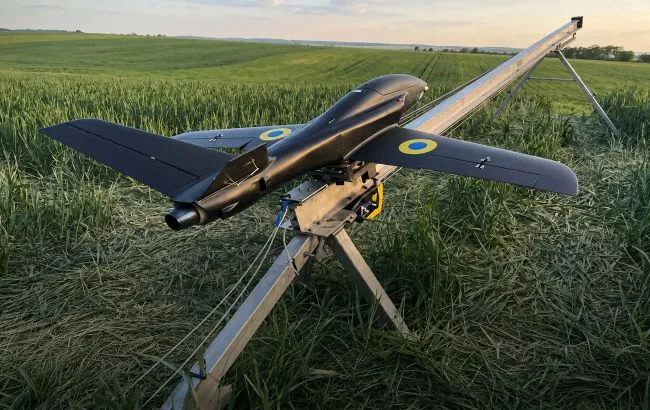
Ukraine is deploying new systems to intercept Russian jet drones. These drones can reach speeds of about 400 km/h, leaving Ukraine’s air defense forces less time to detect and destroy them. The Ministry of Defense also reported that in September 2026, Ukrainian air defense forces intercepted thousands of aerial targets, including missiles and attack drones.
The Armed Forces of Ukraine are developing new methods for intercepting jet-powered drones, which Russia uses to attack various regions. According to the ministry, Russian troops are launching small groups of such drones—several at a time—toward various regions. To counter them, Ukraine is using, among other things, aircraft and deploying new interception systems.
“The enemy is directing small groups of several jet-powered drones toward various regions. To counter such targets, Ukraine is using, in particular, aviation and developing innovative interception methods,” the Ministry of Defense noted. At the same time, the ministry did not disclose the specific characteristics of the new systems or details of their use.
Why Jet-Powered Drones Are Harder to Intercept
Ballistic missiles remain one of the challenges for Ukraine’s air defense. In addition, Russia is increasingly using jet-powered drones, which can reach speeds of approximately 400 km/h. As a result, air defense forces have less time to detect a target, determine its direction of travel, and prepare for interception. Therefore, Ukraine needs to develop various means of countering air threats, particularly high-speed drones.
Ukrainian air defense employs various forces and assets for this purpose. These include combat aircraft, anti-aircraft missile units, electronic warfare units, unmanned systems, and mobile fire groups.
How Ukrainian Air Defense Performed in September
According to the Ukrainian Air Force, during September 2026, Ukrainian air defense intercepted a number of Russian missiles and drones of various types. Specifically, the Ministry of Defense report cites the following figures:
- 24 Kh-101 cruise missiles;
- 8 “Iskander-M”/KN-23 ballistic missiles;
- 12 “Kalibr” cruise missiles;
- 6 X-59/69 guided air-to-ground missiles;
- 6 Iskander-K cruise missiles;
- 8 “Zircon” anti-ship missiles;
- 86 S8000 “Banderol” drones;
- 2,722 Shahed-131/136 attack drones;
- 1,935 Shahed-238 attack drones;
- 1,009 reconnaissance drones;
- 719 Lancet drones.
Separately, the agency reported that over 48,000 tactical-level drones were neutralized over the course of the month. Various units of the Defense Forces intercepted the aerial targets. The operation involved aviation, anti-aircraft missile forces, electronic warfare assets, unmanned systems units, and mobile fire groups.
Why Ukraine Needs New Air Defense Systems
Russia is using various types of aerial targets against Ukraine—from strike drones to cruise and ballistic missiles. They differ in speed, flight path, and method of attack, so different approaches are needed to intercept them. The development of new systems to counter jet-powered drones should help the Ukrainian military counter high-speed targets. At the same time, the Ministry of Defense has not specified exactly when the new systems will be fully operational or what results they have already demonstrated.
Thus, Ukraine continues to strengthen its air defense, adapting to new Russian attack tactics. One of the priorities remains protection against jet-powered drones, which are more difficult to detect and intercept in time due to their high speed. This was reported by the Ministry of Defense of Ukraine.
Earlier, Russia struck Kharkiv with KAB bombs, resulting in one fatality and several injuries.
On October 11, in the Bohodukhiv district of the Kharkiv region, Russian forces attacked a truck belonging to an agricultural enterprise with a drone. The driver was killed in the strike.
Russia also attacked Kharkiv and nine other settlements in the region, resulting in casualties.




