
MEPs propose transferring Russia's frozen assets to EU control
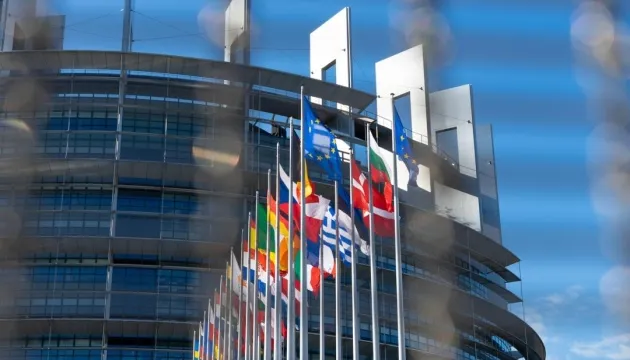
The European Union should take control of the frozen accounts of the Central Bank of Russia held at the Euroclear depository. Members of the European Parliament have put forward this initiative. In their view, this would create a backup funding mechanism for Ukraine in case existing sources of international support prove insufficient.
This is stated in a letter signed by more than 70 Members of the European Parliament from six political groups. The document, reviewed by Ukrinform, is addressed to Irish Prime Minister Micheál Martin, European Council President António Costa, European Commission President Ursula von der Leyen, EU High Representative Kaja Kallas, and European Commissioner for Economic Affairs Valdis Dombrovskis.
In September, MEPs had already appealed to EU leaders to transfer Russia’s frozen sovereign accounts from depositories in member states to a special EU mechanism that would act as their custodian.
“We are writing again because it is time to act,” the authors of the letter note, as the European Commission prepares proposals to cover Ukraine’s financial needs in 2027.
They point out that, according to Kyiv’s estimates, Ukraine will need an additional 70 billion euros next year to ensure the functioning of the state and meet the needs of the military.
“By providing a 90-billion-euro loan to support Ukraine, the EU has already demonstrated its willingness to support Ukraine. However, the funding shortfall continues to grow. During a recent European Council meeting, President Zelenskyy put forward a specific proposal—to create a ‘special mechanism under EU control’ to manage Russian assets. We are convinced that the European Union must respond to this request,” the lawmakers write.
They recalled that last year’s attempt to seize these assets was unsuccessful, as Belgium—where approximately 185 billion euros in Russian funds are held in the Euroclear system—feared being left to face legal claims and retaliatory measures from Russia on its own.
“Transferring the assets in these accounts to EU management should resolve this issue. The accounts of the Central Bank of the Russian Federation, along with the corresponding liabilities, will be transferred to a special EU mechanism, thereby freeing Euroclear from any obligations to Moscow. At the same time, Russia will remain the owner of the funds, which will simply be held by a different custodian,” the MEPs explain.
The authors of the letter note that the EU has already taken a similar step: in 2003, in accordance with a UN Security Council resolution, the European Union was required to transfer Iraq’s frozen sovereign assets, held on its territory, to an account at the Federal Reserve Bank of New York.
In the event of such a transfer, the EU must assume joint responsibility for protecting Belgium, Euroclear, and other depositories from potential losses associated with this operation, while taking measures to minimize risks. Since this concerns all frozen accounts in the European Union, the corresponding burden will be fairly distributed among member states, MEPs note.
“There is already a proposal, known as the ‘Russian Transfer,’ which details how this could be implemented,” the letter states.
The authors of the letter emphasize that they support any viable option for covering Ukraine’s financial shortfall in 2027 that the European Commission is considering. At the same time, regardless of the decision chosen, the EU must take control of the accounts of the Central Bank of the Russian Federation. This will make it possible to create contingency financial instruments that can be drawn upon if other sources of funding prove insufficient.
“The volume of these assets is sufficient to provide support for Ukraine until 2029—that is, throughout a period that includes elections in several member states, after which further funding for Ukraine may be in question. They could also provide funding after the next U.S. presidential election,” the MEPs stated.
They explained that once the assets are transferred to EU management, they cannot be used as a bargaining chip in negotiations taking place without Europe’s participation.
“Decisive action now will demonstrate to Moscow that the cost of its war continues to rise, and this is precisely what will compel it to engage in serious negotiations,” the MEPs emphasized.
They also note that Article 122(1) of the Treaty on the Functioning of the EU allows the European Council to make decisions by a qualified majority—which is precisely how the freeze on these assets was extended last December.
According to the MEPs, if the EU adopts such a decision, other partners may follow suit. The United Kingdom has stated its intention to revisit this issue, and Canada was already prepared last year to act in concert with the European Union.
In light of this, MEPs have called on the European Commission to include the transfer of the role of administrator of Russian assets in the proposal it is preparing for the European Council, and on the Council itself to adopt a corresponding decision by the end of the year.
This is stated in a letter signed by more than 70 Members of the European Parliament from six political groups. The document, which Ukrinform has reviewed, is addressed to Irish Prime Minister Micheál Martin, European Council President António Costa, European Commission President Ursula von der Leyen, EU High Representative Kaja Kallas, and European Commissioner for Economic Affairs Valdis Dombrovskis.
As a reminder, there are plans to transfer Russia’s frozen assets to a new EU entity.
Sweden has once again raised the issue of Russia’s frozen assets.




