
Culinary Holiday on November 22, 2026 — Kimchi Day: Three Recipes
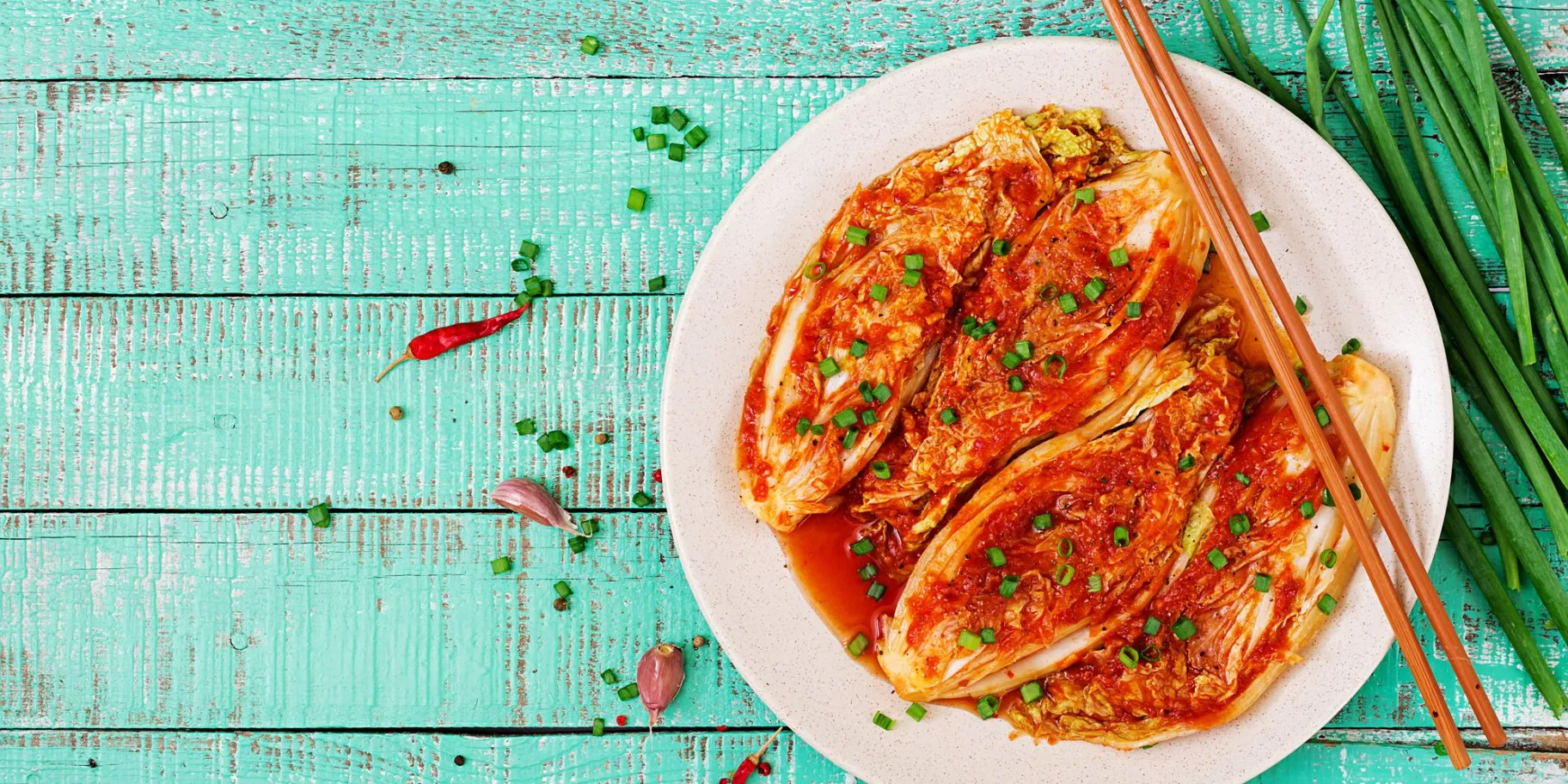
November 22 marks International Kimchi Day—a holiday celebrating the traditional Korean dish made from fermented vegetables. It is most often made with napa cabbage, radish, garlic, ginger, and hot red pepper. Kimchi has long since spread beyond Korea’s borders: it is added to soups, rice, noodles, pancakes, and even sandwiches.
In South Korea, November 22 has been officially celebrated as Kimchi Day since 2020. It was established to draw attention to this national dish, its nutritional benefits, and its cultural significance. The date was chosen symbolically: November is the eleventh month of the year, and the number 22 evokes the idea of combining different ingredients that together create the unique flavor of kimchi.
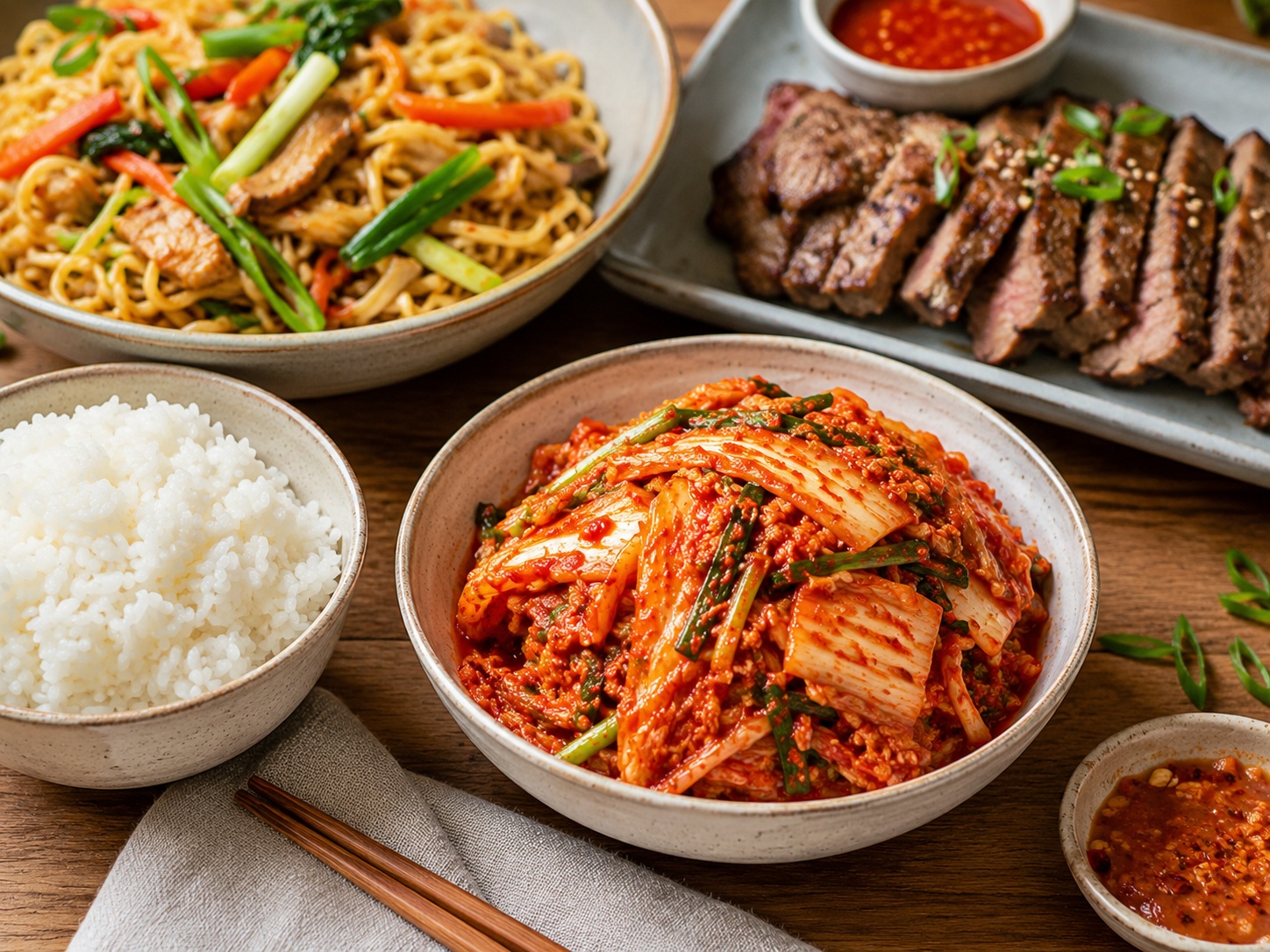
International Kimchi Day has been celebrated since 2017. The Korean Kimchi Association was the driving force behind the initiative. Over time, other countries and regions joined in the celebration. In particular, Kimchi Day was established on November 22 in several U.S. states, as well as in Argentina.
Where Does Kimchi Come From?
Kimchi has a long history spanning many centuries. Originally, it was a simple way to preserve vegetables for the winter. Before the advent of refrigerators, Koreans needed to stockpile food to survive the cold months when fresh vegetables were scarce. Therefore, cabbage, radishes, and other vegetables were salted and left to ferment naturally. Early versions of kimchi differed significantly from modern ones. They weren’t as red or spicy, since red peppers didn’t reach Korea until much later. It began to be widely used in recipes around the 18th–19th centuries. And napa cabbage became the basis for the most famous variety of kimchi at the turn of the 19th and 20th centuries.

An important part of the dish’s history is the tradition of kimjang. This is the name given to the communal preparation of large batches of kimchi in late fall. In the past, entire families, neighbors, and friends would participate in this process. Together, they would salt the cabbage, prepare the spices, and stuff the leaves with the vegetable mixture. The finished kimchi was distributed among families to ensure there would be enough to last through the winter. In 2013, UNESCO added the kimjang culture to the list of the Intangible Cultural Heritage of Humanity. The organization recognized not only the dish itself but also the tradition of collective labor, the exchange of experience, and mutual aid.
In Which Countries Has Kimchi Become Popular
The homeland of kimchi is Korea, but today it is known and prepared in many countries. This has been largely driven by the popularity of Korean culture—K-pop music, TV series, movies, and national cuisine.
South Korea. Kimchi is an integral part of the daily diet. It is served with rice, meat, fish, soups, and other dishes. Many families have their own recipes, passed down from generation to generation.
United States. Kimchi has become popular not only among the Korean diaspora but also among people interested in Asian cuisine. It is added to burgers, hot dogs, sandwiches, tacos, and salads. Several states even officially celebrate Kimchi Day.
Japan. Here, kimchi is sold in supermarkets and served as a side dish with rice and meat. The Japanese also prepare their own versions of the dish, adapted to local tastes.
China. Various types of fermented vegetables are common in the country. Korean kimchi can also be found in stores and restaurants, especially in regions with Korean communities.
Argentina. Interest in Korean cuisine has grown here thanks to the local Korean community. The country has also joined the international celebration of Kimchi Day.
The United Kingdom and other European countries. Kimchi is increasingly used in restaurants and home cooking. It is added to noodles, rice, vegetable dishes, and even European sandwiches.
According to South Korea’s Ministry of Agriculture, the country exported kimchi to 87 countries in 2022. And by 2023, according to the Ministry of Culture, the dish was being sold in 97 countries.
What Kimchi Is Made Of
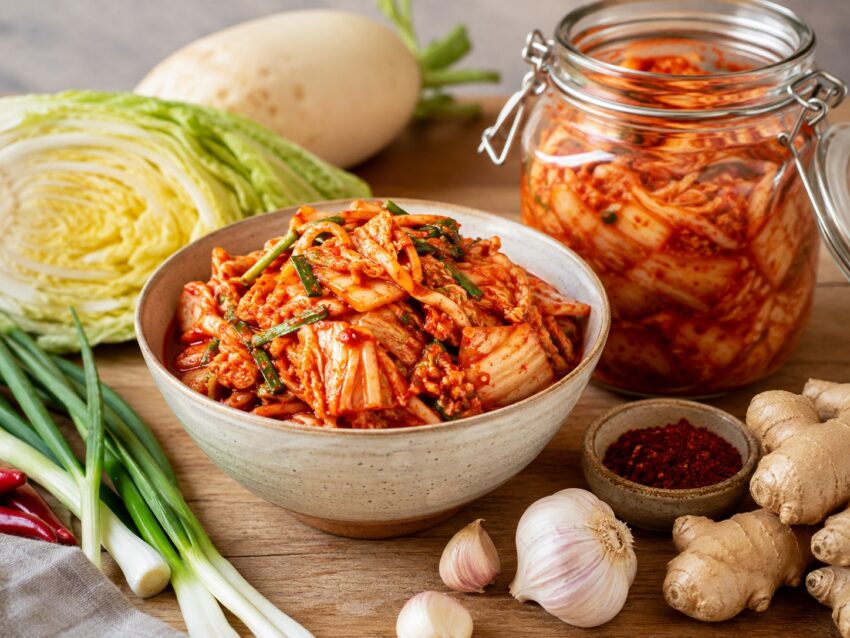
The most famous type of kimchi is baechu kimchi, made from napa cabbage. The vegetables are first salted, then coated with a spicy blend of spices, and left to ferment.
Main ingredients:
Napa cabbage;
Korean radish or regular daikon;
kochugar red pepper—flakes or powder made from Korean pepper;
garlic;
ginger;
green onions;
salt;
fish sauce or fermented seafood, such as salted shrimp.
Some recipes also call for sugar, pears, apples, onions, and rice flour. The fruit adds a subtle sweetness, while the rice base helps the spices cling better to the vegetables.
There are also vegetarian recipes that do not include fish sauce or seafood. These may use soy sauce, vegetable broth, or other plant-based ingredients for flavor.
Interesting Facts About Kimchi
1. There are hundreds of varieties of kimchi in Korea. It’s made not only from napa cabbage but also from radishes, cucumbers, green onions, mustard greens, and other vegetables. Recipes vary depending on the region and season.
2. Kimchi wasn’t always red. Ancient recipes didn’t use hot red peppers. They were added much later, so the dish used to have a different color and flavor.
3. Kimchi doesn’t have to be spicy. For example, white kimchi—pekchu kimchi—is made without red pepper. It has a milder flavor and often contains fruit, radishes, and other vegetables.
4. Special clay pots were once used for kimchi. They are called ongi. Vegetables were fermented in these containers, and in winter, they could be buried in the ground to maintain the proper temperature.
5. Kimchi has become part of global cuisine. It is used not only as a standalone appetizer but also as an ingredient in pizza, burgers, pasta, soups, rice dishes, and even cheese sandwiches.
6. The flavor of kimchi changes during fermentation. At first, the vegetables have a fresher and less sour taste. Over time, lactic acid bacteria convert sugars into lactic acid, so the dish becomes more sour and acquires its characteristic aroma.
Three Recipes for Kimchi and Dishes Featuring It
Kimchi isn’t just for eating as an appetizer. It pairs well with rice, meat, eggs, cheese, and even dough. Below is a classic recipe for fermented napa cabbage and two interesting ways to use it in hot dishes.
1. Classic Korean Kimchi with Napa Cabbage

Prep time: about 2 hours · Fermentation: 1 to 5 days or more
Ingredients:
1 large napa cabbage;
1 small radish or daikon;
5–6 cloves of garlic;
a piece of ginger, about 3 cm;
4–5 tbsp Korean kochugar pepper;
3 tablespoons fish sauce;
1 tablespoon salted shrimp (optional);
1 bunch of green onions;
1 tablespoon sugar;
100 g coarse salt for brining;
1 liter of water.
Preparation:
Cut the cabbage lengthwise into four pieces. Dissolve the salt in the water and submerge the cabbage in the brine. You can also sprinkle salt on the thicker parts of the leaves.
Let the cabbage sit for 2–3 hours, turning it occasionally. The leaves should become soft and pliable.
Rinse the cabbage thoroughly with cold water several times and leave it in a colander to drain off excess liquid.
Grate the garlic and ginger. Cut the radish into thin strips and the green onions into pieces about 3–4 cm long.
Mix together the garlic, ginger, kochukaru pepper, fish sauce, sugar, and salted shrimp. Add the radish and green onions.
Put on gloves and distribute the mixture evenly among the cabbage leaves.
Pack the cabbage tightly into a clean jar or container, leaving a little space at the top.
Leave it at room temperature for 1–2 days to start the fermentation process, then transfer it to the refrigerator. The duration depends on the temperature and the desired level of sourness.
The finished kimchi can be eaten as a side dish with rice, meat, fish, or other dishes. The longer it ferments, the more pronounced and tangier the flavor becomes.
2. Korean Kimchi Pancakes

Cooking time: about 25 minutes · 2–3 servings
This dish is called kimchi-jeon. These are thin, salty pancakes made with cabbage, fried until crispy. They can be served as an appetizer or a full-fledged snack.
Ingredients:
200 g ready-made kimchi;
100 g wheat flour;
2 tbsp kimchi brine;
100 ml cold water;
1 small onion;
1 egg;
2 tbsp green onions;
½ teaspoon sugar;
oil for frying.
For the sauce:
2 tbsp soy sauce;
1 tsp vinegar;
1 tsp sesame oil;
a pinch of sesame seeds.
Preparation:
Cut the kimchi into small pieces, slice the onion into thin half-rings, and chop the green onions.
In a bowl, mix the flour, egg, cold water, the liquid from the kimchi, and sugar.
Add the vegetables and stir. The batter should be runny but not watery.
Heat a skillet with oil. Pour the batter into the skillet in a thin layer, forming a large pancake.
Cook for about 3–4 minutes, until the edges turn golden brown. Flip it over and cook for another 2–3 minutes.
For the sauce, mix soy sauce, vinegar, and sesame oil. Sprinkle with sesame seeds.
Cut the pancake into pieces and serve hot with the sauce.
The secret to this dish is well-fermented kimchi. It gives the pancakes a distinctive sour and spicy flavor.
3. Fried Rice with Kimchi and Egg

Cooking time: about 20 minutes · 2 servings
This is one of the easiest ways to use up leftover kimchi. In Korea, it’s called kimchi pokkimbap. The rice is stir-fried with cabbage, vegetables, and spices, and is often topped with a fried egg.
Ingredients:
300 g cooked rice;
150 g kimchi;
1 small onion;
2 cloves of garlic;
2 eggs;
1 tbsp soy sauce;
1 tsp sesame oil;
1 tsp gochujang paste (optional);
1 tbsp vegetable oil;
green onions;
sesame seeds for garnish.
Preparation:
Cut the kimchi into small pieces. Chop the onion and press the garlic.
Heat the vegetable oil in a skillet. Sauté the onion until soft, add the garlic, and cook for about 30 seconds more.
Add the kimchi and sauté for 3–4 minutes, until the vegetables are slightly browned.
Add the rice, soy sauce, and gochujang. Stir thoroughly and cook for a few more minutes.
Finally, add the sesame oil and green onions.
In a separate skillet, cook two eggs. You can leave the yolks slightly runny.
Divide the rice among plates, top with an egg, and sprinkle with sesame seeds.
If desired, you can add pieces of chicken, bacon, tofu, or mushrooms to the rice. And if you want a richer flavor, use a little more of the liquid from the kimchi.

Tip: For homemade kimchi, use clean dishes, well-washed vegetables, and follow the fermentation guidelines. After the initial fermentation, store it in the refrigerator. For a vegetarian version, replace the fish sauce and salted shrimp with plant-based alternatives.




