
An “Air Shield” for Warsaw: What to Expect from the NATO Summit
NATO countries are deciding how to respond to possible "incursions" by Russian missiles or drones into Alliance territory.
Russia’s latest violation of Poland’s airspace was discussed simultaneously at the NATO Parliamentary Assembly in Berlin and in Brussels—at an emergency meeting of the NATO North Atlantic Council.
Three days earlier, on November 20, Russian Kh-101 cruise missiles fell in the southeastern part of the country, near the site where Poland was conducting military exercises involving the “Coalition of the Willing.” NATO forces did not shoot down any of the targets.
Previously, airspace violations had also been recorded in other NATO countries, including Romania, Lithuania, Latvia, and Estonia. These incidents are occurring with increasing frequency amid the Kremlin’s demands that NATO withdraw its forces from Central Europe and cease support for Ukraine.
When will NATO forces be able to protect European skies from Russian missiles, and what do Ukrainian military analysts say about the consequences of the Alliance’s passive response to the Kremlin’s provocations? Read the full story on UA.News.
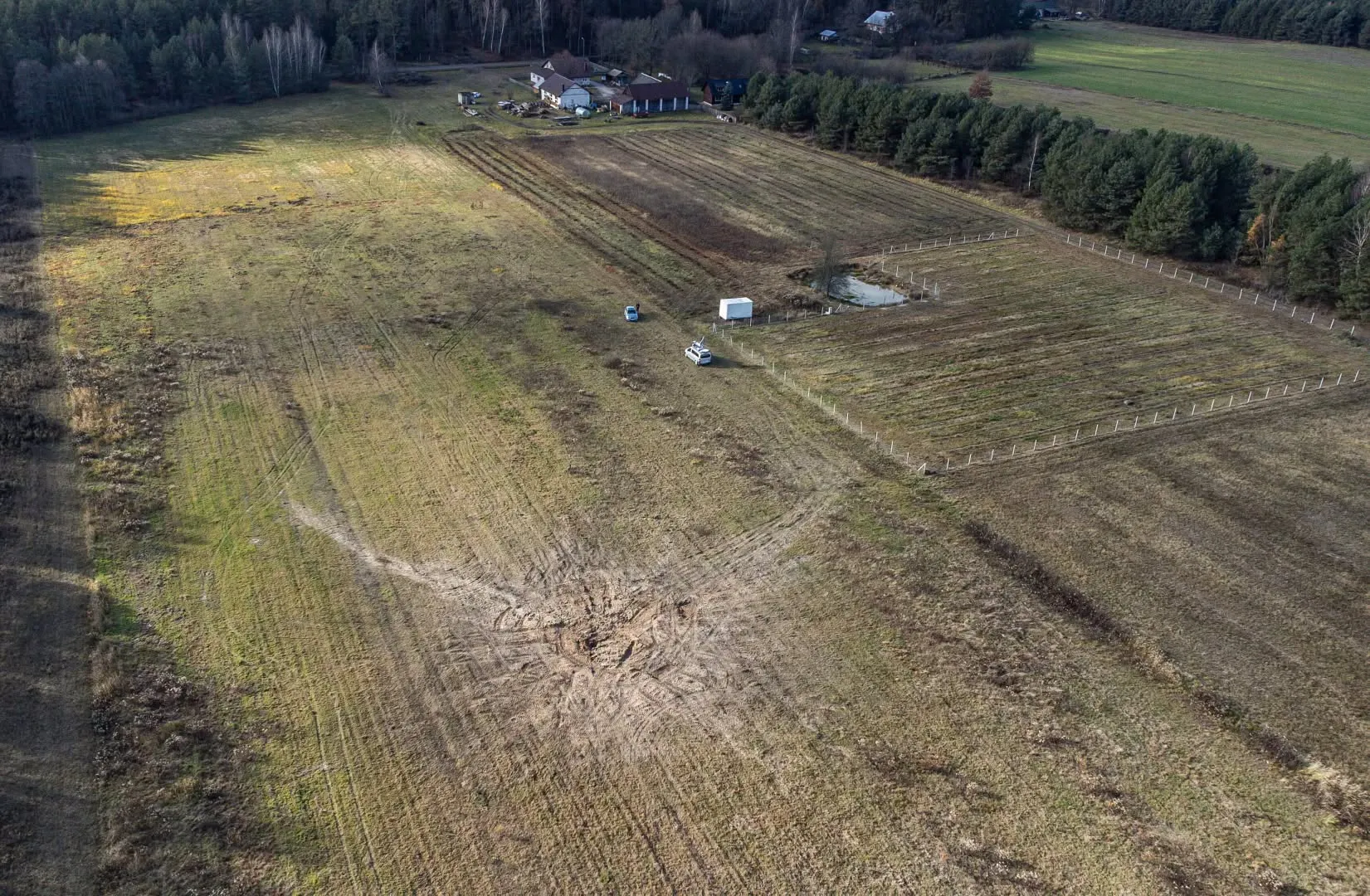
This is not the first
time Russian X-101 missiles have struck Poland
An investigation into the missile strikes in the Lublin and Podkarpackie provinces has revealed new, telling facts. All three objects, whose debris was found near the towns of Novy Lipovets, Rudnik-nad-Syanem, and Molodych, turned out to be X-101 cruise missiles. They rolled off the assembly line quite recently—in the fourth quarter of 2026 at a factory in Dubna, near Moscow.
One of the missiles exploded less than 100 km from the site of military exercises conducted by the “Coalition of the Willing.” This strike was no accident, said Polish Prime Minister Donald Tusk. He explicitly called it a deliberate “provocation by Moscow.”
Since the start of the full-scale war, this is not the first time Russian missiles and drones have been maneuvering in Polish airspace. Since February 2022, at least eight such incidents have been recorded, most of which appeared to be part of Russian attacks on Ukraine.
November 15, 2022, in the village of Przewodów (Lublin Voivodeship). A missile fell and exploded near the border with Ukraine, killing two Polish citizens. The investigation determined that the tragedy occurred as a result of Ukrainian air defense forces repelling a massive Russian strike.
December 16, 2022, near the city of Bydgoszcz. A Russian Kh-55 cruise missile (without a warhead) flew about 400 km into the country and crashed in a forest. Its debris was not found until April 2023.
December 29, 2023, near the village of Wożuchin-Cukrownia (Lublin Voivodeship). A Russian cruise missile penetrated 40 km into Polish airspace, remained there for 3 minutes, then changed course and returned to Ukraine.
March 24, 2024, in the village of Oserduw (Lublin Voivodeship). A Russian cruise missile was traveling at a speed of nearly 800 km/h and remained in Polish airspace for 39 seconds at an altitude of up to 2 km from the border during an attack on the Lviv region.
August 26, 2024, near the town of Tyshivtsi. An unmanned aerial vehicle, likely of the “Shahed” type, violated Polish airspace. The object flew approximately 25 km into Polish territory and disappeared from radar during a massive attack on Ukraine.
August 20, 2025, Osiny village (Lublin Voivodeship). A Russian strike drone flew more than 200 km into Polish territory, crashed, and exploded in a cornfield 100 km from the border.
July 30, 2026, village of Tarnava-Kolonia. A Russian Kh-101 cruise missile crashed in an undeveloped area during a combined bombardment of Ukraine’s western regions. The Polish prosecutor’s office determined that the X-101 missile was manufactured in the second quarter of 2026 at a plant in the Moscow region.

NATO’s
Response and Trump’s
Statements
On November 21, the very next day after three Russian missiles struck Polish territory, NATO Secretary General Mark Rutte arrived in Warsaw. He reaffirmed the alliance’s support and assured that NATO would defend “every inch of Polish territory.”
At the same time, Polish Defense Minister Władysław Kosiniak-Kamysz announced that Poland would soon “receive strong support from its NATO allies, which will strengthen the defense of its eastern border.”
German Foreign Minister Johann Wadepül also expressed solidarity with Poland and assured that NATO would resolutely defend itself.
“We will defend every centimeter of NATO territory,” he said on November 23 during the continuation of the NATO Parliamentary Assembly in Berlin. Addressing Russian dictator Vladimir Putin, he emphasized: “Make no mistake: we may be a defensive alliance, but we are ready to defend our countries.”
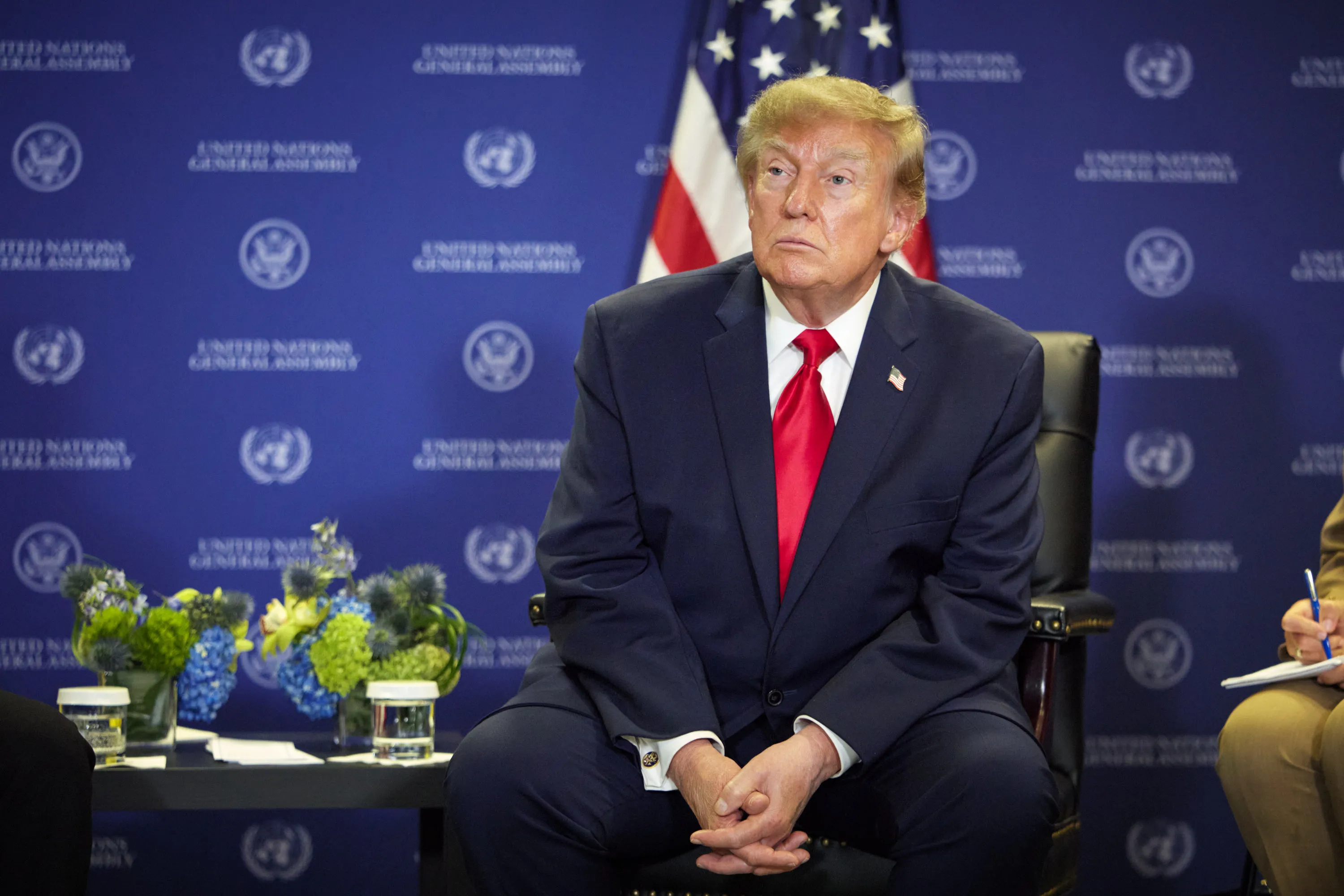
The reaction from a key NATO country—the United States—was the
opposite. U.S. President Donald Trump attempted to publicly justify the incursion of Russian missiles, calling them “small” and their maneuvers “accidental.” In doing so, Trump sought to salvage his own negotiating track with Moscow and signaled that the White House is ruling out a U.S.-led collective response in the event of Russian provocations.
However, the Baltic and Central European countries are already aware that they must rely first and foremost on their own defense capabilities and European solidarity.
One example is the Northern Viking military exercises in September 2026, which took place in the strategic GIUK Gap (the passage between Greenland, Iceland, and the United Kingdom). For the first time, NATO member states conducted maneuvers without the participation of U.S. armed forces. Germany deployed its reconnaissance aircraft, Belgium deployed fighter jets, and Canada deployed warships. Participants practiced a scenario involving the detection and destruction of Russian submarines in the North Atlantic.
For the first time since these large-scale annual exercises began, no U.S. ship or aircraft joined this defensive operation. NATO forces sought to demonstrate to Moscow that they can defend the continent without U.S. leadership.
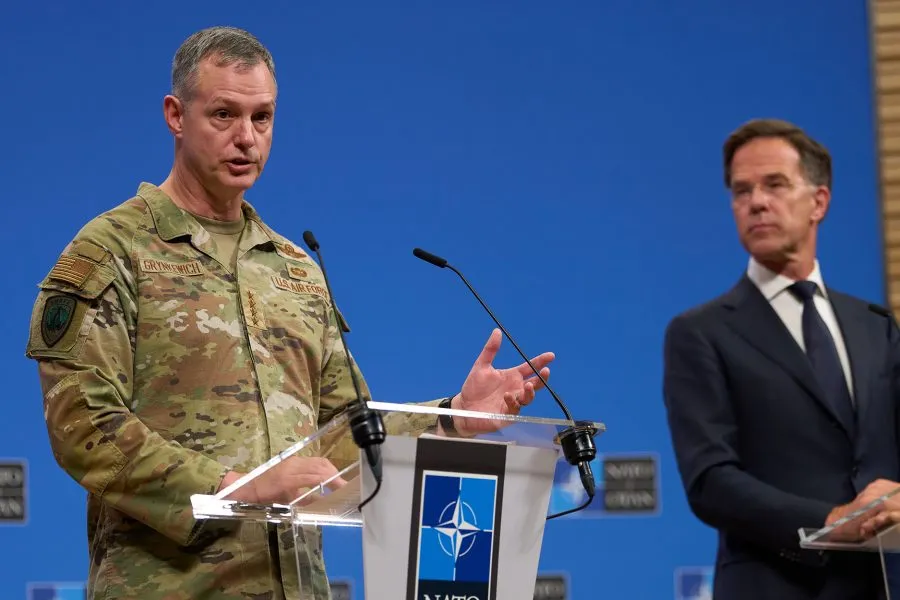
NATO’s “Theory of Victory” and Poland’s
Request
How to respond to the heightened threats from the Kremlin was discussed at an emergency meeting of the North Atlantic Council, convened at NATO headquarters on November 23. Poland sent Deputy Minister of Defense Paweł Zalevski and Brigadier General Jarosław Strużyk, head of the Polish Military Counterintelligence Service, to the meeting.
At the meeting in Brussels, Warsaw is presenting specific demands regarding the strengthening of border security. Poland is insisting on the deployment of additional fifth-generation F-35 fighter jets and AWACS long-range early warning aircraft, which will enable the detection of low-flying targets even as they approach.
The incursion of Russian missiles on November 20 also exposed vulnerabilities in NATO’s air defense protocols. According to the Polish command, a Swedish Gripen fighter jet on patrol in the sky had authorization to shoot down the missile, but was unable to do so due to difficult weather conditions and the short time the targets spent in Polish airspace (about three minutes at a speed of over 800 km/h). Warsaw is now demanding that its allies simplify and speed up interception procedures.
Warsaw is also taking a fresh look at its defense strategy in the event of a potential military attack by Russia on Alliance countries. A document titled “Theory of Victory” was presented in October 2026 by General Alexus Grinkevich, Supreme Commander of NATO’s Allied Forces in Europe, during the Warsaw Security Forum.
It is based on the principle of “deterrence through prevention,” whereby the aggressor is made to understand that any attack will fail and that the cost will be too high. The doctrine provides for readiness to launch conventional strikes deep into enemy territory against logistics and command centers in the event of open aggression. However, the Alliance does not yet have a clear response to hybrid provocations, such as isolated missile strikes.
What Experts Think About NATO’s Response to Russian Provocations

Vladimir Dubovik,
director of the Center for International Studies, does not consider NATO’s reaction to the incursion of Russian missiles into Polish airspace to be overly restrained.
“There was active coordination within the Alliance regarding these events. The response was rather measured. In fact, it will be discussed at this meeting in Brussels. Such decisions must be made at the collective level, since this concerns the principle of collective defense and security. We’ll see what conclusions are drawn.
In my opinion, the conclusion will be that this was likely not a deliberate act of aggression against Poland. However, there may be some decisions regarding how best to prepare for a recurrence of such events and how best to defend ourselves. Perhaps the question of shooting down Russian missiles while they’re still in flight will also come up. But personally, I don’t expect that to happen.
As for President Trump, it’s typical for him to always defend and justify Russia’s actions. Right now, his sympathy for Putin is clearly intensifying. I think Washington’s position will, of course, be taken into account at the meeting in Brussels—that is, in the direction of a more measured response.”

The
most NATO can do is invoke Article 4 of the North Atlantic Treaty. It provides for an increased level of security and vigilance along the border with the Russian Federation, in particular, the mobilization of air defense forces and assets. But this is not Article 5, notes Oleksandr Kovalenko, a military and political analyst with the “Information Resistance” group.
“Article 4 has already been invoked on multiple occasions, but it has not yielded any significant results. And here’s the most important thing: NATO’s response continues to encourage and motivate Putin to take even more decisive and brazen steps—ones that are no longer merely provocative in nature.
The missiles that flew into Poland, based on their specifications, were not supposed to reach Polish territory. Specifically, the Kh-101 missile constantly maneuvers and changes altitude during flight. Under such conditions, it would not have had enough fuel to reach Poland: it would have had to fall somewhere within Ukrainian territory, as its fuel supply would have been exhausted beforehand.
Such a missile could only reach Poland if it flew in a straight line—without maneuvering or changing altitude, at a constant altitude and cruising speed. In that case, the fuel supply might have been sufficient. However, this did not happen: the missiles maneuvered, changed altitude, and attempted to bypass Ukrainian air defense zones.
What does this mean? According to the laws of physics and aerodynamics, and based on calculations using Tsiolkovsky’s formula, such a missile should not have been able to reach Poland. Therefore, its design may have been modified and upgraded. For example, by reducing the warhead and increasing the fuel tank, which would allow it to travel a greater distance.
In other words, in my opinion, this was a deliberate strike on Polish territory using three X-101 missiles, specifically modified for this purpose.
However, NATO does not acknowledge this. Incidentally, this is not the first time an X-101 missile has reached Poland: previously, one of them exploded in a field on a farm.
At that time, questions also arose regarding the explosive power of the blast and the size of the crater it left behind. These did not quite match the characteristics of a standard X-101 warhead. After all, a missile with a standard warhead is capable of destroying several stories of a monolithic building, and a direct hit on a five-story brick building could lead to its complete destruction.
In Poland, however, the crater was significantly smaller, which could indicate a warhead with lower yield. So, relevant questions were already being raised back then. Now the situation is repeating itself.
Thus, in my opinion, NATO’s rather passive response is encouraging Putin to take more decisive action. Therefore, it cannot be ruled out that we will see even larger-scale provocations in the future.
Moreover, this is not just about Poland. The exclusive economic zones of Romania and Bulgaria in the Black Sea can no longer be considered safe either. Russian drones are almost constantly attacking commercial vessels there—dry cargo ships and tankers. Crew members are dying, there are human casualties, and several ships have already been sunk. At the same time, the response to these events remains unclear.
“Yes, these are not the countries’ internal territorial waters, but this sets a precedent for acts of terror in the Black Sea—within the exclusive economic zones of states that are members of NATO and the European Union,” notes Kovalenko.
As for the interception of the Russian missiles themselves, the military analyst notes that NATO has every legal basis to intercept such targets. Perhaps there really was no technical or operational capability to do so.
“I don’t rule out that the cause could have been insufficient training on the part of the pilot, who didn’t know how to operate in difficult weather conditions, or other circumstances. However, such incidents demonstrate once again that NATO pilots lack sufficient experience in carrying out combat missions under extreme conditions and are unprepared for such challenges.
At the same time, Ukrainian pilots flying old Soviet MiG-29s and the basic F-16 variants transferred to us are successfully intercepting Russian missiles. We lack, first and foremost, the aircraft themselves to shoot down all targets, as well as the necessary ammunition. Nevertheless, our interception rates are quite high.
Poland, on the other hand, had the fairly modern Saab Gripen multi-role fighter. It’s a decent aircraft, which Ukraine is also set to receive. In terms of its technical, technological, and flight characteristics, it even surpasses the aircraft we have been using in recent years. However, even it was unable to intercept a missile,” says Oleksandr Kovalenko.
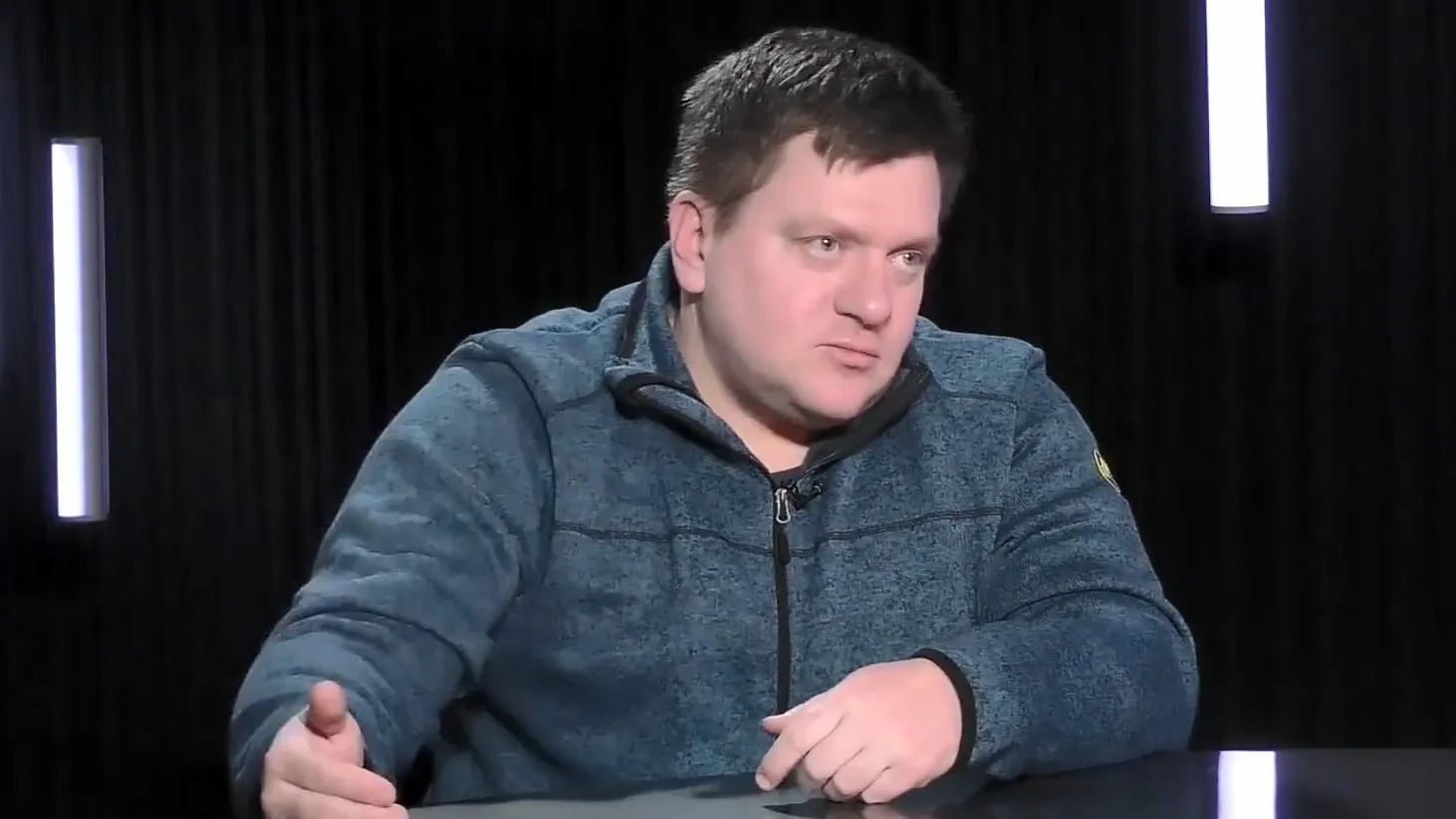
The armed
forces of NATO member states are not prepared for modern warfare, which presents different challenges and scenarios. Furthermore, the situation is complicated by the White House’s stance on negotiations with the Kremlin, according to military analyst Denis Popovich:
“NATO’s restrained reaction is largely explained by Trump’s stance on ‘small missiles.’ The U.S. is the military backbone of NATO, but when Trump calls Putin a ‘friend,’ can we rely on that foundation? Overall, NATO is currently not ready to take decisive action against Russia, and this missile incident has demonstrated that once again.”




