
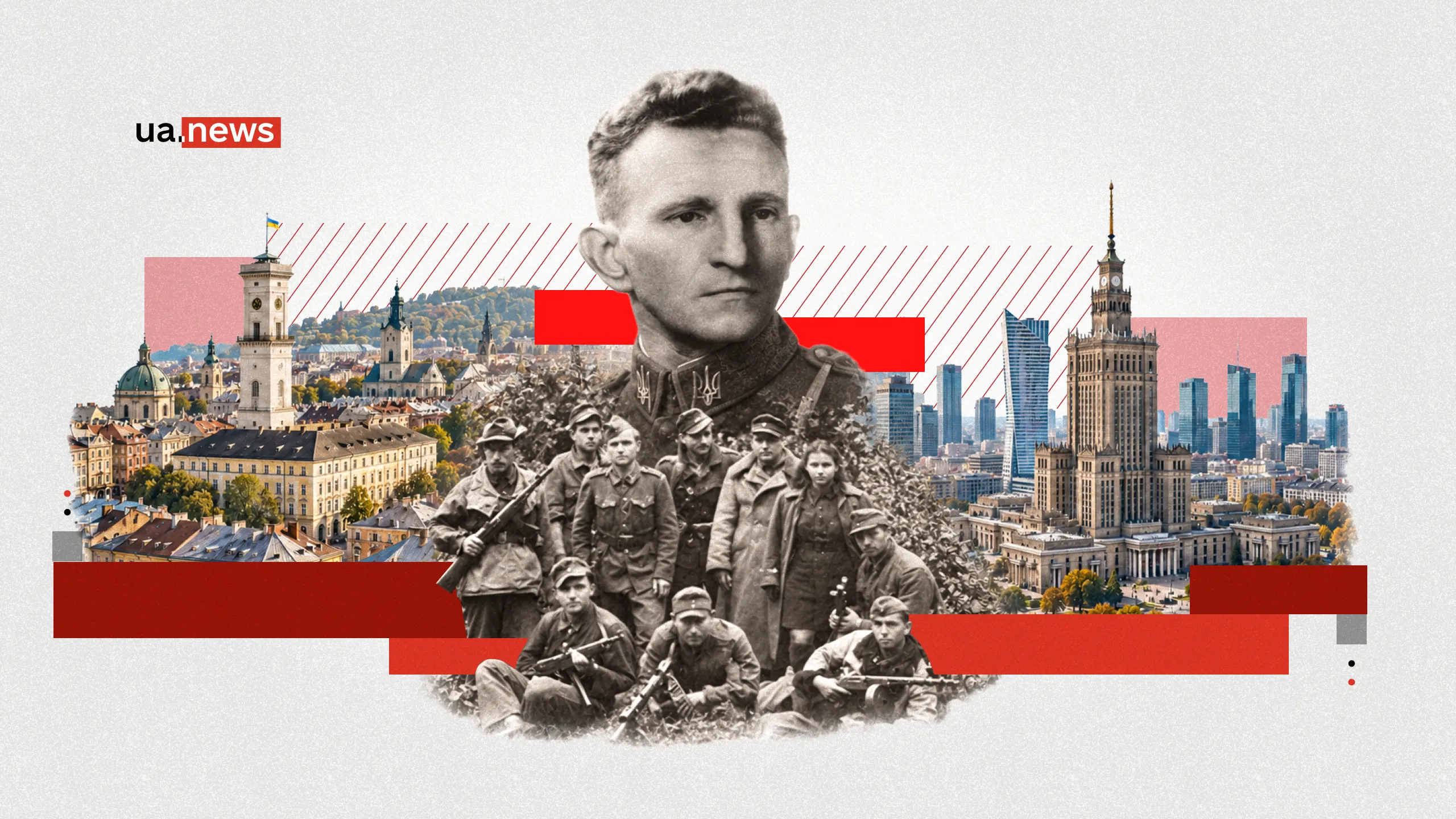
On Tuesday, October 20, members of the Lviv Regional Council gathered for a regular plenary session. The agenda appeared routine. One of the items was a resolution to designate 2027 as the Year of the UPA, Roman Shukhevych, and Oleg Olzhych—an initiative that has already been implemented repeatedly at the local level and which, in and of itself, does not seem particularly unusual for modern Ukraine. But this time, Warsaw’s reaction was surprisingly sharp: bilateral cooperation was called into question, as was even a large package of military aid that Poland had been preparing for Ukraine.
As of October 22, the conflict appears to have been largely resolved thanks to the swift response of the central government in Kyiv to the contentious issue. The Polish side also received additional assurances from Ukraine that the Lviv Regional Council’s decision would not take effect. But a “lingering issue” remains: Deputy Sviatoslav Sheremeta, who initiated the vote, has been barred from entering the Schengen Area for five years, and the mayors of Kraków and Przemyśl have already initiated a review and even a suspension of partnership relations with Lviv.
This raises the question: why did this conflict arise in the first place, and why do the figures of Shukhevych and the UPA fighters remain such a flashpoint in contemporary Polish-Ukrainian relations? How can such misunderstandings be prevented in the future? UA.News investigated the issue.
A Chronology of the Escalation: From the Lviv Regional State Administration to the Conflict with Poland
This story began on October 20. At a plenary session, the Lviv Regional State Administration supported the declaration of 2027 as the Year of the UPA, Roman Shukhevych, and Oleg Olzhych. The formal pretext was a series of anniversaries: 2027 was to mark the 85th anniversary of the UPA’s founding and honor the memory of its commander-in-chief. The initiative was proposed by Deputy Sviatoslav Sheremeta.
For Ukraine, such decisions have not been uncommon since 2014. The commemoration of nationalist figures and organizations from the past at the regional and even national levels has occurred before, so Lviv deputies likely did not expect the reaction to be quite so sharp this time.
However, that is exactly what happened. Polish Foreign Minister Sikorski publicly called Shukhevych “the UPA commander who issued orders for the deportation and murder of Poles,” and stated that Sheremeta would be added to the list of undesirable persons, who would also be barred from entering the Schengen Area. Prime Minister Tusk used even harsher language, referring to Ukraine’s “suicidal” tactics. He recalled that, together with Zelenskyy, he had made considerable efforts to overcome a previous similar crisis in Ukrainian-Polish relations—and now that work could be in vain.
On October 21, the Polish Ministry of the Interior officially carried out its threat: Sheremet was added to the register of persons whose presence in the Schengen Area is undesirable, with a five-year entry ban. On the same day, local authorities joined the fray. The mayors of Kraków and Przemyśl proposed suspending or even terminating partnership relations with Lviv.
There were also reports that Poland had suspended the transfer of a large package of military aid to Ukraine. This news spread instantly across Ukrainian and Polish media. However, it was later denied by the Polish Ministry of Defense.
Meanwhile, the Ukrainian Ministry of Foreign Affairs called the Lviv Regional Council’s decision “counterproductive” and emphasized that the council members had not consulted with the foreign ministry. The Office of the President also de facto disavowed the Lviv Regional State Administration’s initiative, publicly calling on local authorities to act with “pragmatism” and “responsibility.”
So as of today, the conflict appears to have been formally resolved: the aid package has not been halted, Kyiv and Warsaw have exchanged signals of de-escalation, and the blame has been placed on the not-so-far-sighted Lviv deputies, who have already withdrawn their resolution: it has been removed from the Regional State Administration’s website. However, a certain aftertaste remains, and it lies in the fact that the topic of nationalist organizations and figures from the distant past once again served as a trigger at a time when Ukraine least needs such an “explosion.”

Who Is Shukhevych, and Why Do He and the UPA Still Set Poland Off So Much?
To understand why a purely regional decision on the “Year of the UPA and Shukhevych” provoked such a reaction in a neighboring country, it is worth recalling who Roman Shukhevych was and what the UPA was—without myths, but also without oversimplifications.
Shukhevych was born in 1907 in the Lviv region; from a young age, he was an activist in the Ukrainian nationalist movement and a member of the OUN (B). After the outbreak of World War II in 1941, he served in the “Nachtigall” battalion, formed by German intelligence from Ukrainian nationalists. This unit was later reorganized into the 201st Schutzmannschaft Battalion, which operated in Belarus against Soviet partisans until the end of 1942. This episode—an entirely official collaboration with Nazi structures—is the very “inconvenient” fact that is mentioned in Poland, Israel, and other countries whenever Shukhevych’s name appears on the official agenda. For the Polish side, this serves as grounds to speak of collaboration, and denying the fact that Shukhevych served in German units is inaccurate in light of the facts.
At the same time, Shukhevych’s biography is not limited to this episode. From 1943 onward, he led the Ukrainian Insurgent Army (UPA)—the armed wing of the OUN(b)—which fought primarily against Soviet rule but, from a certain point onward, also against the German occupiers. For decades, Soviet propaganda portrayed him exclusively as a “collaborator with the Nazis,” ignoring, among other things, the anti-German dimension of the UPA’s struggle. Contemporary Ukrainian historiography, for its part, tends to emphasize exclusively the liberation aspect, sometimes downplaying or even completely omitting objective facts such as collaboration with the German occupiers at the beginning of the war. The truth, as always, lies somewhere in the middle, and it is more complex than either of these two purely ideological frameworks.

The
UPA as a phenomenon was not a monolith either. These were Ukrainian nationalist armed groups operating primarily in Western Ukraine—but with different factions, different motivations, and varying degrees of control by the central leadership of the OUN(b). Some of the insurgents fought exclusively against the Red Army, while others fought both the communists and German punitive units; however, there were also those who participated exclusively in ethnic cleansing against the peaceful Polish population. It is precisely this aspect that makes Shukhevych and the UPA utterly unacceptable to Poland.
This refers to the Volhynia tragedy of 1943–1944. In Poland, this is referred to as the “Volhynia Massacre” or the “Genocide in Volhynia.” During this period, UPA units and some other nationalist groups carried out mass killings of the Polish civilian population in Volhynia and Eastern Galicia. Historians still debate the exact number of victims: estimates range from several tens of thousands to over one hundred thousand Poles. The Polish side classifies these events as genocide, and for Warsaw, this is not an abstract historical debate but a living trauma passed down from generation to generation. In Poland, Shukhevych is considered personally responsible for the orders that led to these killings. This explains the harsh reaction to the decision by the Lviv Regional State Administration.
It is important, however, to remember the other side of the coin and to understand the historical context of the era as a whole. This interethnic conflict of the 1940s was not one-sided: Polish units also regularly carried out punitive operations against Ukrainian villages. And although, objectively speaking, the number of victims on the Ukrainian side was an order of magnitude smaller, this does not make the tragedy any less real for those who lived through it. The situation in Volhynia (and, more broadly, throughout Europe) in the 1940s was such that “everyone was killing everyone else”: the horrific, inhuman logic of that war, which defies any moral justification. And that is precisely why attempts to glorify any of the participants in those tragic events inevitably provoke resistance from the other side.

The
problem is that this whole issue is not the first time it has become a stumbling block. In May of this year, Zelenskyy bestowed the honorary title “Named After the Heroes of the UPA” on one of the units of the Special Operations Forces of the Armed Forces of Ukraine. This decision sparked a wave of outrage in Poland, and President Karol Nawrocki responded by stripping Zelenskyy of the Order of the White Eagle—Poland’s highest state honor. Zelenskyy ostentatiously returned the order by mail, which added even more emotional intensity to the story. Pragmatic diplomats and politicians on both sides then went to great lengths to quell the flames of mutual conflict. And now, just a few months later, Lviv city council members have once again stirred up the same issue—one might even get the impression that this was done on purpose.
A natural question arises: why? Why keep returning to figures who are deeply controversial not only for Poland but also—let’s be honest—for a significant portion of Ukrainian society? Why look for heroes in a bloody, war-torn past filled with mutual hatred, where their legacy inevitably causes conflicts with our closest neighbors—when Ukraine today has countless real, living heroes: those who are defending the country here and now, whose names require no historical rehabilitation and do not provoke diplomatic scandals? Questions without answers.

History should be left to historians
This episode, despite its seemingly trivial nature, once again lays bare a series of systemic problems.
First, Ukraine has yet to establish a clear line between the independent actions of local self-government and the state’s foreign policy. A regional administration can make a rash decision that will have not just nationwide but international consequences. Meanwhile, the central government finds out about it after the fact, from the media, and scrambles to correct the situation in a chaotic manner. Yes, this time the Ministry of Foreign Affairs and the Office of the President reacted very quickly, but a reaction—unlike prevention—is always too late.
Second, it is worth noting that Polish-Ukrainian relations remain hostage to an ambiguous historical memory. No matter how much is said about “strategic partnership,” “shared interests,” and a common enemy, the topic of the UPA is capable of undoing months and years of diplomatic work in a matter of hours. Back in July, Polish Defense Minister Kosiniak-Kamysz stated as openly and directly as possible: “You won’t join the EU with Bandera.” This is a major problem for the future that needs to be addressed.
Third, the history of the 1940s is clearly not the kind of material that should be used for current political or ideological purposes. And in general: it is impossible to build a future by constantly looking back to the past. The Volhynia tragedy, the controversies surrounding Shukhevych, the debates about the UPA, “Nachtigall,” and everything else—all of this should remain the subject of scholarly discussion among historians. When the past becomes a tool of the present, it always takes a toll on the here and now.

To sum up, the “October conflict” with the Poles seems to have been quickly resolved this time. The aid package has not been halted, Kyiv quickly moved toward de-escalation, and Lviv’s deputies have already removed the relevant resolution from their website.
But next time, we might not be so lucky. And if Ukraine truly wants to keep Poland as an ally—not just in name, but in reality, one that provides weapons and opens the door to Europe—it’s worth learning one simple thing: sometimes the wisest decision is not to pass a resolution that is “right” from the local community’s perspective, but to refrain from doing so when the cost of that “right” decision is measured in problems affecting the entire country.
And speaking more broadly, perhaps it would be worth considering a reevaluation of the entire Ukrainian historical and ideological paradigm of recent years. Because the ghosts of the past should have no influence on the present, let alone the future.




