
Secret Getaways and Traditional Crafts: How Women Live in Tehran
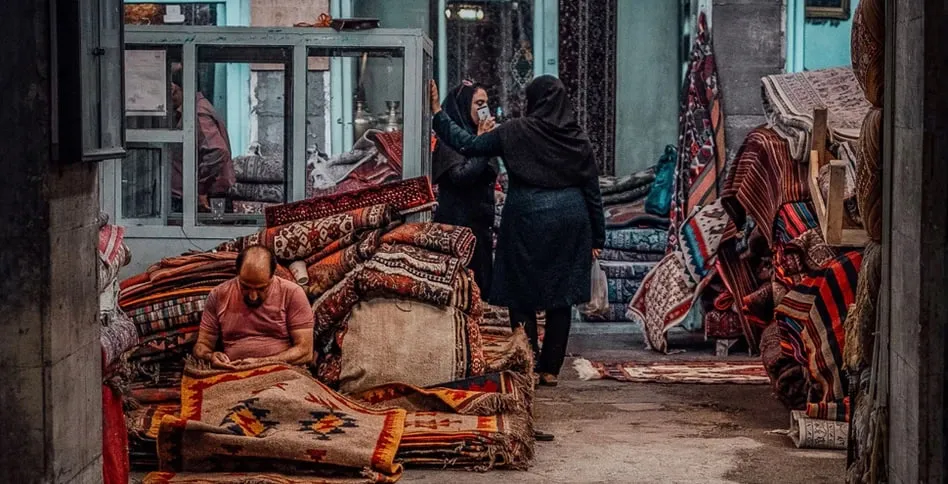
Despite strict legal restrictions, women in Iran continue to practice traditional crafts, including making handmade carpets, attending creative workshops, and finding ways to relax.
“Women have long been engaged in traditional crafts, and many of them in various parts of the country continue this work to this day,” said an Iranian woman.
“Iran is famous for its handwoven carpets. Women have long been engaged in traditional crafts, and many of them in various parts of the country continue this work to this day. Unfortunately, the craftswomen themselves earn next to nothing for their work, while numerous middlemen and dealers profit from their labor, taking the lion’s share of the profits for themselves,” the Iranian woman noted.
Fatemeh herself takes painting classes. She notes that in large cities, women have the opportunity to engage in creative pursuits, but such activities are far from accessible to everyone due to the cost.
Fatemeh also confirmed that there is an underground nightlife in Tehran. According to her, this includes private nightclubs with restricted access, parties, and even casinos.
“Yes, there is an underground nightlife—from casinos to exclusive nightclubs with membership limited to a select few. I’ve only heard about such places from acquaintances, but I’ve never been there myself. Iran also hosts wonderful parties and weddings, although they vary depending on people’s financial means and social status. However, technically all these gatherings are illegal, since under the country’s laws, men and women are prohibited from dancing together in the same room,” Fatemeh emphasized.
Fatemeh also explained that women in Iran are divided into two groups. The majority have no ties to the regime and do not support it, while a much smaller portion sides with the government.
“The hijab is another sensitive issue. For the past 47 years, since the Revolution, many Iranian women have been fighting for the right to choose whether or not to wear it. Recently, pressure from the authorities on this issue has eased somewhat, but the fear and restrictions have not gone away. In general, women still have very limited social and legal rights. In large cities, they are usually allowed to study and work, but they still need their husband’s permission to travel abroad. There are also many other restrictions. For example, if a woman wants a divorce, her husband can often take custody of the children and deprive her of many of her legal rights,” Fateme added.
Incidentally, Fateme also expressed solidarity with Ukrainian mothers who, along with their children, are forced to hide in bomb shelters due to Russian attacks, particularly those involving drones of Iranian origin. She emphasized that any invasion of another country’s territory is an evil act for which there is no justification.
Fateme, who lives in Tehran, spoke about this in an interview with “Glavkom.”
In Iran, six women were sentenced to death in connection with the protests — BBC News.
Hundreds of women without hijabs took part in a race in Tehran — Al Jazeera.




