
The Federation Council of the Russian Federation called for an entry ban on the Armenian governor
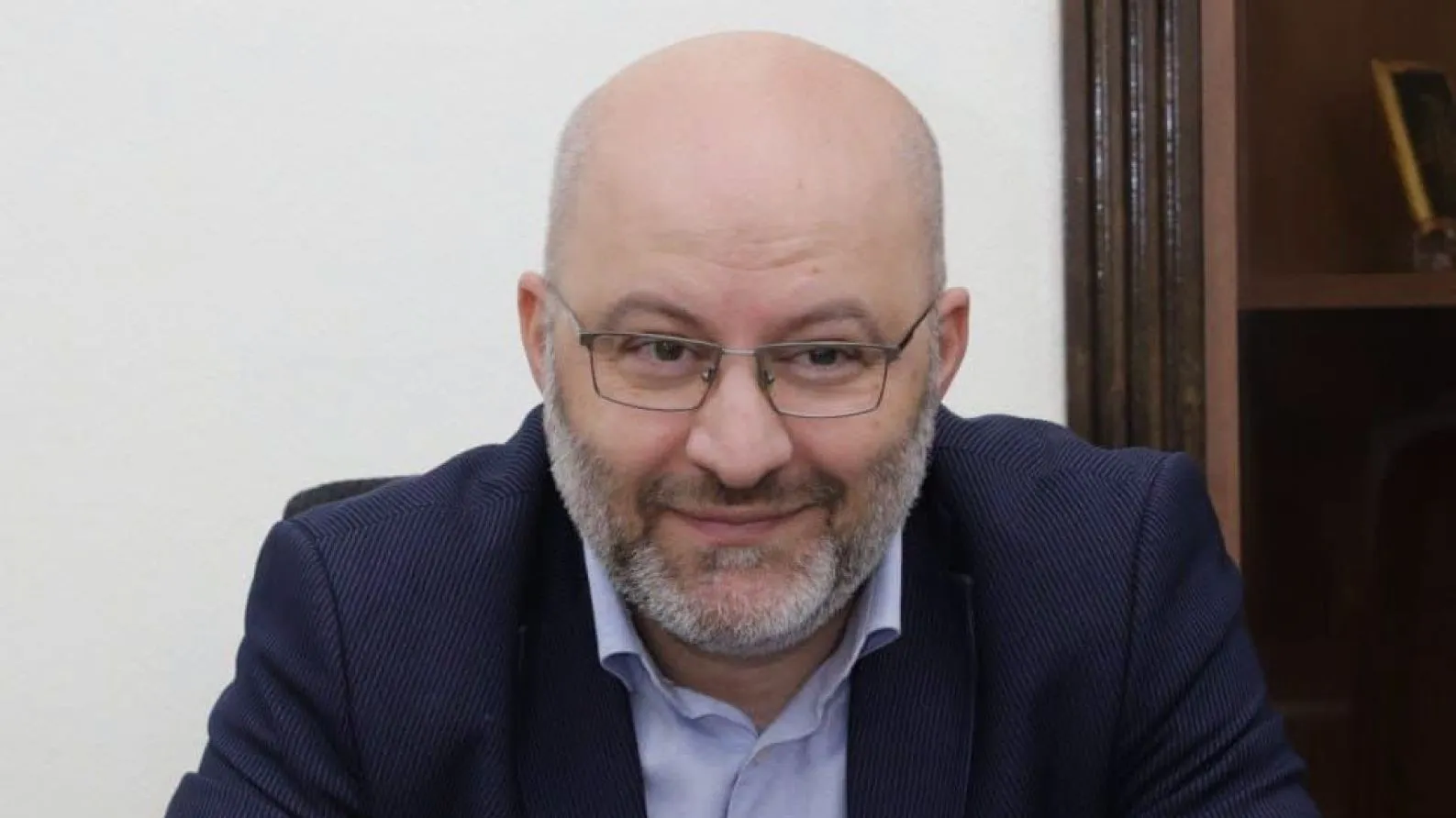
In Russia, there have been calls to ban David Arushanyan, the governor of Armenia’s Shirak Province, from entering the country. The reason was a post he made about the celebrations for Gyumri City Day, in which he criticized an event organized by the opposition party “Strong Armenia.” Russian diplomats and Senator Vladimir Dzhabarov stated that the governor’s remarks could indicate a disrespectful attitude toward Russians.
Vladimir Dzhabarov, chairman of the Russian Federation Council’s Committee on Rules of Procedure, proposed that the Russian Ministry of Foreign Affairs consider banning David Arushanyan from entering the country. The statement was prompted by a post by the governor of Shirak Province dated October 17. At that time, Arushanyan criticized the celebration of Gyumri City Day, which was organized by the opposition party “Strong Armenia.” Its founder is businessman and philanthropist Samvel Karapetyan. The Armenian authorities consider this political force to be pro-Russian.
In his post, the governor called the event a political spectacle and questioned the organizers’ sincerity. He also used harsh words to describe those who had come to the city. “A few cameras, a few concerned faces, a few loud slogans about ‘our Gyumri’—and there you have it: yet another political spectacle. All that’s left is to find an audience. But there’s one small catch: Gyumri isn’t your ‘Nizhny Tabir,’ and the people of Gyumri aren’t your ‘Ivans,’” Arushanyan wrote.
At the end of the post, the governor noted that the region’s residents are hospitable to visitors, but urged them not to cross the line. “We are a hospitable people; guests are always welcome here. But don’t try to bite off more than you can chew—falling from a height hurts. Tourists, be careful…” he added.
The Russian Embassy accused the governor of using unacceptable rhetoric
On October 26, the Russian Embassy in Armenia responded to the post. The diplomatic mission stated that it was puzzled by the reference to “Ivans.” According to Russian diplomats, this phrasing resembles the vocabulary of German Nazis during World War II. The embassy also noted that the Shirak region is home to the 102nd Russian military base and units of Russian border guards.
“We would not like to think that an official heading a region where the 102nd Russian military base and Russian border guards are stationed considers it acceptable to make public statements that could provoke national animosity toward Russians,”, the embassy’s statement reads. The diplomats also stated that, in their view, such remarks run counter to the spirit of the long-standing friendship between the peoples of Russia and Armenia.
Russian Senator Calls for Punishment
Vladimir Dzhabarov supported the Russian embassy’s position and stated that the governor must be held accountable for his words. He proposed considering a ban on Arushanyan’s entry into Russia. “David Arushanyan, governor of Armenia’s Shirak Province, allowed himself to speak disparagingly about Russians, calling them ‘Ivans.’ I believe that one must bear real responsibility for such words. It would be appropriate for our Ministry of Foreign Affairs to consider banning David Arushanyan from entering Russia,” the senator wrote.
Dzhabarov also stated that Russians had helped Armenia in the past and participated in the fight against Nazism. In addition, he recalled the presence of Russian military personnel and border guards in Gyumri. “It was precisely these ‘Ivans’ who, in their time, saved Armenia from genocide, and later the entire world from the fascist ‘brown plague.’ And today, our border guards and the 102nd Military Base are stationed in Gyumri, ensuring the peace and security of local residents. Instead of inappropriate rhetoric, the governor should simply say thank you,” he said.
The Russian senator also accused Arushanyan of spreading anti-Russian sentiment. He claims that the governor’s statements allegedly mirror the methods of Western non-governmental organizations, which, according to him, were previously used in Ukraine, Moldova, and the Baltic states. Dzhabarov called the Russian embassy’s reaction appropriate and once again drew parallels between the governor’s post and the rhetoric of the Nazi era. At the same time, the Russian statements cited mention a proposal to consider an entry ban. There is no information indicating that such a decision has already been made.
The governor’s comments were also criticized
Arushanyan’s post sparked a debate among Facebook users as well. Some commenters sided with the organizers of the celebration and reproached the governor for criticizing the event instead of proposing initiatives for the city himself. One user noted that Gyumri is part of Armenia, so it doesn’t matter which political force organized the celebration. In his view, what matters is that the city was recognized and that an event was held to mark its anniversary.
Another commenter pointed out that, according to him, the country’s government didn’t even congratulate the residents of Gyumri on the holiday. “They organize an event—you’re unhappy. Then organize it yourselves! The government didn’t even congratulate the people of Gyumri—that’s what you should be upset about,” the user wrote. Another participant in the discussion suggested that the governor focus on the city’s specific problems. In particular, he mentioned the paving of several streets in the Ani neighborhood.
Thus, the post about the Gyumri City Day celebrations sparked a dispute between the governor of Shirak Province and representatives of the Russian authorities. Moscow criticized Arushanyan’s wording and proposed restricting his entry into Russia, while some social media users focused on issues related to Gyumri’s development. The Panorama news agency reported this, citing the senator’s post on his channel on the “Max” platform.
The Collective Security Treaty Organization may consider Armenia’s withdrawal from the alliance at the summit on November 10–11 in Moscow, the capital of Russia—the aggressor state.
Armenia has appealed to the Eurasian Economic Union (EAEU) to recognize the trade restrictions imposed by Russia, the aggressor state, on Armenian goods as illegal market barriers.




