

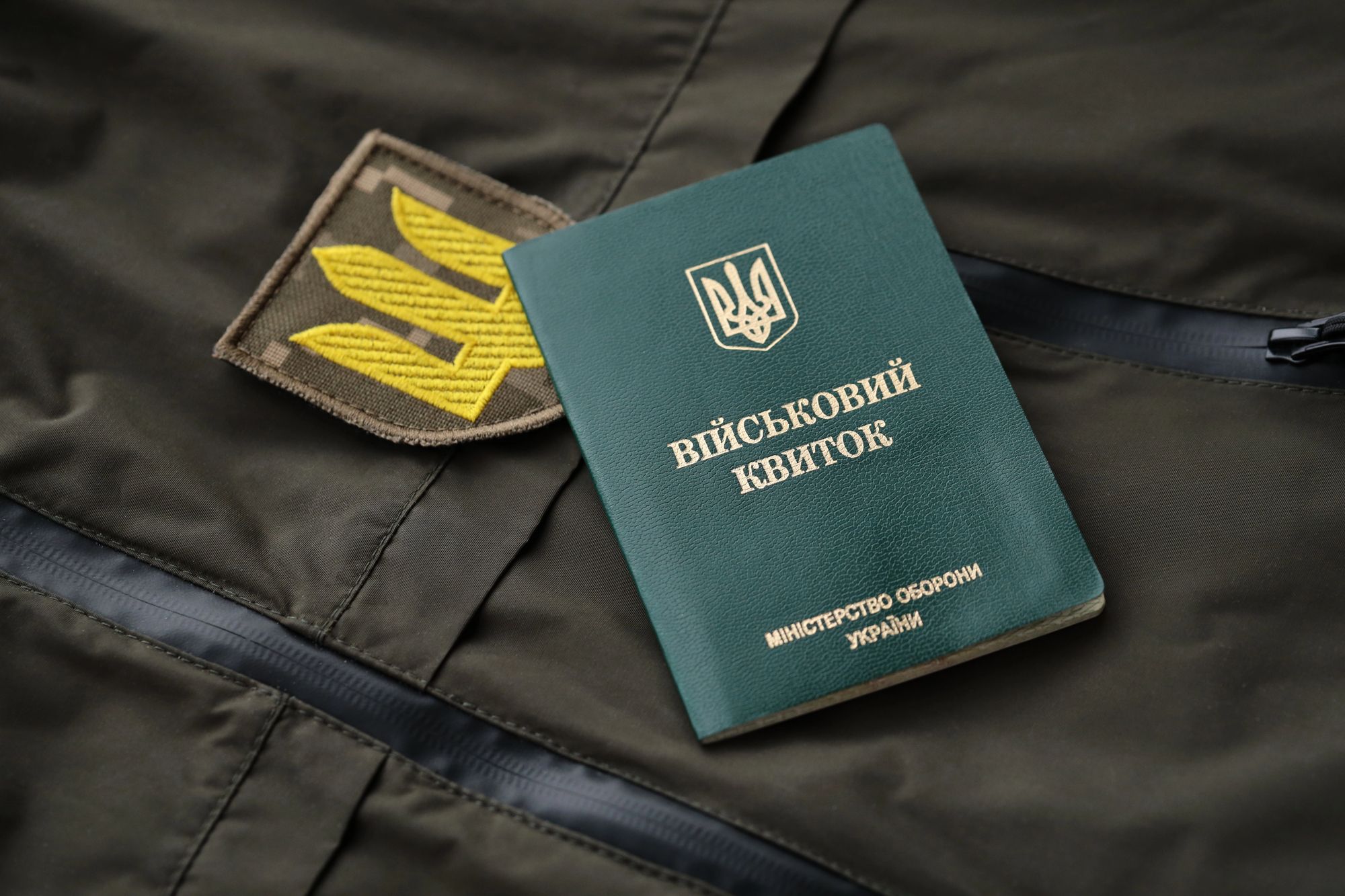
After several weeks of consultations, revisions, and heated debates, the Cabinet of Ministers finally released the new rules for Ukrainians making reservations. On October 26, Resolution No. 1328 appeared on the government portal—a document that was supposed to put an end to the saga of quota revisions, but which had already sparked considerable debate even in its draft stage. Because instead of reassuring businesses and the public, the resolution raised new questions: Who is now allowed to place employees on furlough? How many can be retained at a company? Who will decide whether a company is critical to national security? and most importantly—what does all this mean for the energy and utilities sectors on the eve of the most challenging winter?
The government insists that the current decisions are dictated by the needs of the front lines. Even before the resolution was published, Prime Minister Koretsky explained that the number of people with exemptions and deferrals is growing by tens of thousands every month, and if nothing changes, “soon absolutely everyone will be exempted.” Experts, however, sounded the alarm even at the draft stage, noting that further reductions in exemptions for critical infrastructure threaten a staffing collapse just as the country is preparing for an extremely difficult heating season amid constant shelling by Russia.
What exactly has changed, what are the new reservation rules, what do they indicate, and what are experts saying? UA.News political analyst Mykyta Trachuk looked into the issue.
How It All Began: From the October 13 Draft to Resolution No. 1328
The story of the revision of the reservation rules began long before the final document was published. As early as October 13, according to media reports, the Cabinet of Ministers adopted a preliminary resolution that set the framework for future changes. At that time, the figures were quite drastic: for the defense-industrial complex and the energy sector, the quota was planned to be reduced from 100% to 85%, and for housing and utilities enterprises—from 75% to 60%. For the remaining critically important enterprises, the baseline limit was to remain at 50%. In addition, the plan called for the creation of a new body—a Coordination Center under the Cabinet of Ministers—which was to consist exclusively of law enforcement officials and determine the criticality status of enterprises.
At the time, the draft bill drew a barrage of criticism. The Association of Ukrainian Cities publicly called on the government to maintain the 100% exemption for employees in housing and utilities, energy, and transportation, emphasizing that the physical survival of communities depends on them. Experts also assessed the draft negatively.
Alongside the criticism, political signals were also being sent. A group of members of parliament from various factions appealed to the prime minister, demanding that he abandon the creation of the Coordination Center in its proposed form. Koretsky himself later attempted to defuse the tension, stating that no radical changes were planned for truly critical enterprises in the defense industry and energy sector. Final Resolution No. 1328 was an attempt to find a compromise between the General Staff’s demands, the needs of the business community, and the concerns of critical infrastructure. But how successful it was remains an open question.

What Has Changed in the Reservation Rules: 10 Key Changes
The first and, perhaps, most notable of the innovations is the creation of a separate Coordination Center for organizing reservations. Previously, proposals to increase the volume of reservations were submitted to the Ministry of Defense or other authorized bodies. Now they will be forwarded specifically to this Center, which includes representatives from the Ministry of Economy, the Ministry of Defense, the Ministry of Digital Transformation, the Ministry of Internal Affairs, the energy sector, and other agencies. An important detail: The Center is an advisory body. It prepares recommendations and proposals, while decisions are made directly by the authorized bodies.
The second change concerns the limit exceeding 50% for critically important enterprises. This limit itself existed previously, but the procedure for approving its exceeding has now changed: such approvals must take into account the recommendations and proposals of the Coordination Center. In addition, the resolution explicitly sets out the grounds for refusing to consider a proposal to increase the limit. These include systematic violations by the manager of military registration requirements and/or the manager being held administratively liable for such violations.
The third and most debated provision is that a separate 95% reservation limit is established for the energy and defense industries. Previously, as a reminder, the limit was 100%. However, it is important to understand that the 95% limit does not apply to just any company operating in the energy or defense sectors. Companies must meet the categories and conditions described in the resolution.
Fourth, the duration of the reservation decision is specified in detail for the first time. The new rules establish specific deadlines and the consequences of noncompliance. If a company’s limit has been officially increased, it has 10 business days to process the reservation of the new number of employees through “Diyu.” If it fails to do so within this timeframe, the decision to increase the limit will expire.
Fifth, the criteria for recognizing a company as critically important have been changed. Specific sectors are listed: the defense industry, energy, housing and utilities, the extractive and processing industries, the agricultural sector, retail, construction, transportation and logistics, IT, banking, healthcare and telecommunications, as well as emergency and rescue services. However, merely belonging to a specific sector is no longer sufficient to automatically receive this status: the enterprise’s significance must be confirmed by verifiable metrics.
Sixth, deadlines have been established for reviewing applications from enterprises. The government agency reviews the application and forwards the materials to the Coordination Center within 7 business days. The Center prepares its recommendations within one month. After receiving the recommendations, the government agency makes a decision within 3 business days. The total time required to reach a decision may exceed one month.
Seventh—for representative offices of donor institutions and implementers of international technical assistance projects (typically grant-funding organizations), the procedure for exceeding the limit of 7 reserved employees has been clarified. Previously, the limit was no more than 50% of employees directly involved in a single project and, as a rule, no more than 7 people. Now, the number of reserved employees may exceed 7.
Eighth—an exception has been added to the criterion regarding confirmation of the absence of tax and social security contribution arrears, specifically for arrears arising from the temporary suspension or non-payment of funds from the state and/or local budget.
Ninth—a separate category of executives subject to reservation has been added. These are individuals who hold the position of executive in an entity that is legally authorized to perform public administration functions related to special oversight of auditing activities.
Tenth—The Coordination Center may now issue recommendations to state authorities regarding the revocation of a decision to designate an enterprise as critically important. One of the grounds for considering such a matter is a request from law enforcement agencies. However, the actual decision is still made by the authorized state body. In other words, a request from law enforcement agencies does not in itself mean the automatic revocation of an enterprise’s status.
Betting on War, Not Diplomacy
If we step back from the list of changes and look at the Cabinet of Ministers’ resolution in a broader context, one thing becomes clear: the government is clearly banking on continued war, evidently not having much faith in diplomatic prospects or in a swift peace achieved through international efforts. The logic of the document is simple and pragmatic: the front lines need people, so the state is prepared to cut back on quotas even in the most critical sectors.
However, this does not mean that the government is completely ignoring concerns and expert opinion. Compared to the October 13 draft, which proposed 85% for the energy and defense sectors, and 60% for housing and utilities, the final figure of 95% for the energy sector and the defense industry appears to be a step back from the most stringent scenario and a compromise of sorts. But the problem is that even 95% is still not 100%. For critical infrastructure, which is already operating at the limits of its capacity, the loss of even a few percent of qualified specialists can have disproportionately severe consequences.
Even before the war, utility companies were short up to 50% of their blue-collar workers. Energy and utility workers possess highly specialized and critical skills that cannot be replaced in a week or two. Their knowledge and experience have been accumulated over decades, and the average age of many of these workers is already close to retirement age. If the workforce shrinks from 100% to 95%, some of these specialists will receive a draft notice. And all of this, ultimately, is happening on the eve of winter, when the load on the power grid and heating and utility companies increases significantly, while Russian shelling of energy facilities continues unabated.
A separate issue is the housing and utilities sector. In the draft resolution dated October 13, a reduction from 75% to 60% was proposed for utility companies. In the final Resolution No. 1328, the figure for housing and communal services does not explicitly appear among those for whom the limit was raised to 95%. This means that the housing and communal services sector will most likely remain within the basic percentage ranges or other categories defined separately. And although the government emphasizes that there will be no “radical changes” for truly critical enterprises, in practice, the housing and utilities sector may become the most vulnerable area. The new rules could disrupt preparations for the extremely challenging fall-winter period and paralyze the operation of critical infrastructure. One can only hope that such a scenario can be avoided.

Expert
Opinion
Military expert and retired SBU Colonel Oleg Starikov reminds us: a front line without a rear is a path to defeat. That is the law of war. The stronger the rear, the stronger the front line.
“The rear depends on the enterprises that sustain the functioning of cities. This includes building maintenance, water supply, electricity, and so on. If these enterprises lack workers who can ensure 100% operation of housing and communal services, the rear will first experience problems, then deteriorate, and eventually simply collapse. And here we return to point number one: the stronger the home front, the stronger the front lines. Everything related to defense industry production is very important, but it is not critical. The West is still helping us; key production facilities have been moved outside Ukraine, and citizens of other countries work there. But what is absolutely critical is housing and communal services, healthcare, social security, and so on,” notes Oleg Starikov.
The expert highlights another important point: the war in 2026 differs from all previous years. The front line is now sparse. The number of personnel on the front line of defense is tens, if not hundreds, of times smaller than it was in 2022–2024.
“The personnel currently available are sufficient to carry out the tasks. The front line now extends not in width but in depth, so the bulk of the Ukrainian Armed Forces’ personnel is fully capable of supporting the active troops. Where, then, should reserves come from? I propose the following options. First: We must lift the exemption for employees who work and serve in the Ministry of Defense. If you look at who holds these positions, they’re “guys” aged 25 and older who have been shielded from mobilization. They’re of no use whatsoever. That’s why we need to demilitarize the Ministry of Defense—as, incidentally, the law requires. Military personnel who wish to serve should be transferred to the Armed Forces of Ukraine. And finally, we must close this loophole for those with connections. The same audit should be conducted at the Ministry of Veterans Affairs and in other ministries as well.
After all, according to the law, the size of law enforcement agencies is determined by their authorized strength, based on the country’s population. Currently, according to demographers’ estimates, there are about 25 million people left in Ukraine. Therefore, the authorized strength of the Ministry of Internal Affairs must be recalculated based on this figure. And all the “excess” personnel should be transferred to the Armed Forces of Ukraine. This would ensure that the Armed Forces are fully staffed. All ministers and deputy ministers could also be sent there—provided, of course, that they are men. Women could easily take their places. But it’s not worth touching the members of parliament just yet: after all, they were elected by the people,” says Oleg Starikov.
In summary, Cabinet Resolution No. 1328, which establishes new rules for military service exemptions, is a document that attempts to strike a balance between two mutually exclusive needs: the army needs people, while critical infrastructure, business, and the civilian sector as a whole need specialists. The government has chosen a path of compromise on both fronts: on the one hand, it has maintained a relatively high quota for the defense and energy sectors; on the other, it has tightened controls and limited opportunities for abuse.
But this “compromise” has proven to be very fragile. For energy and utility companies, even a 5% loss could prove critical on the eve of winter. For businesses, the new bureaucratic procedures mean an additional burden. And for society as a whole, this is yet another signal that the authorities are preparing for a protracted war, and that no one really believes in the success of peace talks.
Whether the new model will work remains to be seen during the heating season—and it will depend on how effectively the Coordination Center can weed out “invalid” reservations without cutting off legitimate specialists in the process. One thing is certain: Resolution No. 1328 does not put an end to the debate over reservations. It merely opens a new phase of the debate: one with new rules, new risks, and new challenges that the authorities will have to address amid winter conditions and the expected intensification of enemy attacks.




