
In Kyiv, for the first time in Ukraine, a patient underwent simultaneous heart and liver transplants

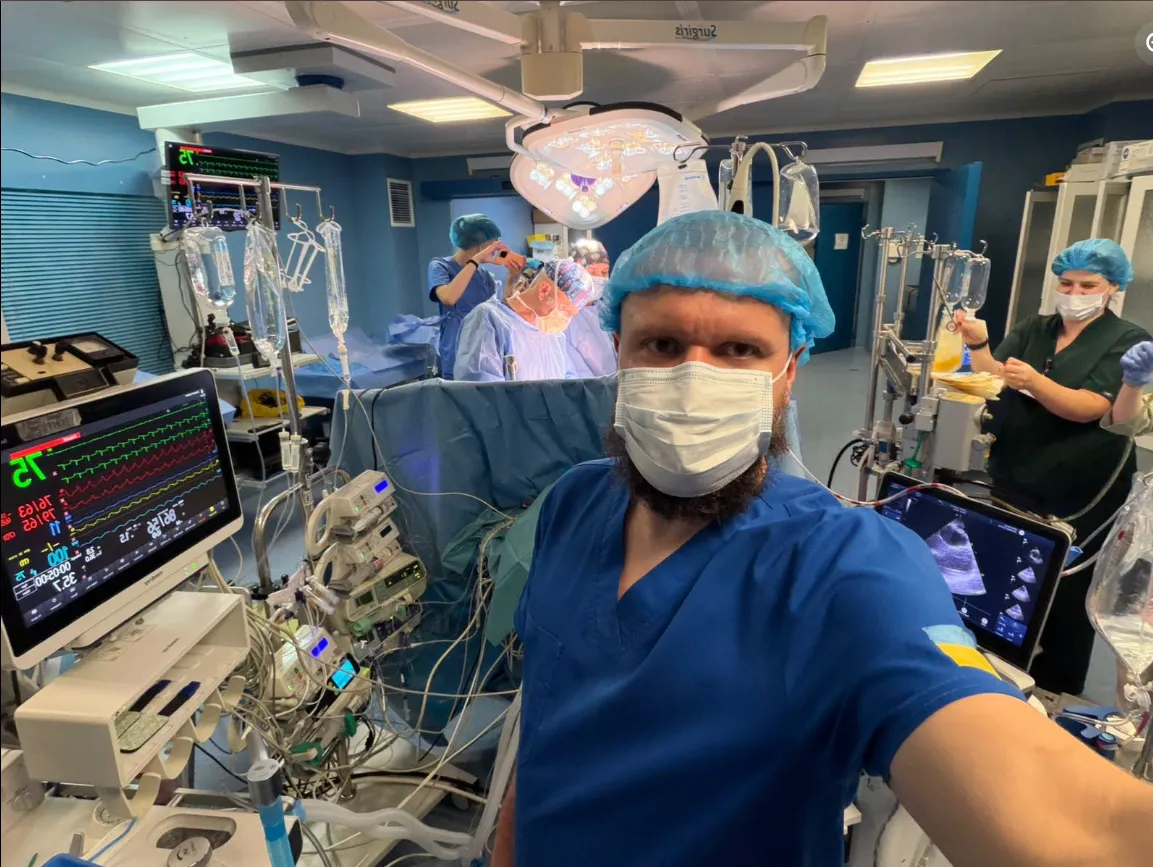
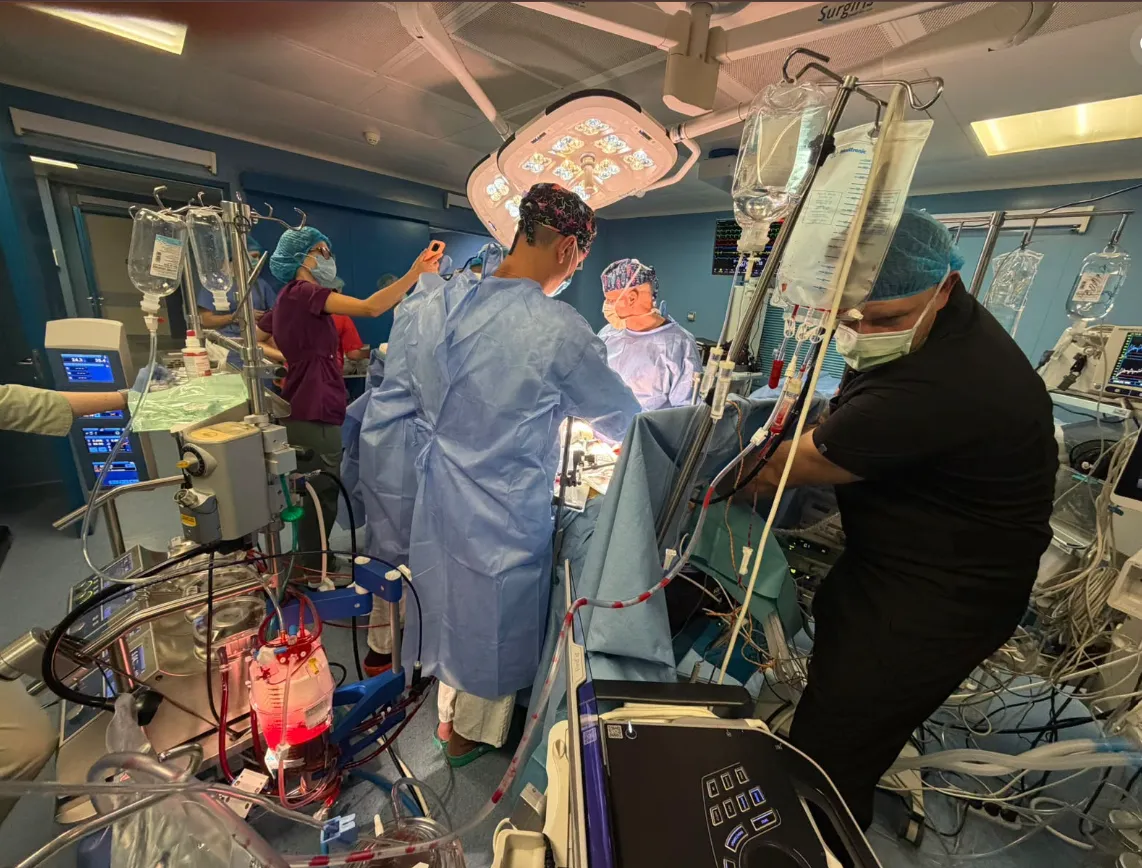
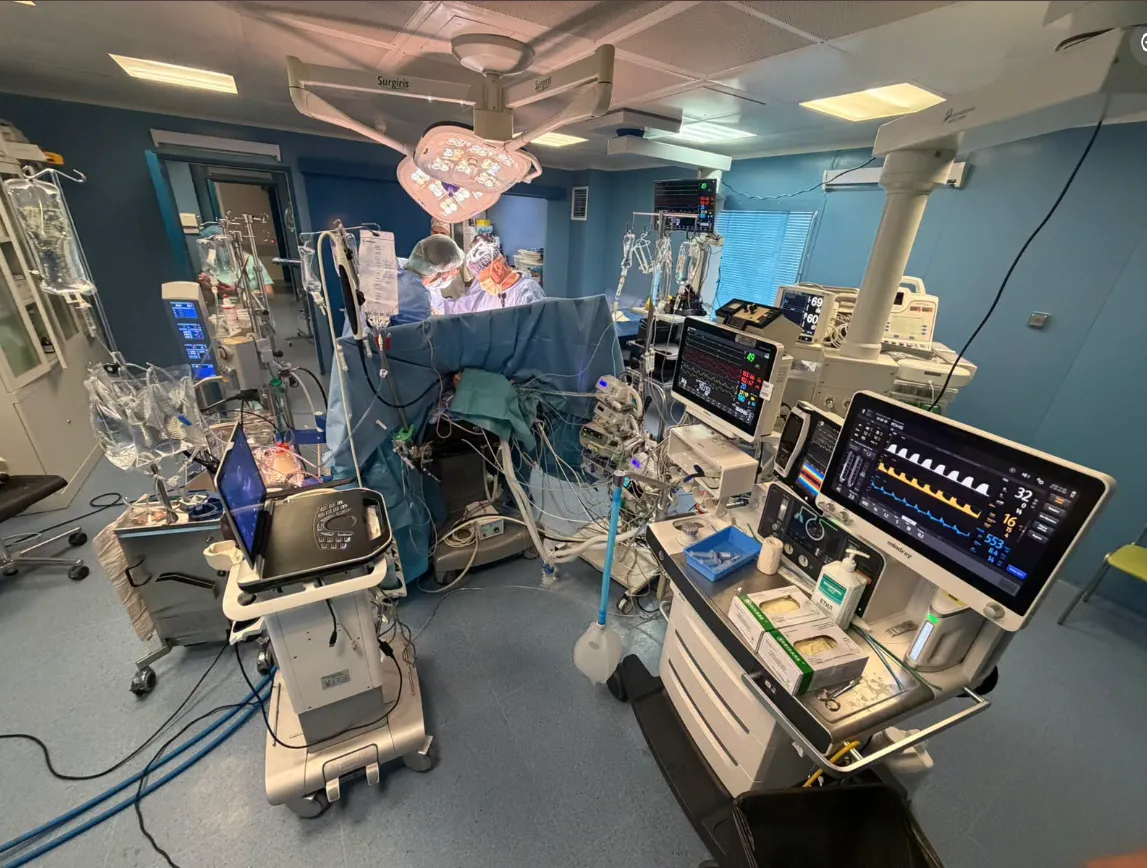
At Kyiv City Clinical Hospital No. 1, doctors performed a simultaneous heart and liver transplant on a single patient for the first time in Ukraine’s history. The operation lasted about 15 hours. Within the first 24 hours after the procedure, the man was taken off the ventilator. He is currently in stable condition and remains in the intensive care unit.
“A multidisciplinary team of doctors at Kyiv City Clinical Hospital No. 1 successfully performed a simultaneous heart-liver transplant on a single patient for the first time in Ukraine’s history,” the statement reads.
According to the medical director of anesthesiology, transplantation, and high-tech medical care at Kyiv City Clinical Hospital No. 1, program director Maksym Pavlovsky, the surgery was performed on a 44-year-old Kyiv resident who suffered from severe heart and liver diseases.
Back in 2018, the man was placed on the waiting list for a combined transplant in Minsk, but he never received the necessary care.
Subsequently, the patient’s condition deteriorated critically. His ejection fraction dropped significantly, he experienced numerous life-threatening bleeds from varicose veins in the esophagus, and his cardiovascular and liver failure progressed.
The only chance to save the man was a transplant of both organs.
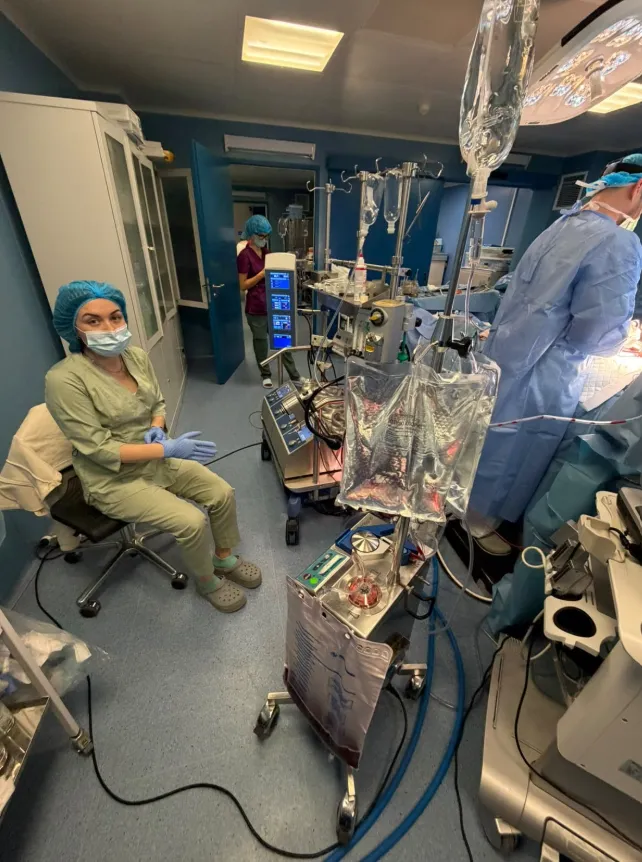
The medical team first transplanted the patient’s heart, followed by his liver. A heart-lung machine was used to maintain blood circulation during both stages.
Ensuring stable blood circulation during the liver transplant—when surgeons temporarily occlude the inferior vena cava—posed a particular challenge.
To reduce the risk of complications and create the right conditions for the recovery of both transplanted organs, the team planned in advance the transition from cardiopulmonary bypass to veno-arterial extracorporeal membrane oxygenation (ECMO).
This technology maintains blood circulation and oxygenation, helping the body recover. Thanks to a pre-planned equipment connection scheme, the doctors were able to switch to ECMO without additional venous cannulation.
After completing the main stages of the transplant and controlling bleeding, the patient was transferred to the intensive care unit.
The operation required careful planning and coordinated work among cardiac surgeons, transplant surgeons, anesthesiologists, and perfusionists—specialists who operate extracorporeal life support machines.
Throughout the procedure, the team continuously monitored hemodynamics and bleeding.
To stabilize the donor’s condition, the medical team also had to quickly initiate ECMO. This helped maintain his vital functions and buy time for organ retrieval.
The donor was a young man who had suffered a hemorrhagic stroke. Doctors confirmed brain death.
Simultaneous heart and liver transplantation is one of the most complex surgical procedures in modern medicine. Such operations are performed only in a limited number of specialized centers worldwide.
This first combined transplant of its kind in Ukraine marked an important step in the development of national transplantology and the expansion of high-tech medical care capabilities.
Within the first day after the surgery, the patient was already breathing on his own, was conscious, sitting up, and eating. Currently, his condition remains stable, and he continues to be under medical supervision in the intensive care unit.
This was reported by the Kyiv City Health Department on Facebook.
As a reminder, Yuriy Halas, a 55-year-old tractor driver from the Lviv region, had almost completely lost vision in his left eye due to a rare tumor that typically occurs in newborns and infants. The man had ignored his deteriorating vision for years until it became extremely difficult for him to work in the fields. Specialists at St. Panteleimon Hospital removed the tumor, and the patient’s vision was partially restored the very next day.
Earlier in Lviv, doctors managed to save 43-year-old Volodymyr from Kyiv, who suffered burns over approximately 50% of his body as a result of a Russian strike on a tanker in the Odesa region.
In Lviv, doctors helped a 62-year-old resident of Khmelnytskyi who was suffering from a critical disruption of blood flow to both legs. The man sought treatment from specialists at St. Panteleimon Hospital, complaining of severe pain and a sensation of coldness in his lower extremities.




