
In Lviv, a patient with the rare Madelung disease underwent surgery for the first time
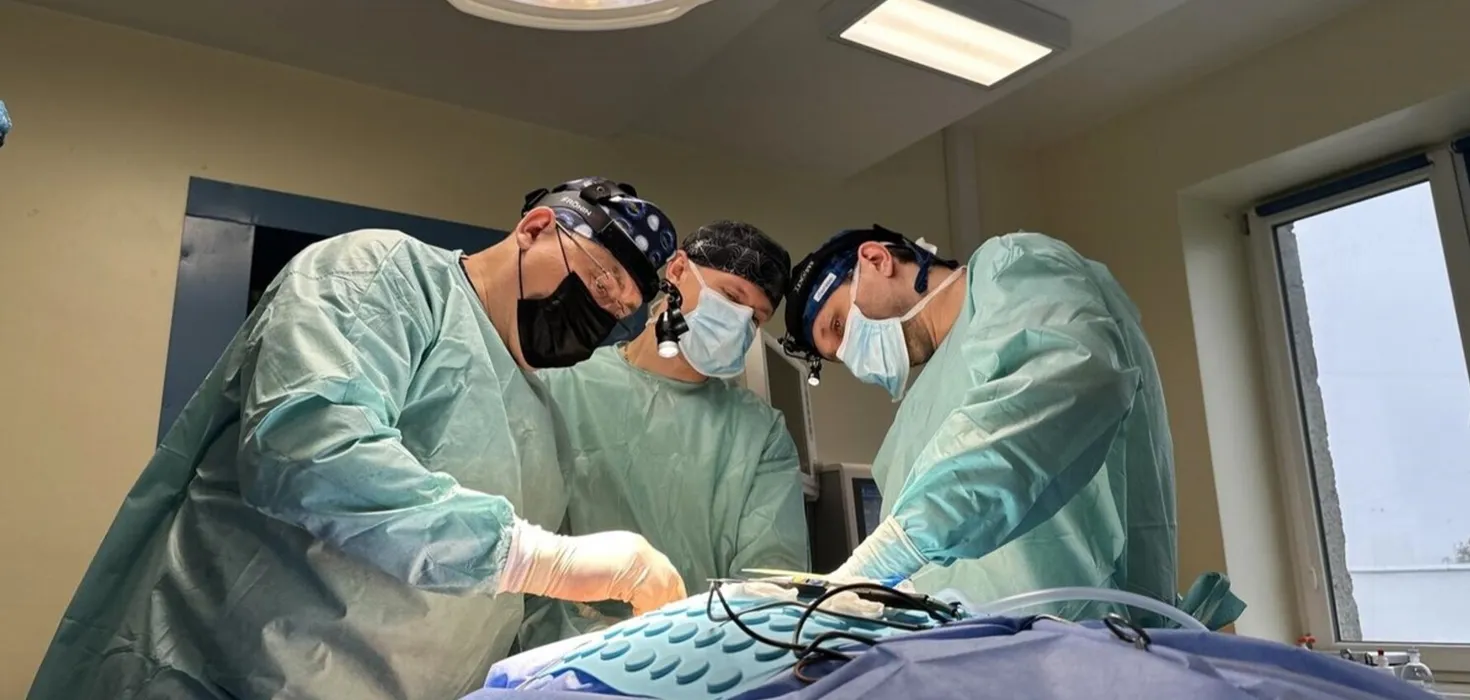
In Lviv, doctors performed a series of surgeries on a 33-year-old man with the rare Madelung's disease. Due to abnormal growth of fatty tissue in the neck and collar area, the patient had difficulty moving, eating, chewing, and sleeping.
Medical literature describes approximately 600 documented cases of this disease worldwide.
Specialists at St. Panteleimon Hospital encountered this condition for the first time. The Lviv City Council reported on this unusual case.
The man, who is serving a prison sentence, first noticed the symptoms in 2022. They manifested as atypical growth of adipose tissue. Initially, the changes appeared on his neck, and later spread to his face, shoulders, arms, and abdomen.
Over time, the fatty growths enlarged to such an extent that it became difficult for the patient to turn his head, chew, and sleep.
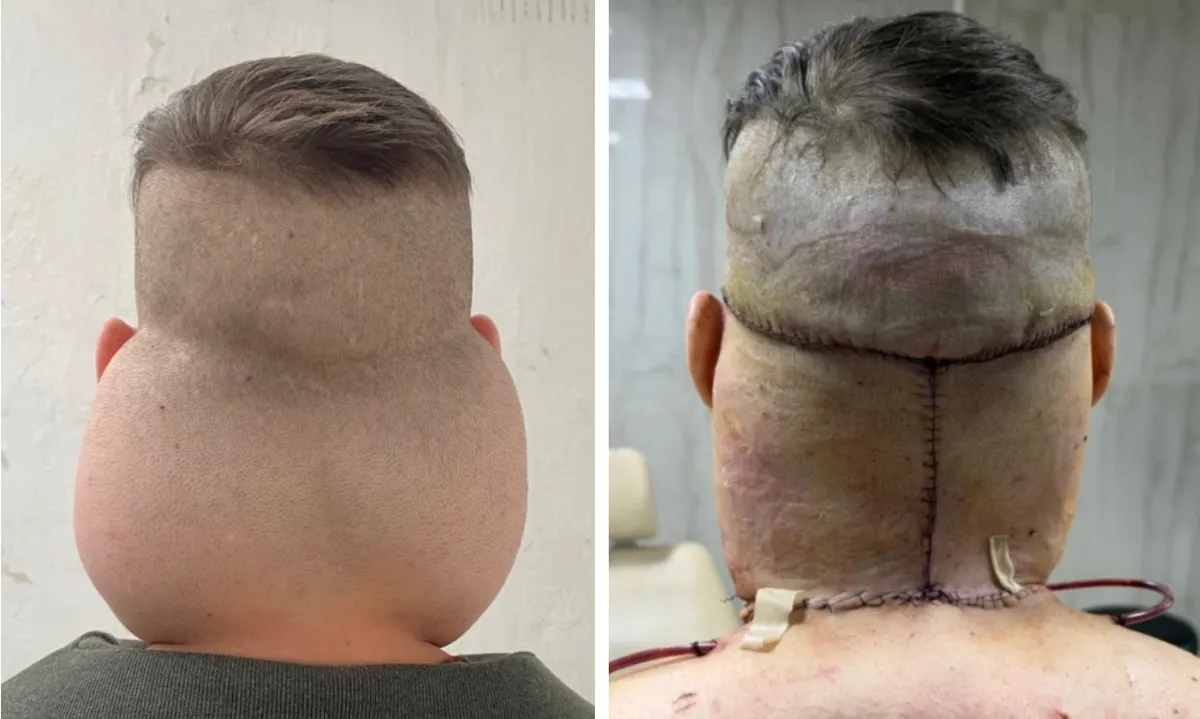
Doctors diagnosed him with Madelung’s disease—a rare condition in which subcutaneous fat tissue grows unevenly and forms large, tumor-like lumps. Most often, fat accumulates around the neck, on the back of the head, and on the shoulders, forming a mass that resembles a large fat collar or hump.
According to foreign medical publications, about 600 cases of Madelung’s disease have been reported worldwide. However, the actual number of people with this diagnosis may be significantly higher.
Risk factors include chronic alcohol abuse, genetic mutations, metabolic disorders, and prolonged stress. Doctors speculate that the latter may have been one of the factors contributing to the development of the disease in this patient.
Specialists from Lviv Hospital No. 19—which is part of the correctional system—as well as Oleg Kovtunyak, head of the Head and Neck Center at St. Panteleimon Hospital of the First Medical Association, and his team were involved in the man’s treatment.
It is noted that in over 35 years of practice, this leading maxillofacial surgeon in Lviv encountered for the first time the need to remove fatty growths in a patient with Madelung’s disease.
The treatment was carried out in several stages. During the first procedure, surgeons removed fatty growths from the front of the neck and face. After the surgery, the man felt significant relief and was able to move more freely.
In the second stage, the medical team operated on the back of the neck. They removed over a kilogram of subcutaneous fat deposits, as well as excess stretched skin. Both procedures went without complications.
Oleg Kovtunyak explained that one of the main methods of treating the condition is lipectomy—the surgical removal of tumor-like fatty growths. However, in this patient’s case, the surgery had to be divided into several stages due to significant deformity of the front and back of the neck.
“One of the main treatment methods is lipectomy, that is, the removal of tumor-like growths. Our patient had **significant deformation of the front and back of the neck, so we decided to perform the surgery in stages. We perform even more complex procedures, but this one has its own challenges. If too much subcutaneous tissue is removed, the skin can become necrotic because the blood vessels in the flap are damaged. So you’re walking a fine line: you have to leave a certain thickness of the fat layer. Moreover, the neck and face are the most challenging areas due to their innervation and blood supply,” noted Oleg Kovtunyak.
The patient himself also spoke about the results of the treatment and how his well-being has improved.
“I underwent major surgery, and afterward it became much easier to breathe, chew, and live in general. I’m very satisfied,” the man said.
The Lviv City Council reported on this unusual case.
Earlier, at the M. I. Pirogov Vinnytsia Regional Clinical Hospital, doctors performed a complex reconstructive surgery on a serviceman who had sustained a severe open comminuted fracture as a result of a Russian drone attack. The doctors made every effort to save the soldier’s limb.
In the Lviv region, a doctor with a heart condition underwent a unique minimally invasive surgery.
Earlier in Lviv, doctors managed to save 43-year-old Volodymyr from Kyiv, who suffered burns covering approximately 50% of his body as a result of a Russian strike on a tanker in the Odesa region.




