
Journalist Plinsky revealed a 300 billion hryvnia scheme involving NBU deposit certificates
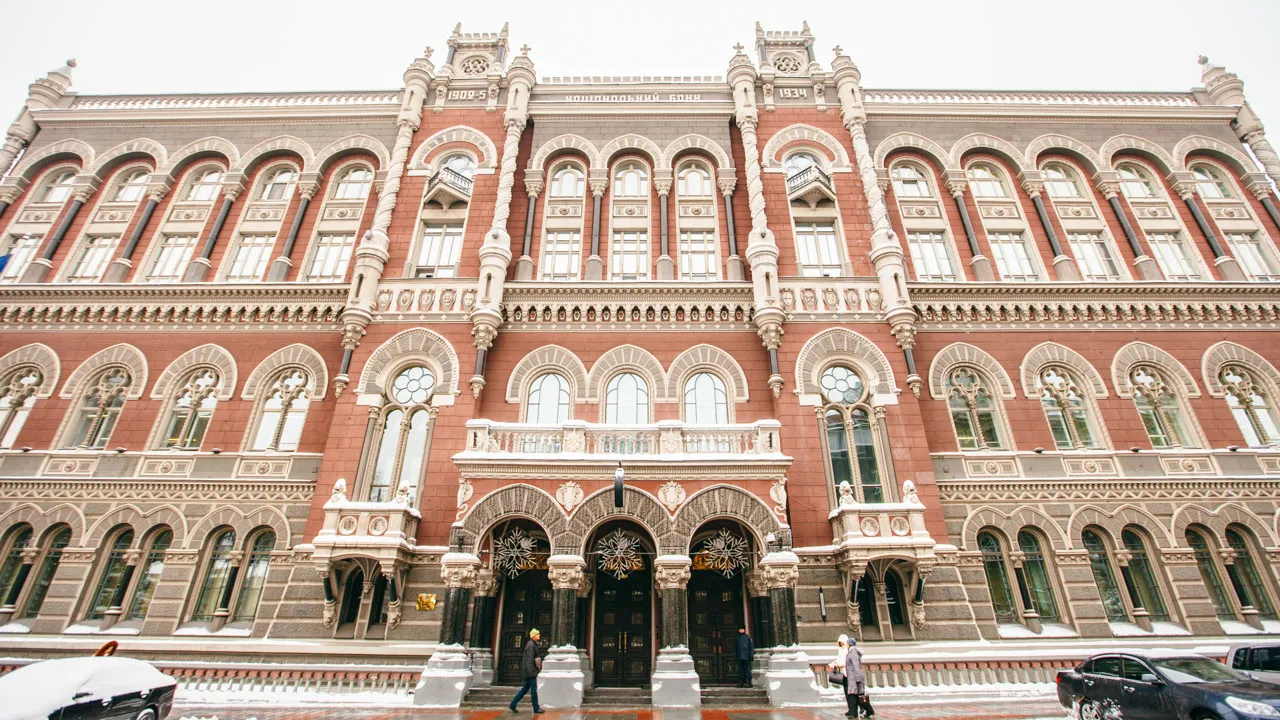
Journalist Yevgen Plinsky called for an investigation into the mechanism for payments to commercial banks under the National Bank of Ukraine’s certificate of deposit program. According to his estimates, between 2022 and 2025, banks received nearly 292 billion hryvnias through this instrument, and the system itself creates conditions for guaranteed profits for financial institutions rather than encouraging more active lending to the economy.
Plinsky raised this issue amid searches conducted by the National Anti-Corruption Bureau of Ukraine (NABU) at the National Bank and discussions regarding the activities of its chairman, Andriy Pyshnyy. The journalist expressed hope that the investigation would focus not only on the management of “Sens Bank” and possible ties to the gambling industry, but also on the mechanism by which banks generate profits through NBU deposit certificates.
In his investigation, Yevhen Plinsky described this model as a 300 billion hryvnia scheme and stated that it effectively channels funds received by the National Bank from the Ministry of Finance for government bonds to the commercial banking sector through payments on deposit certificates.
How the mechanism for payments to banks works
According to the journalist’s explanation, the Ministry of Finance raises funds through domestic government bonds (OVDP) to cover the state budget deficit. The National Bank also holds a significant portfolio of such bonds and receives interest income from them.
According to data cited by Plinsky, in 2025 the Ministry of Finance paid the NBU 85.3 billion hryvnia in interest income on OVDPs. In the same year, the National Bank paid commercial banks 81.98 billion hryvnia on certificates of deposit.
The journalist notes that the amount paid to banks accounted for 96.1% of the NBU’s income from domestic government bonds. In his assessment, this indicates that a significant portion of the funds received by the National Bank from the budget was effectively transferred to the commercial financial sector.
In total, between 2022 and 2025, payments to banks under deposit certificates, according to Plinsky’s calculations, reached 291.8 billion hryvnias.
According to Plinsky, certificates of deposit allow banks to place excess funds with the NBU and earn income with relatively low risks. In his investigation, he notes that the yield on this instrument reached 18.5%.
The journalist believes that this model reduces incentives for banks to lend to businesses and individuals, since placing funds with the National Bank allows them to earn money without having to assess borrowers’ risks.
Bank profits are rising, while lending is lagging behind
To support his argument, Plinsky cited data on the net profits of Ukrainian banks:
2022 — 24.7 billion UAH;
2023 — 86.5 billion UAH;
2024 — 91 billion UAH;
2025 — 126.8 billion UAH.
According to the data provided by the journalist, the banking system’s total assets amount to 4.3 trillion UAH, while the volume of lending to the real sector of the economy is approximately 1.2 trillion UAH.
Plinsky also claims that 64.2% of income from certificates of deposit comes from banks with private and foreign capital. In his view, this means that a significant portion of the funds goes not to state-owned financial institutions but to the private sector.
Separately, the journalist drew attention to tax policy regarding banks. He noted that in 2025, the corporate income tax rate for banks was reduced to 25% after a 50% rate had been in effect in 2023–2024. In 2026, he said, the 50% rate will be reinstated.
Plinsky called for a review of the NBU’s policy
The journalist believes that the mechanism for payments on certificates of deposit requires a separate audit. In his view, the state is effectively propping up the profitability of the banking sector, while businesses—especially those in regions near the front lines—face difficulties in obtaining loans.
Plinsky called on parliament and the government to examine this model and assess its impact on the state budget, business lending, and the financing of the country’s wartime needs.
Source: Yevhen Plinsky
As a reminder, the searches at the residence of Andriy Pyshnyy, head of the National Bank of Ukraine, may be related to the situation surrounding the “KarpatNaftoChem” plant and the management of Sens Bank by third parties. This was stated by People’s Deputy Yaroslav Zheleznyak, citing several of his own sources.
Prior to this, the National Anti-Corruption Bureau of Ukraine (NABU) confirmed that searches were being conducted at the National Bank’s premises and at the residence of one of its employees.
Earlier, MP Zheleznyak reported that NABU was conducting searches in the office of National Bank Governor Andriy Pyshnyy.
As a reminder, Pyshnyy denied that he had influenced personnel decisions at Sens Bank.
In addition, searches were also conducted at Sens Bank as part of a special anti-corruption operation by NABU and the Special Anti-Corruption Prosecutor’s Office (SAPO).
Businessman Vasyl Veselyi’s candidacy for a position at “SENS Bank” was recommended by Andriy Pyshnyy, the head of the National Bank of Ukraine. According to Shevki Adzuner, Pyshnyy personally introduced him to Veselyi even before the interview process began.
The High Anti-Corruption Court imposed a preventive measure on Oleksiy Stupak, chairman of the board of Sens Bank, in the form of bail set at 15 million hryvnias, which must be paid within five days. The prosecutor’s office had demanded 150 million hryvnias.




