
Photo: Ukrainian troops carried out a unique air evacuation of a wounded soldier in the Kharkiv region
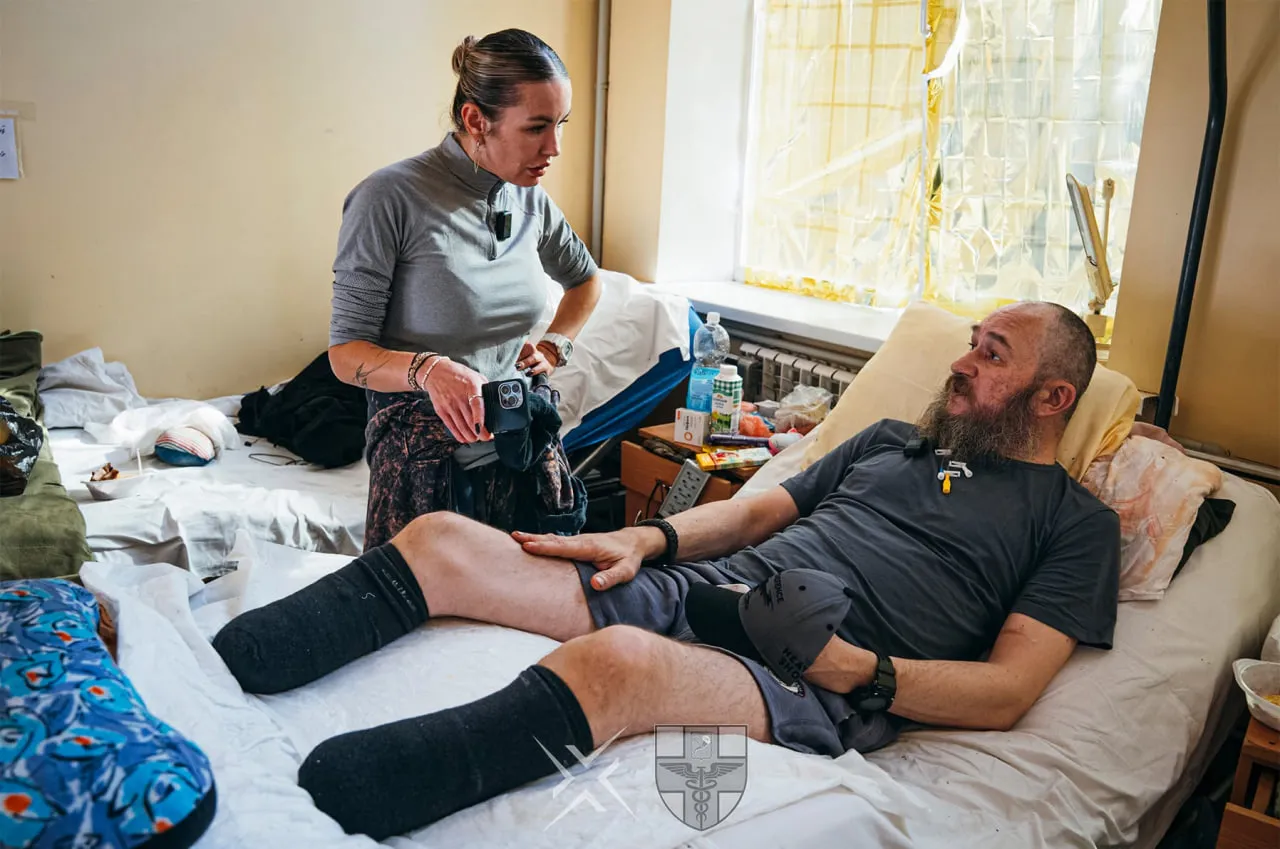
In the Kharkiv region, the Ukrainian Defense Forces conducted their first air evacuation of a wounded soldier directly from the battlefield since the war began. In the Kupiansk sector, a large drone was used to evacuate 49-year-old soldier Kostyantyn, who had lost both legs, from his position.
The soldier had been holding the observation post on his own after Russian troops killed his comrade with drone-delivered munitions. Kostiantyn sustained injuries to both legs and was left alone at his position.
Several attempts to evacuate the soldier using various methods, including a ground-based robotic system (GRS), proved unsuccessful. Russian troops attempted to thwart the rescue missions.
Footage of this unique operation is expected to be released shortly.
Despite everything, under extremely difficult conditions, the soldier continued to carry out combat missions and hoped for evacuation.
“Although the Russians offered me the chance to surrender, I couldn’t bring myself to do it. They played a column or a record on a gramophone to put psychological pressure on me. I remember all of this word for word, because this recording played over and over again: ‘Brother, we know you’re here. Your comrades won’t help you. Did you hear the explosion? The next one might hit you. A white lantern will lead you out. And then—capture, exchange, and home!” They knew I was the 300th and that I’d already lost my comrade and was holding the position alone. I just shouted, “Russian warship, go away…” And that was it. After that, they dropped two anti-tank mines… My command, my company commander—I’m very grateful to him— he kept everything under control—along with food and water, they kept dropping off medicine for me the whole time: Betadine, antibiotics, painkillers, and other things,” says the man, who is now a patient at the Kharkiv Military Hospital.


To save the soldier, troops from several brigades and even corps joined forces. The Ukrainian military had never before carried out evacuation operations of this complexity, says Artem Bogomolov, commander of the 10th Army Corps.
“There were no other options to save him. What was done was 100% a first in Ukraine. I can’t say whether there have been similar operations anywhere else in the world. The planning was lengthy and meticulous. Dozens of people worked to save just one. The planning involved unmanned aerial systems, artillery units, electronic warfare units, and air defense units. But every life saved is worth many, many hours of that work,” says Artem Bogomolov.
At a hospital in Kharkiv, the soldier underwent several surgeries, after spending several days stabilizing his condition.
“Given that medications and food were airdropped to his position using drones, he managed to avoid serious complications, infection, gangrene, and the like. He was already admitted to us with granulating wounds, meaning it was clear that he had received both antibiotic therapy and anti-inflammatory medications. If not for that, he would not have survived,” says Volodymyr Kupriyanchuk, head of the Department of Surgical Infections and Thermal Injuries at the Military Medical Clinical Center of the Northern Region.
The soldier was evacuated using a Ukrainian-made “Ayudag-6” hexacopter, known as the Heavy Shot. For this mission, engineers from Gurzuf Defence, working together with the military, had to add certain components and make some modifications to the drone.
“This is the first mission in the history of the war where a person was evacuated by an aircraft. And I think everyone understands the complexity: when you have to carry a person not just a kilometer or two, or even 10, but more than 15 km, and you realize that air battles are constantly raging and suppression fire is constant—that’s a huge responsibility,” says Ivan, one of the directors at Gurzuf Defence.
“A man alone in the field is no warrior. And thinking outside the box usually leads to success. We knew that such an aircraft was being built for one of the brigades; we contacted the manufacturer and reached out to that brigade—the 92nd— and they were very accommodating, sending both the aircraft and their specialists to assist us,” says Taras Maksimov, commander of the 14th Separate Mechanized Brigade named after Prince Roman the Great.
“An incredible number of people and various units were involved in providing cover for this drone’s flight. It was like ‘Star Wars’—it was a huge operation!” shares Vader, a soldier in the unmanned ground systems company of the 92nd Separate Mechanized Brigade named after Koshovyi Ataman Ivan Sirko,
“The day before the operation itself, I recorded a video on my phone showing him how to put on the gear and how to secure himself to the drone. He couldn’t hear us, but there was a camera mounted on the drone, so we could see what he was showing us. He attached himself securely and quickly and made a heart shape with his fingers. And then we took off,” shares Chornyi, a pilot with the 30th Separate Mechanized Brigade named after Prince Konstantin Ostrozky.
“They’re all my angels now, especially the pilot. He came to visit me in the hospital. The general came, too, and the drone manufacturers brought me gifts here… Where did I find the strength, and how did I hold on? I don’t know—God helped me. The command staff encouraged me. I have a great company commander and great guys—my brothers in arms. They were all really worried about me. And that—the fact that someone was thinking of me, that no one had abandoned me—is what kept me going all this time,” says Kostyantyn.
Ahead of him lie prosthetics and rehabilitation, as well as work with psychologists.
As of October 19, there were 204 combat engagements on the front lines in the past 24 hours, according to the General Staff.
As a reminder, one person was killed and eight others were injured as a result of a Russian ballistic missile strike on Kyiv.
In Kyiv, the routes of four trolleybus lines were rerouted due to the shelling.
The U.S. once again failed to warn Ukraine about the Russian ballistic missile attack on Kyiv.
Kyiv will increase the number of buses due to damage to the metro infrastructure.
As a reminder, following the Russian Federation’s attack on Kyiv, an above-ground metro station and tracks were damaged, and there were casualties.




