
The General Staff confirmed that all five of Russia's largest oil refineries had been hit
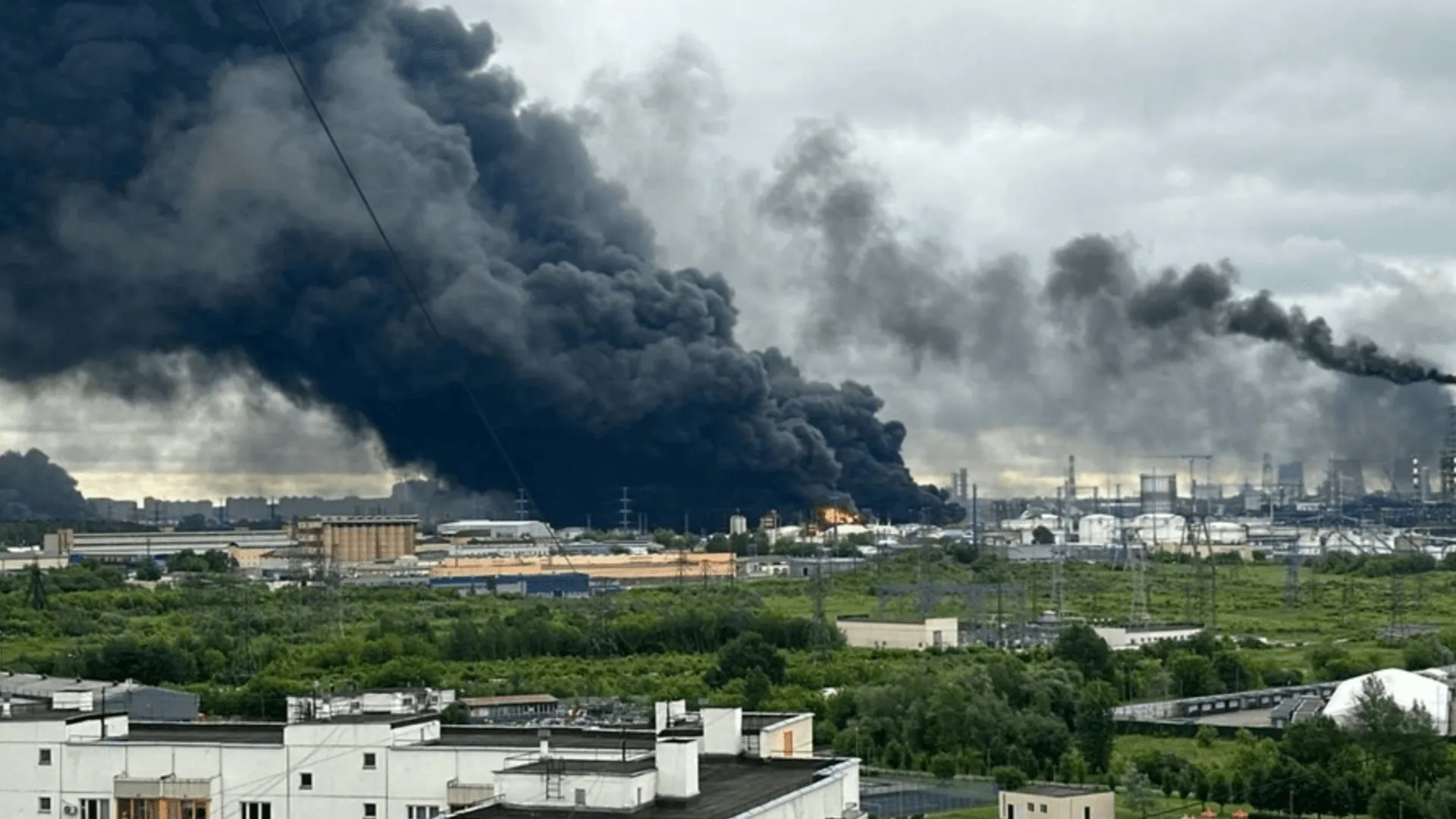
The Ukrainian Armed Forces struck Russia’s five largest oil refineries, including facilities in Omsk, Kirishi, Ryazan, Nizhny Novgorod, and Yaroslavl. According to the General Staff, their combined nominal capacity exceeds 120 million metric tons of oil per year.
On November 12, the General Staff of the Armed Forces of Ukraine reported that all five of Russia’s largest oil refineries had been struck. Ukrainian long-range strikes hit these facilities beginning on October 30.
In addition, the Novokuybyshevsk and Saratov oil refineries were also targeted. The General Staff emphasizes that the Armed Forces are systematically striking the Russian oil refining industry.
Strike on the Omsk Oil Refinery
One of the targets was the Omsk Oil Refinery, located approximately 2,500 km from the Ukrainian border. According to the General Staff, a fire broke out at the facility on November 11 as a result of a strike by the Ukrainian military.
The refinery is one of the largest in Russia and is capable of processing over 21 million metric tons of crude oil per year. The refinery’s processing depth is approximately 99%.
Damage to the Kirish and Saratov Oil Refineries
The General Staff also confirmed the results of strikes on the Kirish and Saratov oil refineries.
On the night of November 9, Ukrainian forces struck the “Kinef” (“Kirishnefteorgsintez”) facility in the Leningrad Oblast. Its capacity is approximately 20 million metric tons of crude oil per year, accounting for over 6% of Russia’s total oil refining capacity.
The attack damaged an atmospheric tubular oil refining unit, a primary refining unit, and two cooling units. The plant produces various petroleum products, including fuel for the Russian army.
Another strike hit the Saratov Oil Refinery on November 7. The facility has a capacity of about 7 million metric tons of crude oil per year. According to the General Staff, it meets the needs of the Russian military-industrial complex and the armed forces.
At the refinery, the sole AVT-6 primary oil refining unit, two fuel hydrotreating units, pipelines, and a 10,000-cubic-meter storage tank were damaged. A fire broke out in the latter. The General Staff reported that the plant’s operations have been suspended.
The damaged plants account for more than a third of Russia’s production capacity
The General Staff noted that the damage to the primary refining units reduces fuel production for the Russian army and impacts the revenues that Moscow allocates to the war against Ukraine.
According to Fire Point, a manufacturer of long-range weapons, the affected facilities account for about 36% of Russia’s total oil refining capacity. The company stated that these results were achieved in less than two weeks.
The combined nominal capacity of the targeted refineries exceeds 120 million metric tons of crude oil per year, the General Staff noted.
As a reminder, on the night of November 5, drones attacked the Ryazan Oil Refinery, one of Russia’s largest oil refining facilities. The attack sparked fires at industrial sites in the city, and part of Ryazan was left without power.
Rosneft, Russia’s largest oil company by production volume, has imposed limits on fuel sales at its gas stations across all regions of Russia. The restrictions took effect following a series of Ukrainian strikes on oil refineries.
On the night of November 9, St. Petersburg and the Leningrad Region came under a massive drone attack. Local authorities reported a “huge number of UAVs,” explosions, and possible damage to industrial facilities. Amid the attack, the city also experienced disruptions to mobile internet service.




