
Defense forces struck an oil terminal and missile factories in Siberia
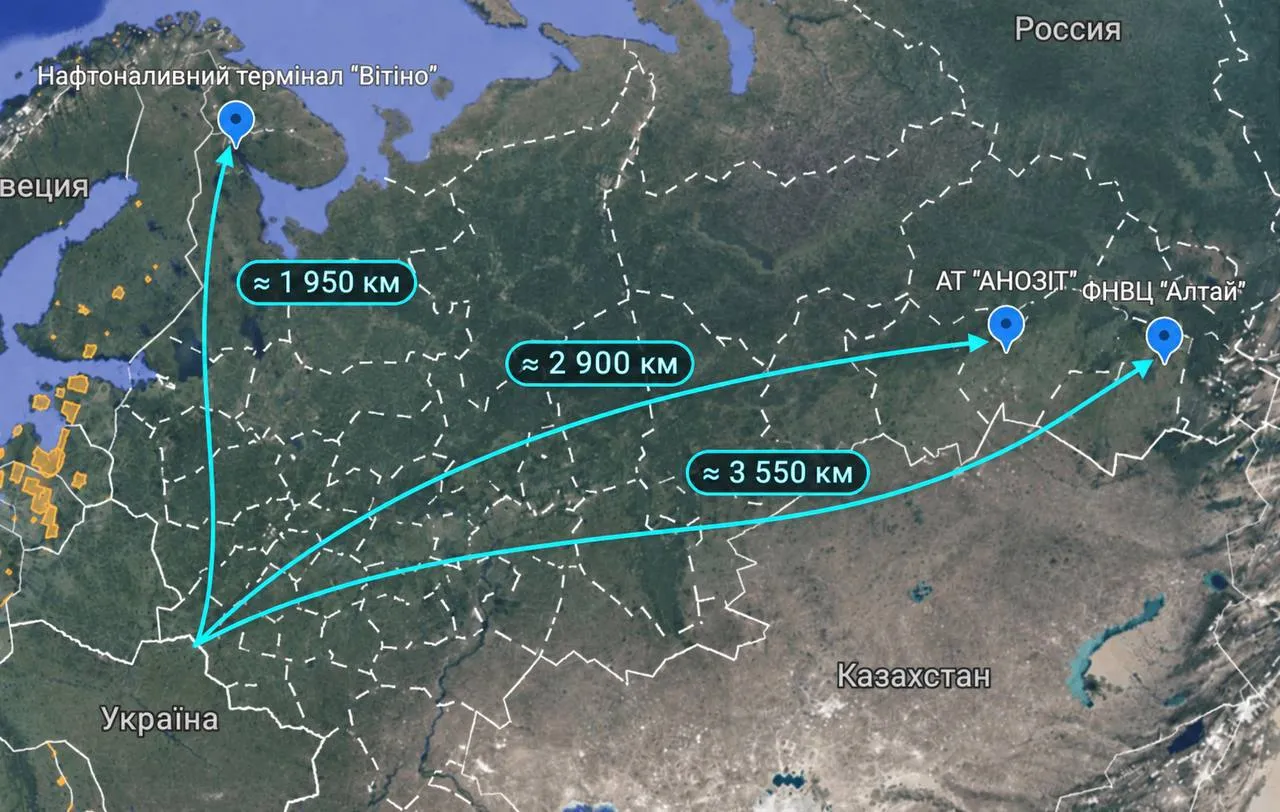
On November 20, the Ukrainian Defense Forces announced that they had carried out long-range strikes against two facilities belonging to the Russian military-industrial complex in Siberia and an oil loading terminal in the Murmansk Oblast of the Russian Federation. Information about these targets was disclosed in a report by the commander of the Unmanned Systems Forces detailing the results of strikes over the past 50 days.
According to analysts, the report publicly named three targets for the first time that had not previously been reported as having been struck. The strikes on facilities in Siberia—which are among the most distant targets hit by the Ukrainian Defense Forces—drew particular attention.
One such facility was the joint-stock company “Anozit.” The company specializes in the production of solid rocket propellant components used in rocket engines.
Damage to this facility could potentially affect the supply of raw materials to the Russian rocket industry. However, there is currently no information on the extent of the damage to the facility.
Another target was the “Altai” Federal Nuclear Research Center, which develops and manufactures solid-fuel propellants for rocket engines.
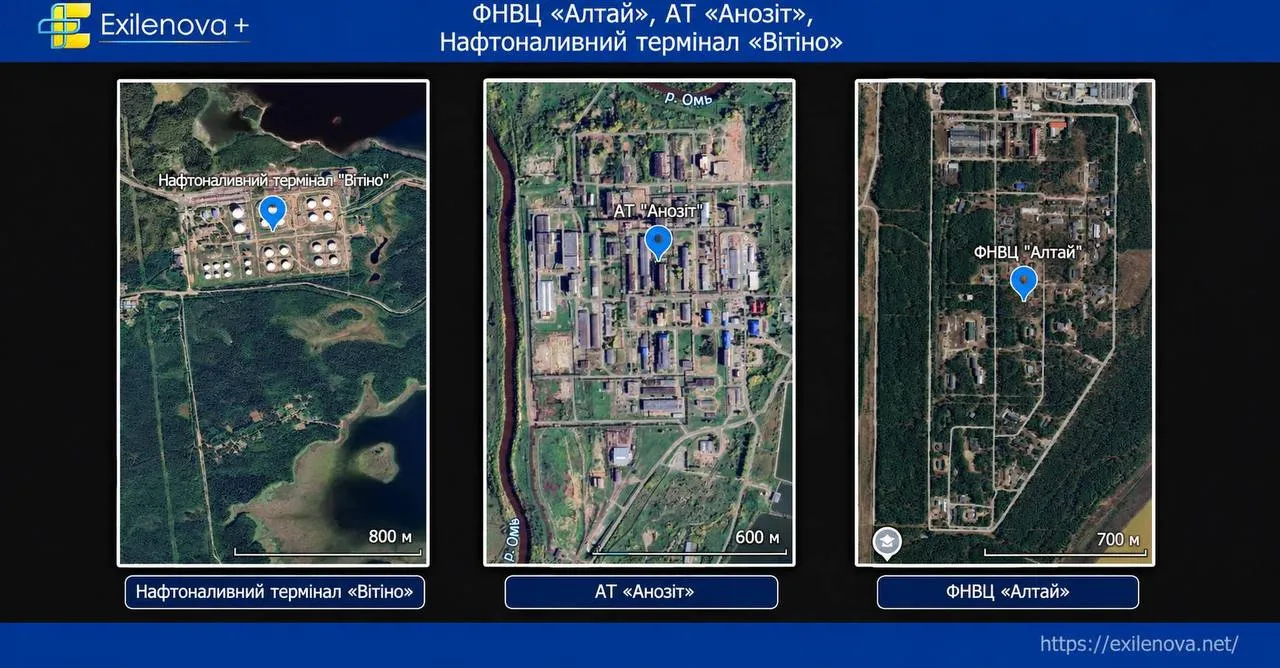
According to Exilenova+, the facility’s products are used, in particular, in the ballistic missiles of the “Iskander-M” operational-tactical missile system, which Russian forces regularly use to attack Ukraine.
Thus, strikes on facilities involved in the production of rocket fuel could make it more difficult for the Russian military-industrial complex to secure the necessary components. However, there is no confirmed information yet regarding a halt in production at these facilities.
The third facility mentioned in the report is the “Vitino” oil terminal in Russia’s Murmansk Oblast.
The terminal is designed for the transshipment and storage of petroleum products. Its infrastructure is used for the storage and transportation of fuel.
The report does not specify when exactly the strikes on the three facilities took place, what weapons were used, or what damage the facilities sustained.
The published satellite images show the locations of the facilities in question, but do not in themselves allow for confirmation of the extent of the damage. There is currently no independent assessment of the consequences of the attacks.
This was reported by the monitoring channel Exilenova+.
In Russia’s Smolensk Oblast, on the night of November 20, drones attacked the Dorogobuzh chemical plant, one of the region’s largest industrial enterprises, which produces components for industrial explosives.
On the night of November 19, drones attacked Almetyevsk, where local residents counted at least 16 powerful explosions. One of the possible targets is said to be the Kaleikino oil pumping station, owned by Transneft.
Earlier, drones attacked two Russian oil refineries in the Krasnodar Krai, causing fires at both.
Prior to this, the General Staff confirmed that one of Russia’s largest oil refineries in Bashkortostan had been hit.
The Defense Forces also struck an oil refinery in Russia’s Krasnodar Krai.




