
The son of an FSB general makes a living protecting Russian data centers from drones
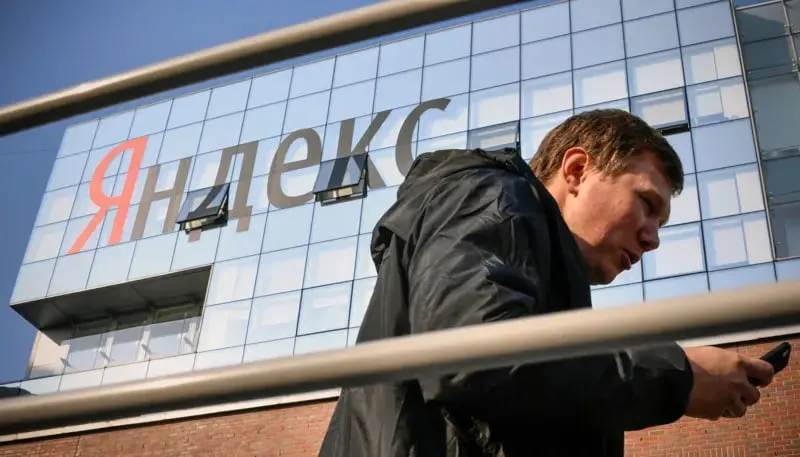
Russian companies began preparing for possible attacks on data centers long before Ukraine launched strikes against them.
In particular, Yandex regularly conducted drills on shutting down and rerouting traffic. At the same time, Russian businesses are actively purchasing mobile data centers. According to the publication, one of the suppliers of such equipment is linked to the son of a high-ranking FSB general.
Demand for mobile data centers began to rise as early as late summer, the BBC notes. They are being purchased not only by IT companies and mobile operators, but also by medium- and large-sized businesses that require computing power exceeding the capabilities of a standard computer.
In Russia, mobile data centers are supplied by “RTK-Data Center,” a subsidiary of Rostelecom, and Yadro, which is part of the “X Holding” group. Boris Korolev—the son of Sergei Korolev, first deputy director of the FSB—holds the position of deputy general director of the holding company.
In 2026, Yadro unveiled the Borey containerized data center. According to government procurement data analyzed by the BBC, its cost—excluding servers—ranges from 18 to 25 million rubles. If the center is equipped with computing hardware, the price could reach hundreds of millions of rubles. Sales of such equipment have been ongoing for several months.
“The news environment is favorable for new sales—perhaps even too favorable,” a source working in this market told the BBC.
According to the publication’s sources, industry representatives have been discussing the inevitability of attacks on Russian data centers since late summer. Approximately two-thirds of such facilities are concentrated in the Moscow region and St. Petersburg. On October 6, just a few days before the first strike on Yandex’s infrastructure, Yevgeny Filatov, deputy head of the Russian Ministry of Digital Development, Communications, and Mass Media, called for computing power to be relocated beyond the Urals—to regions that, he said, have not yet been targeted.
From October 8 to 11, Ukraine attacked three of Yandex’s six data centers, located in Sasovo in the Ryazan Region, Kaluga, and Vladimir. The attacks caused disruptions not only to the company’s own services but also to those of other businesses.
All three of Yandex’s supercomputers—“Chervonenkis,” “Lyapunov,” and “Galushkin”—were housed in the attacked data centers. As of the evening of October 11, there was no information on the extent of the damage to these systems. According to *Kommersant*, replacing the equipment damaged by the attacks could take about half a year.
As a reminder, a number of services in Russia are still down due to the attacks on Yandex’s data centers.
Earlier in Russia, a large-scale outage of internet services occurred following a drone attack on a Yandex data center.
On the night of October 11, drones attacked the Yandex data center in Russia’s Vladimir Oblast. The company confirmed that operations had come to a complete halt, causing widespread disruptions to dozens of digital services across the country.
The Russian technology company Yandex stated that it had completely shut down its data center in Russia’s Vladimir Oblast due to the drone attack. According to the company, its infrastructure was damaged as a result of the attack.




