
The professor explained why the U.S. is unlikely to regain its former power
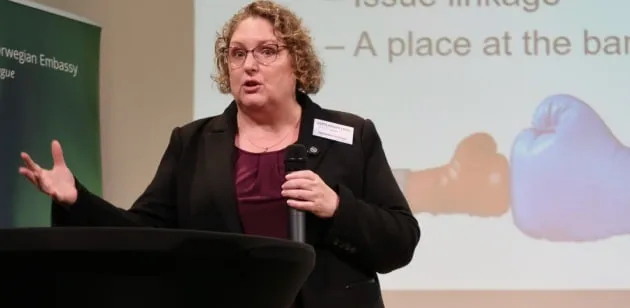
Most members of the American political elite and the general public do not support a policy of isolationism. According to the professor, the current U.S. president is also not an isolationist, despite some controversial statements. At the same time, the United States is gradually losing its former power and is unlikely to regain absolute dominance.
“The Trump administration is quite unpredictable. And one thing is worth noting: Trump declared, ‘We are not going to interfere in international affairs; we want to be isolationists.’ However, he was anything but an isolationist—he was extremely active on the international stage,” the professor noted.
Ashley Leeds noted that there could potentially be a shift in priorities down the line and the situation could change, but for now she sees no signs that the U.S. will completely withdraw from the world stage. However, in her opinion, the U.S. is undoubtedly losing the dominant position it once held.
“I don’t think the U.S. will ever return to the level of absolute, independent power it had during its heyday, when it was head and shoulders above everyone else. There will always be a need for cooperation whenever the U.S. is involved in something. However, there remains a genuine interest among the American elite in multilateralism and an active global role,” the professor said.
She added that she views the current administration more as an “anomaly.” But it cannot be said that in the future the U.S. will return to the course it followed prior to the current administration. In that case, a balance will have to be found, the scholar noted.
“But I certainly wouldn’t say that isolationism has become the dominant view among American elites or society at large,” Ashley Leeds concluded.
When asked whether the United States would be prepared to come to the aid of its European NATO partners in the event of a possible attack by Russia, she answered in the affirmative, although, in her opinion, the question of the extent of U.S. assistance would inevitably arise, and “discussions would begin about what constitutes ‘sufficient involvement’—just as is happening now with regard to Ukraine or other regions.”
The professor is also absolutely convinced that if Latvia, Lithuania, Poland, or any other NATO country comes under attack, they must invoke—and will invoke—Article 5, and NATO must respond. Her confidence is based on research data, most of which indicates that both political elites and the general public in democratic countries are firmly convinced that defending allies in the event of an attack is vitally important. In other words, the level of support for assisting NATO allies against the Russian threat remains significantly higher than just a simple majority.
Overall, Leeds, who studies deterrence, is convinced that it would be much more difficult for Russia to carry out overt military aggression against a NATO member, as it did against Ukraine.
“In such a case, the pressure on NATO to intervene directly would be much stronger. In my opinion, the fact that Ukraine was not a NATO member made this task easier for Russia. So I believe that deterrence is still sufficient at this point—especially given that Russia is extremely preoccupied with the war in Ukraine. But this is something we should be concerned about, so it’s important to maintain this deterrent capability,” said Ashley Leeds.
This opinion was expressed in a comment to Ukrinform by Brett Ashley Leeds, a professor of political science at Rice University (U.S.).
Trump’s New Threats: What Will Happen If the U.S. Leaves NATO?
The U.S. has offered Ukraine security guarantees modeled after NATO.
Steve Witkoff, Special Representative of U.S. President Donald Trump, is scheduled to travel to St. Petersburg on October 21 to meet with Russian leaders. Norwegian Prime Minister Jonas Gar Støre announced these plans following talks involving Witkoff and Ukrainian President Volodymyr Zelenskyy. The parties discussed Ukraine’s security, post-war reconstruction, territorial issues, and the future of European security.




