
ISW Exposed the Kremlin’s Information Operation Regarding the Offensive on Sloviansk and Kramatorsk
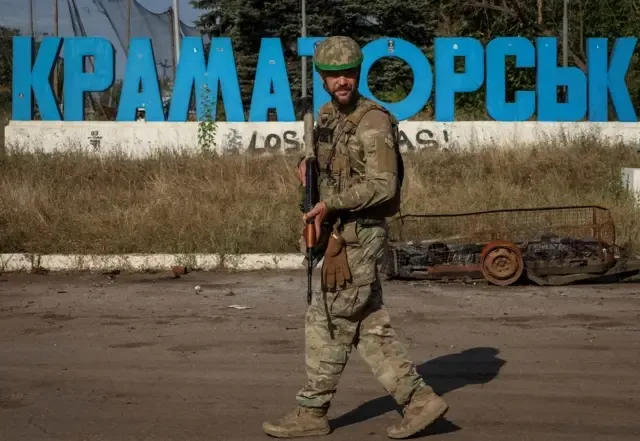
Russia is exaggerating its successes in the Donetsk region to create the impression that the collapse of Ukrainian defenses is inevitable. In a report dated October 15, 2026, analysts at the Institute for the Study of War (ISW) did not confirm Russia’s claimed successes near Sloviansk and Kostiantynivka.
The Russian Ministry of Defense is spreading exaggerated claims about the advance of its troops in the Donetsk region, particularly near Sloviansk and Kramatorsk, in an attempt to create the impression that Ukrainian defenses are supposedly collapsing. However, the actual situation on the front lines does not corroborate the Russian command’s reports. This is stated in a report by the Institute for the Study of War (ISW).
Analysts noted that the Russian Ministry of Defense is claiming to be conducting offensive operations near Sloviansk, Kramatorsk, and Semenivka. At the same time, these settlements are located far beyond the furthest confirmed advance of Russian troops.
According to the ISW, such reports are part of a systematic Kremlin information campaign aimed at exaggerating Russian successes and creating a false impression of the situation on the battlefield.
The Russians claim to have advanced dozens of kilometers
Analysts have documented similar manipulations in other areas as well. In particular, the Russian command claimed to have launched an offensive near Tarasivka and Havrylivka, although these settlements are located approximately 16 and 15 km, respectively, from the farthest positions to which, according to ISW estimates, Russian troops have advanced.
In the Huliaipole sector, the occupiers also reported combat operations near settlements located approximately 14–19 km from the confirmed boundary of Russian advances.
Analysts noted that the Russian Ministry of Defense publishes some of these statements on the Russian messaging app Max rather than on Telegram. According to the ISW, this may indicate an attempt to project an exaggerated picture of success, primarily to a domestic Russian audience.
At the same time, on October 13–14, Russian forces continued attacks on the outskirts of Sloviansk and in the Kostiantynivka area; however, analysts did not observe any confirmed advances in these sectors.
Thus, according to the ISW’s assessment, the Kremlin is attempting to portray the Ukrainian defense as supposedly crumbling, although the available evidence does not support these claims.
On the evening of Wednesday, October 14, a Russian strike in Odesa damaged apartments in two high-rise buildings. There were no casualties, according to Serhiy Lysak, head of the Odesa City Military Administration.
Power outages were reported in Kyiv and seven regions due to Russian attacks.
As a result of a Russian attack on the night of October 14, all three of Kyiv’s municipal combined heat and power plants were hit, as well as critical energy infrastructure in the Kyiv region. The number of dead and wounded in the capital rose following strikes on residential areas.
In the Khmelnytskyi district, a gas station caught fire after debris from a Russian drone fell on it. Two people sustained minor injuries.
On the night of October 14, a fire broke out at an oil depot in Lutsk after it was struck by an enemy drone. The fire started around 2:00 a.m.




